TLDR;
The video discusses the unexpected success of the indie game Windrose and why the mainstream gaming industry and media were caught off guard. It highlights the disconnect between what players want and what AAA companies are producing, using Ubisoft's Skull and Bones as a prime example of a missed opportunity. The video argues that Windrose's success is due to its authentic pirate fantasy, fair pricing, and the developers' willingness to listen to player feedback, contrasting this with larger companies that prioritise monetisation and trend-chasing over genuine player experience.
- Windrose's success highlights the disconnect between AAA game development and player desires.
- Indie developers are more attuned to player feedback and willing to take risks.
- AAA companies often prioritise monetisation and trend-chasing over authentic game experiences.
Intro [0:00]
The video introduces the surprising success of Windrose, an indie game that has resonated strongly with players, selling 500,000 copies in its first two days. The presenter contrasts this success with the struggles of AAA companies like Ubisoft, who have failed to deliver on similar player desires despite significant investment. The presenter aims to explore why the gaming industry was caught off guard by Windrose's popularity and how indie games like it are reshaping the industry.
Windrose [3:10]
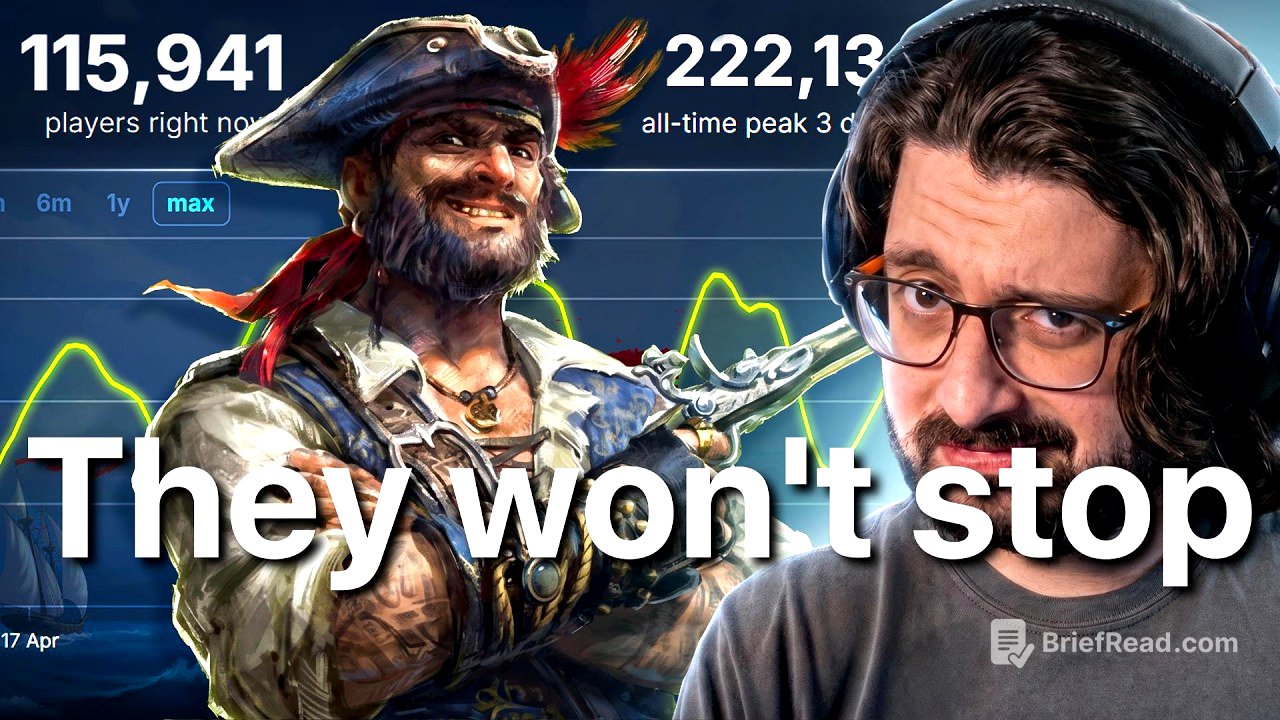
The presenter discusses the disconnect between the games industry and its audience, noting that indie games are often more responsive to player feedback. He references an interview with Windrose's producer, who stated that the shift from a free-to-play MMO to a buy-to-play survival game was driven by player preferences. Windrose launched into early access and quickly sold 500,000 copies, reaching 220,000 concurrent players on Steam and selling a million copies in under a week. The presenter praises Windrose as a polished early access game with intuitive base building, diverse exploration, and excellent naval combat reminiscent of Assassin's Creed Black Flag. He attributes the game's success to its genuine pirate fantasy, created by developers who are passionate about both pirate lore and video games.
The presenter notes the muted media coverage of Windrose despite its commercial success and high player numbers. He contrasts this with the significant attention given to Pragmata, suggesting that Windrose doesn't offer the kind of controversial angles that some media outlets prefer. The presenter highlights the growing disconnect between games media and players, pointing out that a streamer's reaction video of Windrose received far more views than the official trailer. He suggests that games media prioritises AAA titles and struggles to keep up with the indie game scene, often being a step behind the audience.
The presenter argues that the disconnect between the industry and the audience extends beyond media, affecting game development and funding. He believes that those writing about, selling, and funding games often lack an understanding of what players actually want. This disconnect creates opportunities for indie developers to fill the gaps left by larger companies. The presenter views Windrose as a prime example of an industry ripe for disruption, where indie teams can succeed by delivering authentic experiences that AAA companies have failed to provide.
The presenter contrasts Windrose's approach with that of Ubisoft, which he sees as having missed the mark with Skull and Bones. While Ubisoft had success with Assassin's Creed Black Flag, they failed to build on that foundation, instead creating a heavily monetised live service game that didn't resonate with players. The presenter acknowledges that Ubisoft seems to be learning from its mistakes, as evidenced by the Black Flag remake, but notes that it takes significant missteps for these companies to respond to player demand. He points out that Windrose was able to pivot quickly from an MMO to a survival game based on player feedback, while the wider industry struggles to adapt.
The presenter believes the core issue is a lack of authentic desire behind many AAA games. Windrose focuses on delivering a valued player experience, while companies like Ubisoft prioritise increasing their own value. This leads to soulless live service games and a slow response to player desires. The presenter concludes that the industry is losing ground piece by piece as it surrenders territory to smaller, more focused studios. He uses analogies to illustrate this point, suggesting that it's as if Bungie abandoned Destiny or BioWare failed to make good games, leaving opportunities for other companies to step in and take their audience.
The presenter believes that game development is becoming more accessible, allowing smaller teams to create incredible games with limited resources. He questions whether larger companies still have what it takes to reclaim lost ground or hold onto what they have left. The presenter concludes by recommending Windrose, praising its performance and the amount of content available in early access. He encourages viewers to support the developers, who are focused on supporting their players.