TLDR;
The China Observer video discusses the escalating tensions between China and Japan over Taiwan, highlighting a recent incident where Chinese fighter jets locked radar on Japanese aircraft. It analyses the military capabilities of both nations, the strategic alliances forming around Japan, and the internal challenges China faces, including a lack of public support for military action and purges within its military. The video suggests that China's actions, intended to isolate Taiwan, are instead leading to its internationalisation and a potential shift in global recognition.
- Chinese J15 fighter jets locked radar on Japanese F-15 jets, escalating tensions.
- Japan is gaining strategic support from the US and Australia.
- China faces internal challenges, including military purges and a lack of public support for war.
- China's actions are inadvertently leading to Taiwan's internationalisation.
Escalating Tensions Between China and Japan [0:00]
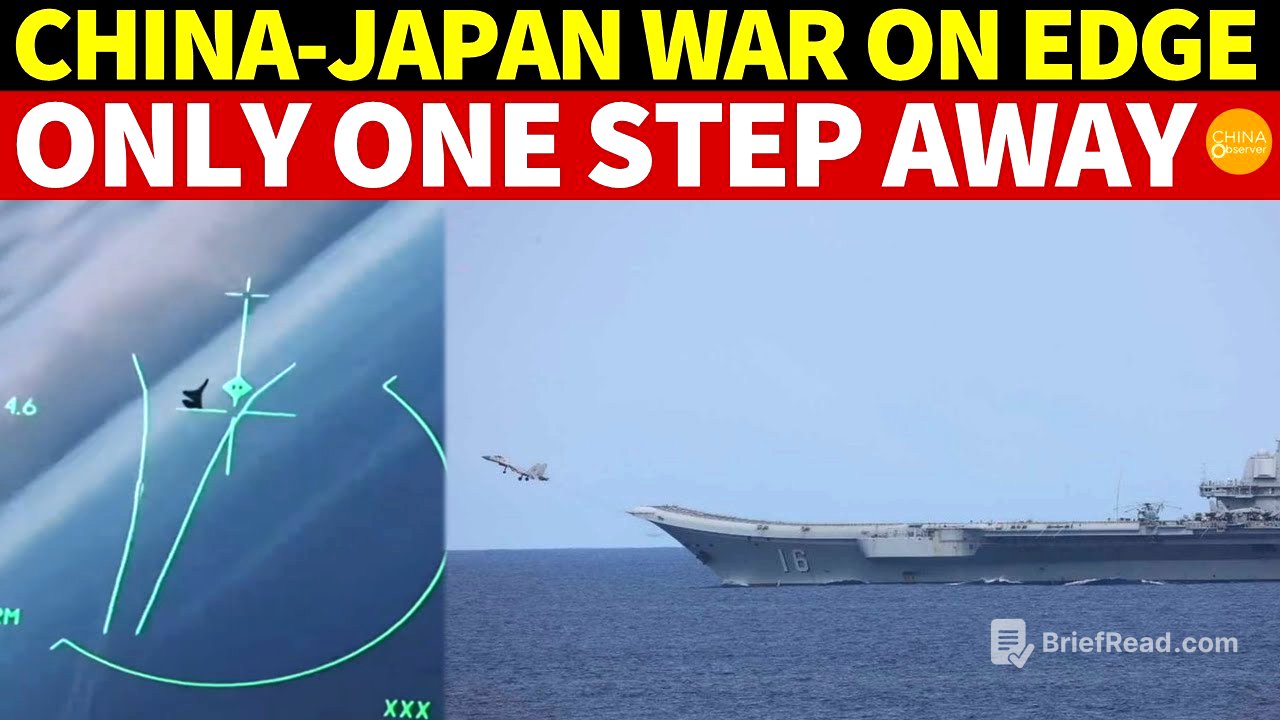
The video begins by outlining the recent escalation in tensions between China and Japan, focusing on an incident on December 6th where Chinese J15 fighter jets locked radar on Japanese F-15 jets in international airspace near Okinawa. This act, considered a provocative hostile act akin to pointing a loaded gun, has heightened concerns about a potential accidental war. The Japanese Ministry of Defence reported two instances of radar lock-ons, one lasting three minutes and another for 31 minutes, both involving J15 jets from the Liaoning aircraft carrier.
Military Capabilities and Weaknesses [1:34]
The analysis moves to the military strengths and weaknesses of both countries. While China's radar lock-on is seen as military pressure, its J15 fighters and the Liaoning aircraft carrier have limitations in engine reliability, avionics, combat range and bluewater operational capability. In contrast, Japan's modernised F-15 fighters possess more mature technology and combat experience. China's military lacks real combat experience, especially in large-scale naval and air combat, whereas Japan's self-defence forces have a well-coordinated combat system through joint training with the US military. This suggests that China's actions may be more of a bluff to test Japan's response.
Japan's Response and International Support [2:57]
The incident has provoked a strong reaction from Japan, with the Defence Minister and Prime Minister expressing regret and lodging strong protests with China. More significantly, Japan is receiving strategic support from allies. The Australian Deputy Prime Minister and Defence Minister Richard Marles visited Japan, condemning the incident and reaffirming Australia's commitment to the rule-based order. Marles then travelled to Washington for talks with US officials, strengthening the US-Australia alliance, including increasing the US military presence in Australia and equipping Australia with nuclear-powered submarines. This trilateral coordination between the US, Australia, and Japan provides crucial support for Japan in its confrontation with China.
Global Perspectives and Alliances [5:30]
The video highlights growing international support for Japan's approach to China. A German analysis praised Japan's composure and resilience in the face of Chinese pressure, suggesting it as a model for European countries. The former Japanese ambassador to Australia emphasised the need for alliances to counter China's pressure, particularly on the issue of Taiwan. He suggested that if China uses force against Taiwan, Western countries should formally recognise Taiwan diplomatically, with Japan leading the way.
Potential Consequences of Taiwan's Internationalisation [7:33]
The analysis considers the potential consequences if Taiwan formally integrates into the Western diplomatic system. Diplomatically, the US State Department could upgrade the Taiwan Relations Act, with other G7 countries and Southeast Asian nations following suit in recognising Taiwan. Economically, Taiwan would benefit from the democratic supply chain, with increased orders from Japan and Europe. Militarily, joint patrols by the US, Japan, Australia, and India would become routine. Politically, Taiwan's status as a de facto country would rise, potentially leading to a referendum on a Taiwan Republic, rendering China's One China principle meaningless.
China's Retaliation and Internal Challenges [8:57]
In response to these developments, China has taken retaliatory measures, including discouraging tourism to Japan, restricting seafood imports, increasing military patrols, and reducing Japanese cultural influence in China. The ferry service between Shanghai and Osaka/Kobe has been suspended. Public sentiment reveals a lack of domestic consensus in China regarding the Taiwan issue. China's actions, intended to isolate Taiwan, are instead heightening global awareness.
Internal Turmoil and Lack of Public Support in China [11:01]
The video points to internal challenges within China, including Xi Jinping's lack of a solid grip on the military, evidenced by recent purges of high-ranking generals. Military morale is low, with corruption prioritised over political loyalty. The Chinese Communist Party also lacks public support for war, with propaganda about national righteousness failing to resonate. Online commentary from Chinese citizens reveals a lack of anti-Japan sentiment and a reluctance to fight for Taiwan. The video concludes that Beijing's narrative of national revival is facing unprecedented disconnection due to economic downturns, propaganda fatigue, and survival anxiety.