TLDR;
In this video, Daniel Lieberman, an evolutionary biologist and author, discusses the significance of exercise, its impact on health, and the misconceptions surrounding it. He emphasises the importance of physical activity for disease prevention and overall well-being, while highlighting the societal shifts that have led to decreased activity levels among humans.
- Exercise is critical for preventing diseases such as cancer and cardiovascular issues.
- Misconceptions about exercise, sleep, and health persist in modern culture, often leading to misguided practices.
Intro [0:00]
Daniel Lieberman discusses why many people exercise, primarily for fat loss, and his background in evolutionary biology. He underscores the evolutionary need for physical activity, highlighting alarming statistics about exercise habits, such as only 50% of Americans engaging in regular exercise. He connects decreasing physical activity to rising rates of diseases like cancer, depression, and anxiety, arguing for an urgent shift towards preventive healthcare.
Why do you do this research? [2:38]
Lieberman explains his journey into evolutionary medicine, detailing his initial focus on human evolution and skull studies before shifting towards public health. He advocates for understanding how evolutionary theory relates to health and disease, suggesting that understanding our evolutionary past can inform modern healthcare practices.
Where has your work taken you? [3:35]
He shares his extensive travel experience studying various populations to gain insights into human health, particularly in regions like Africa and Mexico, which provide data often lacking in Western medical research. His findings challenge existing health paradigms by illustrating how different lifestyles influence health outcomes.
Has your research shifted your perspective on exercise? [4:34]
Lieberman recounts a pivotal moment during his research in Mexico while interviewing an elderly long-distance runner. He notes the lack of a concept of 'training' in the culture, leading him to realise the absurdity of exercising for its own sake in a world where physical activity was once a necessity for survival.
The biggest exercise myths [5:55]
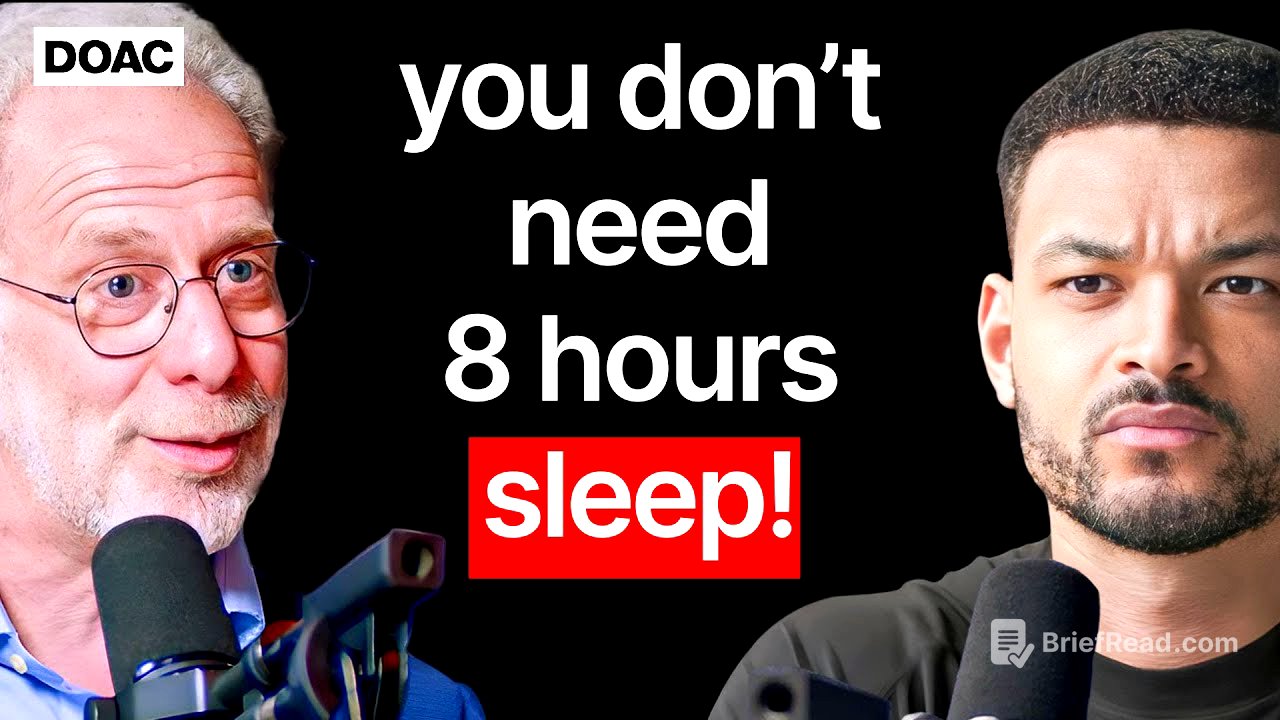
He discusses common myths surrounding exercise, such as the idea that eight hours of sleep is essential and that "sitting is the new smoking." Lieberman clarifies that while both points have truth, the implications are more nuanced than commonly stated, with the real issue often being how and when people sit and sleep.
The importance of weight training [12:00]
Lieberman highlights the importance of strength training, challenging the misconception that it is unnecessary. He points out that as people age, muscle loss can lead to frailty and reduced functional capacity, making resistance training essential for maintaining health and independence.
Why always moving your body is so important [16:12]
He stresses that consistent physical movement is vital for long-term health, linking sedentary lifestyles to various diseases. He argues for integrating more movement into daily life, whether through structured exercise or incorporating more physical activity into routine tasks.
Genetics vs lifestyle [19:47]
Lieberman discusses the interplay between genetics and lifestyle, arguing that while genetic predispositions exist, lifestyle choices heavily influence health outcomes. He encourages a focus on lifestyle adjustments to mitigate disease risk rather than attributing health issues solely to genetics.
Have we evolved to be lazy? [24:20]
He questions whether humans have evolved to become less active due to the convenience of modern life, noting the inherent tension between evolution and contemporary behaviour patterns. This discussion includes misconceptions about the natural inclination towards inactivity as a product of modern societies' comforts.
We should be preventing diseases, not medicating them [25:46]
Lieberman criticises the healthcare system for prioritising treatment over preventive measures, highlighting that most diseases can be prevented through lifestyle changes. He shares statistics illustrating the economic imbalance of spending on prevention versus treatment in healthcare systems.
Do hunter-gatherers get the same diseases as us? [28:13]
He compares hunter-gatherer populations to modern societies, suggesting that diseases like cancer are less prevalent among those who maintain traditional lifestyles. This highlights the importance of lifestyle factors over merely genetic predispositions in determining health.
The truth about sugar [31:32]
Lieberman addresses myths surrounding sugar and its health impacts. He suggests reducing added sugars and processed foods while promoting a balanced diet. He explains how high sugar intake contributes to chronic diseases through mechanisms like insulin resistance and inflammation.
How would you redesign our society? [37:30]
He outlines potential societal changes to promote physical activity and healthier lifestyles, advocating for more infrastructure that encourages movement, such as walkable cities and safe public spaces, alongside public education on nutrition and exercise.
Should organisations force people to exercise? [42:18]
The discussion turns to workplace wellness and whether organisations should mandate exercise. Lieberman argues for encouraging voluntary participation in physical activities while fostering environments that support healthy choices rather than requiring it outright.
What did you learn from these tribes? [48:25]
Lieberman shares insights from studying tribal communities and their approach to health and activity levels. He notes that traditional lifestyles often show a balance of activity, social engagement, and community support, which is crucial for maintaining health.
Why you should do strength training on your feet [50:03]
He advocates for performing resistance exercises in a standing position to build functional strength, highlighting that this method engages core stability and mimics regular life activities more closely than training in seated positions.
Is too much muscle bad? [56:38]
Lieberman addresses the myth that excessive muscle mass can be harmful, explaining that while having muscle is beneficial for health, there is a balance based on individual needs and lifestyle. He emphasises the importance of moderation and functional strength over sheer size.
Running myths [1:01:46]
He debunks myths regarding running, specifically that it can harm the knees, asserting that proper running form and technique can actually promote joint health. He advocates for barefoot running practices to reduce impact stress on joints.
The best cardio workout [1:06:58]
Lieberman explores various forms of cardiovascular exercise, asserting that the best type of exercise is one that individuals enjoy and can maintain consistently. He advocates for a balanced mix of aerobic and strength-based activities.
The best exercise for weight loss [1:09:21]
He explains that no particular exercise guarantees rapid weight loss, stressing that consistency and individual preference matter more. The conversation includes how exercise assists in maintaining weight and preventing regaining after initial weight loss.
Why we need more compassion around exercise [1:15:59]
Lieberman calls for increased understanding and compassion for those struggling to incorporate exercise into their lives, highlighting the psychological barriers many face. He urges society to support and motivate rather than shame individuals regarding their fitness journeys.
What is it that actually gets people exercising? [1:20:46]
He underscores the social aspects of exercise, such as accountability and community support, as key motivators for getting individuals active. He explains that making exercise enjoyable and socially engaging can significantly influence people's willingness to participate.
The last guest's question [1:24:59]
In closing, Lieberman contemplates personal challenges, discussing how comparing oneself to others can lead to dissatisfaction and unhealthy habits. He emphasises the importance of individual journeys in fitness and health, suggesting that personal accountability is essential for sustainable change.