TLDR;
This video discusses food spoilage, its causes, and prevention methods. Key points include:
- Identification of causes and types of food spoilage.
- Importance of maintaining proper temperature, moisture, pH, and oxygen levels to prevent spoilage.
- Overview of prevention techniques including proper storage, hygiene, and the use of preservatives.
Introduction to Food Spoilage [0:00]
Food is essential for health and well-being, but spoilage can occur, leading to the growth of harmful microorganisms and the loss of nutritional value. Understanding causes and prevention is crucial for food safety.
Causes of Food Spoilage [1:20]
Food spoilage results from various factors impacting food quality. Microorganisms like bacteria, yeast, and mould can grow on food surfaces. Their growth is influenced by temperature, moisture, pH, and oxygen levels. Spoilage can be classified into three categories: physical, microbial, and chemical.
Factors Influencing Food Spoilage [2:40]
Temperature is vital; storing food between 40 and 140°F (5 to 63°C) is unsafe. Above 63°C, bacteria are destroyed; below 5°C, microorganisms cannot grow. Moisture also promotes growth, with high levels leading to mould while low levels favour bacteria. Additionally, pH affects food quality, with bacterial growth favouring a pH around 6.0 to 7.5.
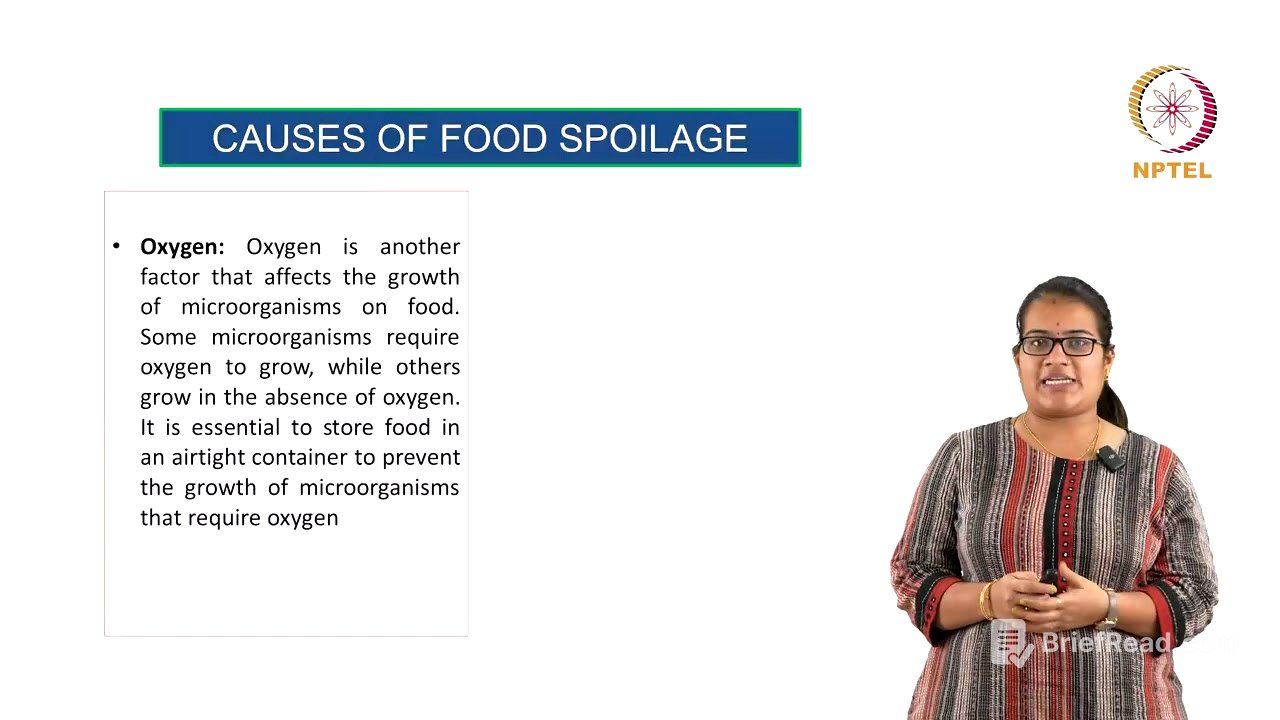
Oxygen levels influence spoilage too, as some microorganisms thrive in its presence (aerobic) while others do not (anaerobic).
Types of Food Spoilage [7:25]
Microbial spoilage occurs due to microorganisms affecting texture, taste, and appearance. Chemical spoilage involves reactions like oxidation affecting taste and colour, as with fruit exposed to air. Physical spoilage results from external factors damaging food, such as thawed ice crystals affecting texture.
Prevention Techniques for Food Spoilage [9:45]
Preventing spoilage ensures food safety and quality. Proper storage, including maintaining appropriate temperature and pH, is essential. Hygiene practices are crucial to reduce microorganism spread, including washing hands and utensils and separating raw and cooked food. Preservation techniques such as canning, freezing, and drying minimise microbial growth.
Use of preservatives like salt, sugar, and vinegar can also inhibit spoilage, ensuring adherence to guidelines to avoid health risks. Overall, maintaining hygiene, safe storage, and appropriate food handling is vital for preventing spoilage.