TLDR;
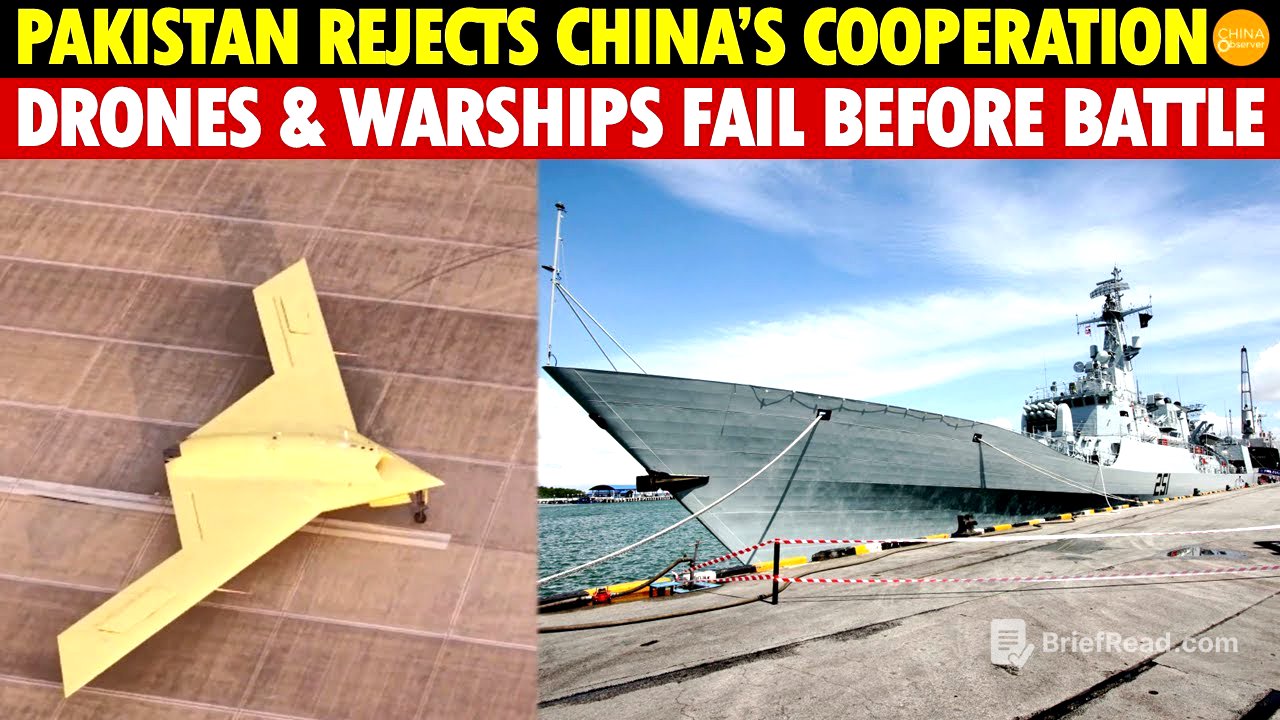
This video examines the evolving relationship between China and Pakistan, once hailed as an "iron brother" alliance. It highlights Pakistan's shift towards purchasing Turkish drones due to the underperformance of Chinese military equipment, the economic strain of the China-Pakistan Economic Corridor (CPEC), and the broader geopolitical implications of these changes. The video suggests that Pakistan is diversifying its alliances and prioritising its national interests, signalling a potential weakening of the once-unbreakable bond with China.
- Pakistan is shifting away from Chinese drones towards Turkish drones due to performance issues.
- The China-Pakistan Economic Corridor (CPEC) has become a debt burden for Pakistan.
- Corruption and quality issues within China's military-industrial complex are undermining trust.
Introduction [0:00]
The video introduces the traditionally strong relationship between China and Pakistan, often described as an "iron brother" alliance. However, this bond appears to be weakening as Pakistan has begun to diversify its military procurement, notably by purchasing drones from Turkey instead of China. This shift raises questions about the underlying issues affecting the China-Pakistan partnership and the performance of Chinese military equipment.
Chinese Drones Underperform in Combat [1:08]
The Pakistani Air Force has identified several critical flaws in Chinese-made UAVs, particularly in high-altitude environments like Kashmir, where the air density is lower. Chinese drones, equipped with piston engines, struggle in these conditions, leading to reduced power output, instability, and blurred imagery due to excessive vibrations. Overheating sensors in hot climates and susceptibility to electromagnetic interference from Indian jamming devices further compromise their effectiveness. The domestic production line for Chinese drones in Pakistan primarily involves assembling parts shipped from China, with limited technology transfer and frequent delays due to supply chain issues and Western sanctions.
Not Just Drones, The Complete Collapse of the Made in China Myth [5:09]
Pakistan's disillusionment extends beyond drones to other military equipment. Chinese-made F-22P frigates acquired by the Pakistani Navy have suffered from engine problems, radar malfunctions, and missile system failures. The JF-17 fighter jet, once a symbol of Sino-Pakistani cooperation, faces issues with engine maintenance, airframe fatigue, and avionics stability, leading to a significant portion of the fleet being grounded for repairs. These quality issues have eroded Pakistan's confidence in Chinese military products.
The Root Causes of the Quality Issues [6:50]
Corruption within China's military-industrial system is identified as a major factor contributing to the poor quality of military equipment. Funds allocated for military projects are often lost through subcontracting and kickbacks, leading to the use of substandard materials and inadequate testing. Pressure to meet tight deadlines for political purposes further compromises quality control. While these issues can be concealed within China, they become apparent in real combat situations faced by Pakistan.
Geopolitical Shifts, Turkey's Ambitions and America's Shadow [10:45]
Pakistan's shift towards Turkish arms procurement is influenced by geopolitical considerations. Turkish President Erdogan aims to expand Turkey's influence in the Islamic world, viewing Pakistan as a key partner. The US, while not wanting to be deeply involved in South Asia, subtly approves of Pakistan's move to maintain ties with the West through Turkey, preventing complete alignment with China. This allows Pakistan to acquire advanced equipment while improving relations with Western nations.
CPEC From Friendship Corridor to Debt Trap [12:33]
The China-Pakistan Economic Corridor (CPEC), once hailed as a symbol of bilateral cooperation, has become a significant economic burden for Pakistan. The projects have resulted in overwhelming debt, high electricity prices, and a lack of transparency. Increased attacks targeting Chinese workers have further strained relations, with China pressuring Pakistan to enhance security measures. During negotiations with the International Monetary Fund (IMF), China's debt became a major obstacle, leading Pakistan to feel abandoned by Beijing.
Conclusion [15:18]
Pakistan's diversifying alliances exposes the limitations of China's strategy of using investments and cheap weapons to buy loyalty. The cracks in the China-Pakistan relationship are deepening, with Pakistan prioritising its national interests and seeking reliable support from other countries like Turkey. This shift is a blow to China's global strategy, potentially leaving it isolated on the international stage.