TLDR;
This video explains the hierarchical organization of life, starting from large organisms and zooming in to the molecular level of DNA. It describes how organ systems are composed of organs, which are made of tissues, which are made of cells. Within each cell are organelles, including the nucleus that houses chromosomes made of tightly coiled DNA. The DNA is a double helix containing nucleotides with bases adenine, cytosine, guanine, and thymine (A, C, G, T). The sequence of these bases in genes carries instructions for a cell's structure and function, and the entire set of DNA instructions is called the genome.
- Organisms are made of organ systems.
- Organ systems consist of organs, which are made of tissues.
- Tissues are composed of cells containing organelles like the nucleus.
- The nucleus houses chromosomes made of DNA.
- DNA is a double helix with nucleotide bases A, C, G, and T.
- Genes, specific DNA sequences, carry instructions for cell function.
- The genome is the complete set of DNA instructions for an organism.
Introduction to Biological Organization [0:03]
Large organisms, such as humans, are composed of organ systems like the circulatory and digestive systems. These systems are comprised of various organs, one example being the liver. Organs are further made up of tissues, which are in turn constructed from cells. Each cell is specialized to perform a specific function within the organism.
Cellular Components and DNA Structure [0:45]
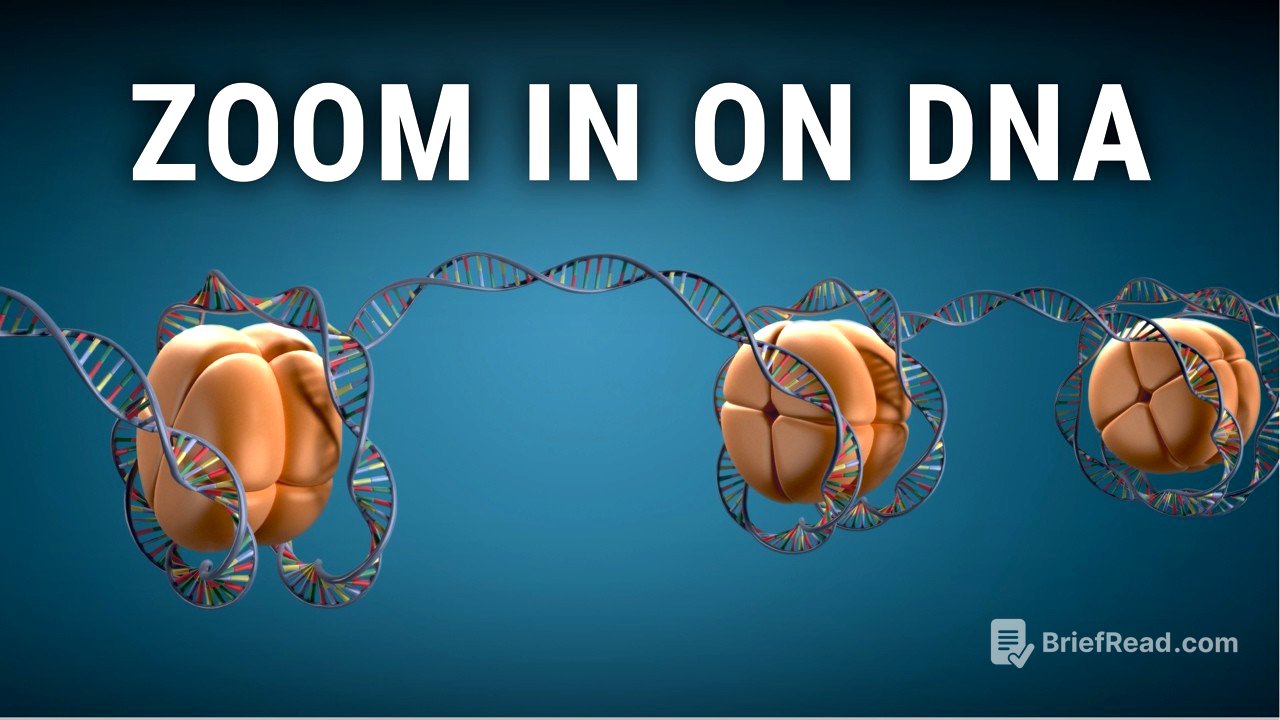
Within each cell, there are structures and compartments called organelles, including the cell membrane, mitochondria, and the nucleus. The nucleus contains 23 pairs of chromosomes, including the pair that determines biological sex. Each chromosome is a long, tightly coiled strand of DNA, which is wrapped around proteins called histones. Unwound, DNA is revealed as a double helix, resembling a twisted ladder.
Genetic Code and Genome [1:42]
DNA is composed of four nucleotides containing different bases: adenine (A), cytosine (C), guanine (G), and thymine (T). A always pairs with T, and C always pairs with G. The sequence of these bases in specific sections of DNA, called genes, carries the instructions for a cell's structure and function. The entire set of DNA instructions for an organism is known as the genome. The genome, organized in chromosomes within the nucleus, instructs each specialized cell on how to function with its neighbors to form tissues, organs, and organ systems, ultimately enabling an organism to grow and live.