TLDR;
This video discusses the potential economic repercussions of the conflict in the Middle East, even if a ceasefire is achieved. It highlights the extensive damage to energy infrastructure, the rising costs of reconstruction, and the impact on global economies, particularly in South Asia, with a focus on India. The analysis includes insights from independent energy reports and financial institutions like Goldman Sachs and IMF, addressing concerns about inflation, reduced economic growth forecasts, and the potential for a global food crisis due to disrupted supply chains.
- Middle East conflict's energy infrastructure damage requires $1.8 trillion NTD for recovery.
- India's economic growth forecast lowered due to heavy reliance on Middle Eastern energy imports.
- Global economic growth faces downward revision and increased inflation due to the conflict.
US-Iran Talks and Global Economic Impact [0:00]
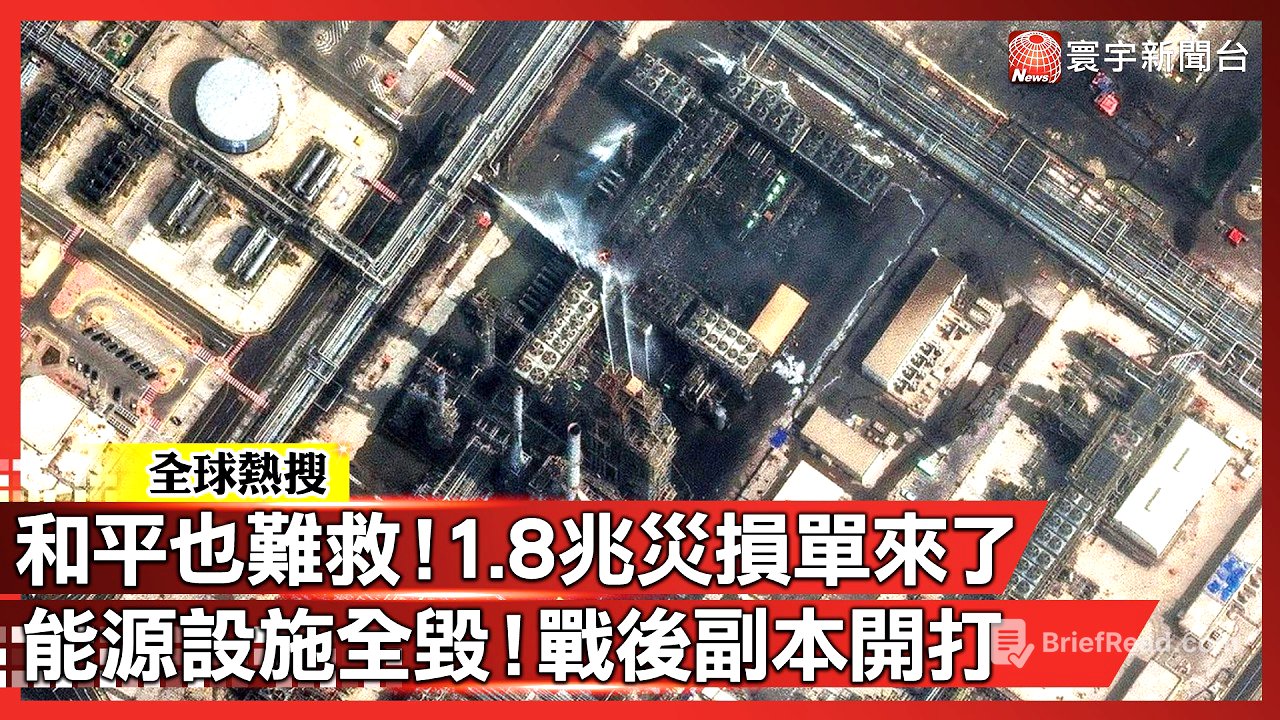
The United States and Iran have shown signs of returning to the negotiation table, potentially leading to a peace agreement. While this is positive news for global financial markets, the damage inflicted on the energy sector during the conflict cannot be quickly reversed. An independent energy company report estimates that the Middle East conflict has caused at least 1.8 trillion NTD in regional energy damage.
Costs of Energy Infrastructure Repair [0:47]
The cost to repair oil and gas facilities is estimated at 1.6 trillion NTD, with the remaining funds allocated to restoring the electrical infrastructure in Gulf countries. Iran faces significant infrastructure damage, including natural gas processing plants, power plants, and export facilities, requiring an estimated 600 billion NTD for energy reconstruction. Qatar's liquefied natural gas facilities have also been severely damaged, leading to the suspension of oil and gas expansion projects and increased project costs.
Broader Economic Consequences and Impact on India [1:43]
Experts warn that the actual cost of the conflict exceeds the 1.8 trillion NTD reconstruction estimate. Repair efforts will not generate new production capacity but will only reallocate existing resources. The resulting capital shift and cost increases may cause project delays and push inflation beyond the Middle East. Financial analysis firms, including IIF and Goldman Sachs, have lowered economic growth forecasts for various countries. South Asia, particularly India, is expected to be severely affected due to its close economic ties with Middle Eastern countries.
India's Economic Challenges [2:39]
Indian officials acknowledge that the damage from the conflict is comparable to the COVID-19 pandemic, leading to a widening fiscal deficit, a declining rupee, and a severe energy shortage. It may take several years for the Indian economy to recover, assuming the U.S. and Iran achieve peace soon. While Indian government forecasts project a 7.2% annual growth rate, Goldman Sachs estimates a more conservative 5.9%.
India's Mitigation Efforts and Dependence on Middle Eastern Energy [3:31]
The Indian government has implemented several relief measures, including reducing equipment oil taxes, establishing a $6 billion stabilization fund, and providing $270 billion in credit guarantees for small and medium-sized enterprises. India is the world's third-largest oil consumer, with over 90% of its oil and gas imports originating from the Middle East and passing through the Strait of Hormuz. The reconstruction efforts in the Gulf countries are crucial for India's economic future and the well-being of its 1.4 billion citizens.
US Maritime Blockade and China's Role [4:46]
The U.S. has implemented a maritime blockade, and China has criticized this action, stating that it undermines the fragile ceasefire. The U.S. proposed that Iran suspend all nuclear-related activities for 20 years, while Iran suggested a suspension of three to five years. U.S. Treasury Secretary Bentsen criticized China for hoarding oil and restricting exports during the Middle East conflict, comparing it to the hoarding of medical supplies during the COVID-19 pandemic.
IMF's Economic Warning and Global Impact [5:54]
The International Monetary Fund (IMF) is set to revise global economic growth forecasts downward, with Managing Director George Ieva noting that indicators point to high inflation and low economic growth. The IMF had initially planned to increase the economic growth rate to 3.3%, but these plans have been disrupted. Even if the U.S.-Iran conflict ends promptly, the IMF will likely increase inflation expectations and lower growth rates.
Economic Consequences of the Strait of Hormuz Blockade [6:56]
The blockade of the Strait of Hormuz has significantly reduced global oil supply, increasing oil prices and disrupting supply chains for helium (needed for semiconductors) and fertilizer for crops. Goldman Sachs identifies Asian countries as being most at risk, and prolonged disruptions could lead to a severe food crisis. Many countries rely on energy imports, and poorer nations are already seeking international aid. This crisis may force significant changes in the global energy structure.