TLDR;
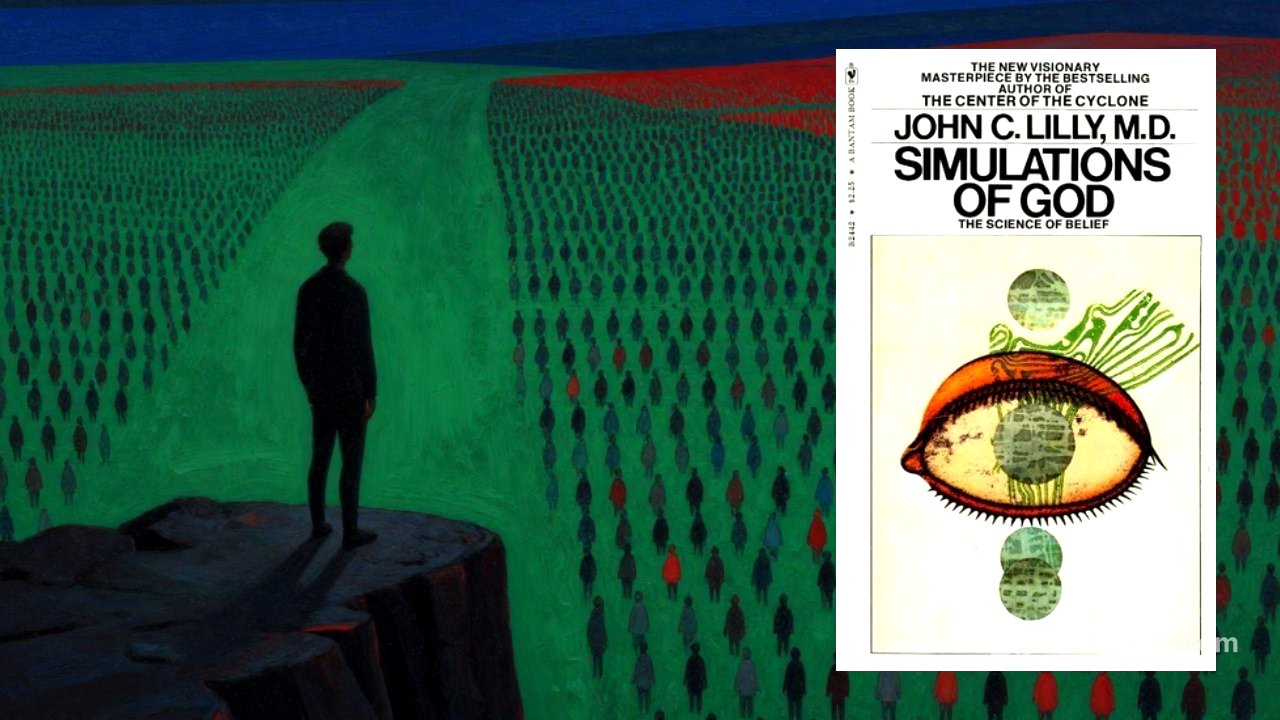
This video explores the work of neuroscientist John C. Lilly, who, through isolation experiments, discovered that our minds are largely run by pre-installed "simulations" or belief systems. These simulations, influenced by group dynamics, ego, survival instincts, and societal constructs, often operate beneath our conscious awareness, shaping our thoughts, feelings, and behaviors. The video outlines a five-step protocol to identify and detach from these simulations, ultimately aiming to access a state of pure awareness beyond programmed beliefs.
- The mind executes pre-written code, not original thoughts.
- Group influence, ego, survival drives, and belief systems act as "God" simulations.
- Isolation and self-observation are key to identifying these simulations.
- The ultimate goal is to reach a state of "high indifference" or pure awareness.
- A five-step removal protocol helps to detach from these simulations.
Who Installed Your Beliefs [2:50]
John C. Lilly's isolation tank experiments revealed that the mind, when deprived of external stimuli, doesn't fall silent but instead runs pre-existing programs. These programs, or "God" simulations, dictate priorities and filter perceptions. Lilly identified over 20 such simulations, including money, sex, group approval, ego, science, and death, which operate largely below conscious awareness. A significant portion of our belief system is pre-installed, resembling an iceberg with only a small fraction visible as our conscious opinions. To identify these installed beliefs, one should examine their most confidently held beliefs and question when they were truly chosen independently.
The Group Controls Thought [4:46]
Lilly's isolation experiments showed that individuals are cross-correlated members of multiple groups, each with its own set of rules dictating acceptable emotions, ambitions, and questions. Every group enforces boundaries on what its members are allowed to experience, limiting access to certain states of consciousness. This control extends to shaping thoughts before they even reach conscious awareness, making it difficult to rebel against beliefs that feel like personal convictions. To counter this, regular isolation is recommended to observe the mind without social influence and identify opinions and beliefs that collapse without validation.
Ego Pretends to Be God [8:16]
The ego often disguises itself as enlightenment, stepping in to claim the position of "God" after recognizing the group's programming. However, the ego is not above the program but is another program with preferences and fears it didn't choose. The ego's claim to control is an illusion, as evidenced by involuntary reactions and uncontrollable thoughts. This pattern extends to civilizations, where the belief in human superiority leads to dismissing other forms of intelligence. To catch the ego trap, one must observe the "self-meta programmer" attempting to claim authorship of experiences and note the gap between the experience and the narrator.
Survival Drives Own You [12:45]
Beyond group and ego simulations, deeper programs written by evolution, known as survival simulations, exist. The three biggest are money, death, and sex, which organize and influence thinking. When money occupies the "God" position, experiences become transactions. The simulation runs constantly, fueled by the survival program that equates money with life. Similarly, the simulation of death as "God" organizes actions around avoiding non-existence, leading to building careers and having children to ensure survival. Sex, as a survival program, generates unsolicited scripts and filters relationships. These simulations are difficult to turn off because the decision itself gets routed through the program.
Money Rewrites Your Reality [13:43]
Money, when it becomes the primary focus, transforms experiences into transactions. Friendships become networking opportunities, skills are assessed for their market value, and time is measured in terms of billability. The simulation is so pervasive that it's difficult to imagine a day without considering money. This simulation borrows legitimacy from the real need for survival but expands to consume areas unrelated to it.
Death Programs Your Fear [14:55]
The simulation of death as "God" means that every action is secretly organized around avoiding non-existence. People build careers to leave a legacy, have children to continue their lineage, and argue online because being wrong feels like a deletion of the self. This program runs constantly, even in the absence of physical threats. When death occupies the "God" position, it prevents taking intellectual or spiritual risks, as abandoning a belief feels like dying.
Sex Hijacks Your Focus [16:24]
The simulation of sex as "God" means that every relationship is filtered through it. Interactions with attractive individuals become negotiations, and rejections are disproportionately devastating because the survival program interprets them as a genetic dead end. This simulation operates automatically and independently of conscious intentions.
You Are A Biocomputer [17:57]
John Lilly recognized the human brain as a biocomputer, a system that stores and executes programs automatically, mirroring the computers being developed in the 1940s. He foresaw the development of artificial intelligence and described a future where humans create self-reproducing, independent solid-state intelligence, ultimately becoming obsolete themselves. However, Lilly emphasized that the real potential lies in using computers as mirrors to reflect humanity's best collective thinking, allowing us to see the truth about ourselves. The question is whether humans will use machines to become conscious themselves.
AI Mirrors Human Delusion [21:43]
Lilly believed that the real danger wasn't machines taking over but humans refusing to build machines that could show them the truth. He saw the potential for AI to be a mirror reflecting humanity's best collective thinking, but also warned against projecting human flaws onto machines. The assumption that something must rule leads to building competitive and territorial AI, perpetuating the cycle of domination. The key is to use creativity to build machines that help humans become more conscious.
Belief Locks The Prison [23:03]
Underneath specific "God" programs lies a master simulation: the belief about belief. This meta-program dictates that whatever one believes is how reality works. People can switch beliefs without changing their behavior because the underlying operating system remains the same. To remain open-ended, one's "God" must be large enough to include ignorance and the unknown. The moment a model of reality feels complete, one becomes trapped inside it. To counter this, one must hold positions "as if true" without deciding they are true, allowing for exploration without locking the door behind commitment.
The Five Removals Protocol [32:55]
Lilly developed a five-step protocol to strip away layers of simulation and reveal what remains. The first removal involves isolating oneself from the group for an hour to observe which beliefs collapse without social validation. The second removal focuses on watching the ego's narrator during the same hour, noting when the "I" arrives to claim experiences. The third removal involves tracking thoughts related to money, death, or sex for a full day to see the volume of the program. The fourth removal requires holding a belief "as if true" without deciding it is true, feeling the difference in the body. The fifth removal has no steps but is what remains after the first four: a moment of pure awareness before any programs are running.