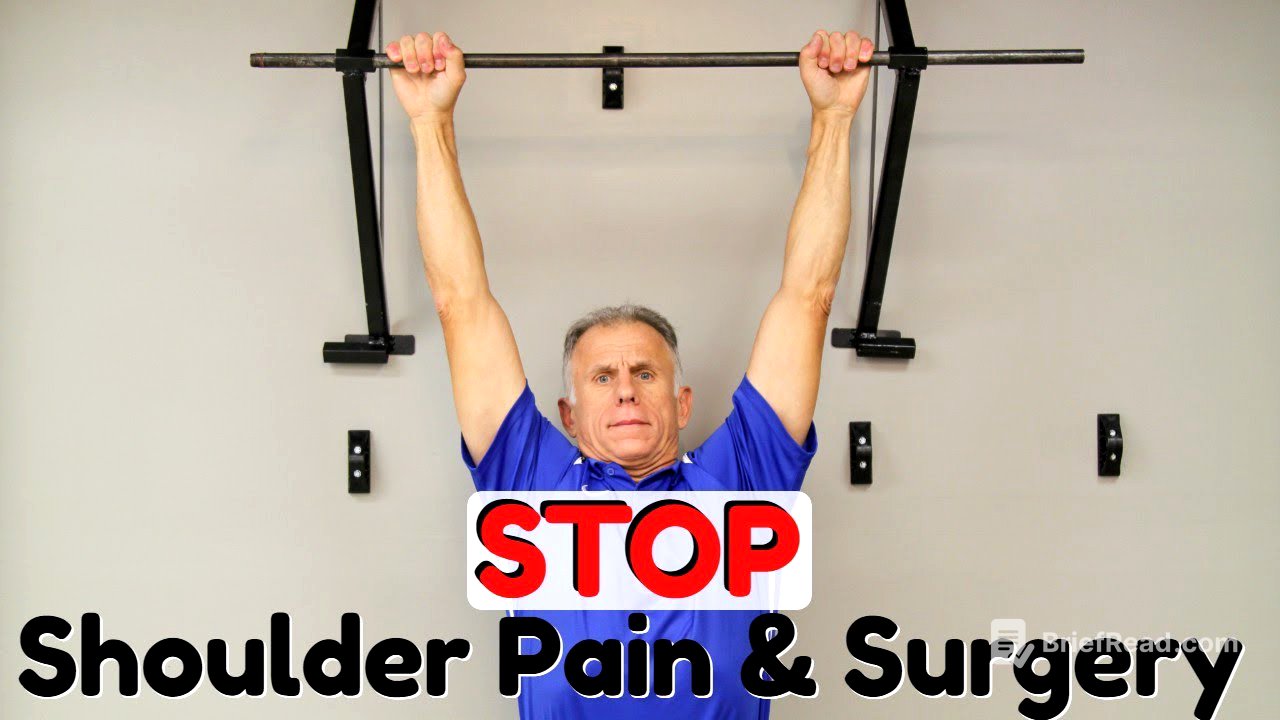
TLDR;
Bob and Brad discuss how hanging can alleviate shoulder pain and potentially prevent surgery, drawing insights from Dr. John M. Kirsch's book. They explain the mechanics of shoulder impingement, how hanging can remodel the shoulder structure, and the importance of scapular movement. They also provide practical advice on how to start hanging safely, including partial hangs and proper technique, while noting additional benefits such as back decompression.
- Hanging can alleviate shoulder pain and potentially prevent surgery.
- Hanging helps remodel the shoulder structure and improve scapular movement.
- Start hanging safely with partial hangs and proper technique.
Introduction [0:00]
Bob and Brad introduce the topic of how hanging can stop shoulder pain and surgery, expressing initial skepticism that turned into appreciation after a viewer recommended Dr. John M. Kirsch's book on the subject. They encourage viewers to subscribe to their channel for daily videos on health, fitness, and pain relief, and to participate in their giveaways.
Understanding Shoulder Impingement [2:53]
The most common cause of shoulder pain is subacromial impingement syndrome (SIS). Impingement can lead to rotator cuff tears. Pain when reaching up or experiencing a painful arc syndrome are indicators that hanging may help.
The Mechanics of Hanging [3:33]
The acromion bone and coracoid process connected by a ligament, create a space where impingement occurs. Hanging remodels this area, opening up the gap and reducing impingement, potentially avoiding surgery which involves grinding bone and cutting tissue to create more space. Hanging also promotes shoulder blade motion, which is essential for full shoulder movement.
How to Hang Safely and Effectively [6:17]
To start hanging, use a pull-up bar and begin with partial hangs, using a stool if needed to reach the bar. Aim for 10-30 seconds initially, with a minute or two of rest in between. Focus on relaxing the entire body except for the grip. Gloves or golf clubs can be used to improve grip. Grab the bar with palms facing away. As you progress, incorporate relaxed swinging motions. Dr. Kirsch recommends doing this for 10-15 minutes.
Additional Benefits and Considerations [9:21]
Hanging can also provide traction and decompression for the back. It's important to use personal judgment and listen to your body when determining how long to hang.