TLDR;
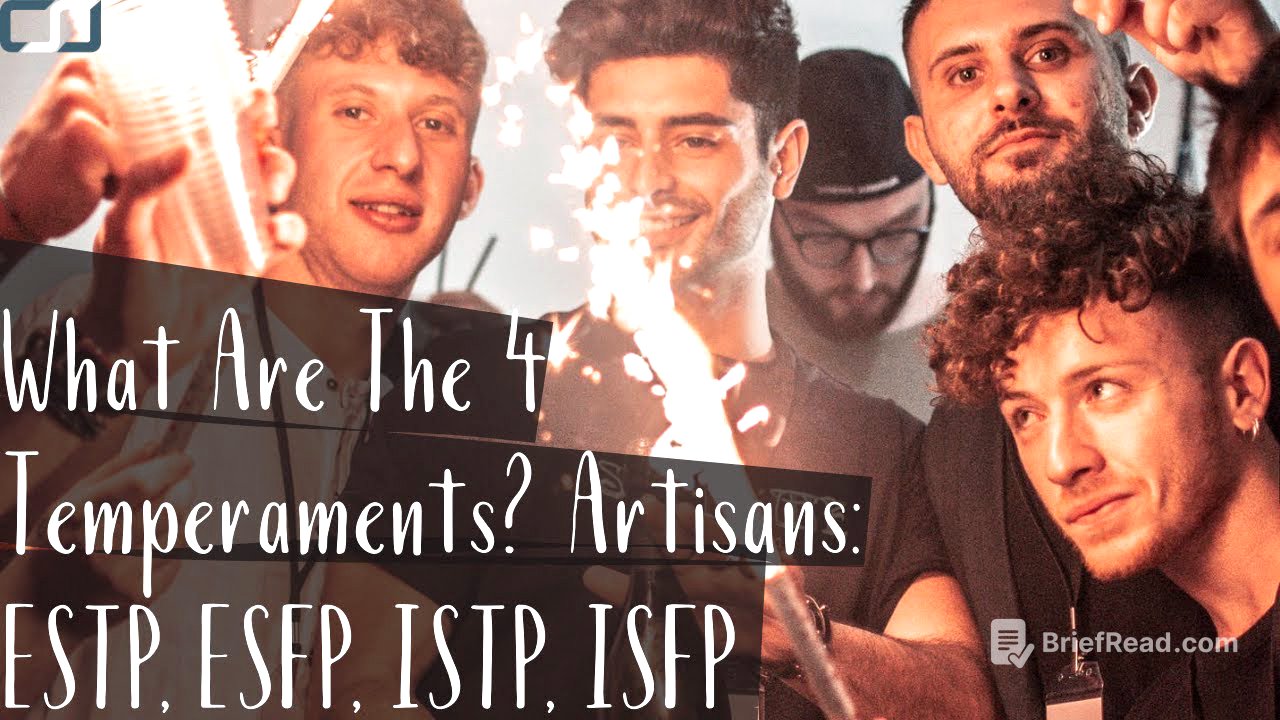
This video discusses the Artisan temperament, specifically focusing on the SP types (ESTP, ESFP, ISTP, ISFP). Artisans are characterized as freedom-based creators with strong creative abilities and mechanical awareness. They thrive in the moment and prefer choices that allow for spontaneous decision-making. The summary explores their behavioral traits, relationships with SJ types, and how these interactions impact their lives and societal perceptions.
- Artisans are creative, freedom-oriented individuals skilled in manipulating their physical environment.
- SP types make up 30% of the world's population, focusing on present experiences rather than abstract theories.
- Relationships between SP types and SJ types (Guardians) are particularly compatible due to complementary traits.
Introduction to the Artisans [0:00]
Chase introduces the Artisan temperament, also known as the SP types in the context of MBTI (Myers-Briggs Type Indicator). He describes them as freedom-based creators who possess mechanical awareness and thrive on creating and manipulating their environments through hands-on activities. These types include ESTP, ESFP, ISTP, and ISFP, all of whom live in the moment and prioritize what they want over what they should do.
Understanding SP Types [1:00]
SP types are defined by their desire for autonomy and choice. Chase emphasizes that they have a sense of duty similar to SJ types but this is more unconscious. SPs are driven by their willpower and motivation to seek immediate gratification in experiences, making choice a vital component in their upbringing and relationships.
Population Dynamics of SP Types [2:00]
Chase notes that SP types make up 30% of the global population, while SJ types constitute the majority at 70%. This population distribution highlights the practical and sensory-focused nature of SPs, who are less interested in abstract theories compared to their SJ counterparts.
Decision-Making and Reactivity [3:00]
Artisans make decisions based on immediate logic or morality, often prioritizing real-time reactions over strategic planning. Chase explains that SP types have a tendency to react quickly in confrontational situations with a focus on fairness and honesty, contrasting with the more calculated approaches of SJ types.
SP Types and Their Relationships [4:00]
The video examines how SP types and SJ types interact, especially within personal relationships. Chase highlights that while SPs are spontaneous, SJs planned out their lives meticulously. Their compatibility arises because SPs often provide experiences that SJs are craving, creating a harmonious balance between freedom and structure.
Artisans in Society [5:00]
Chase discusses societal biases towards SP types, particularly focused on their perceived masculinity and practical skills compared to intellectuals. He points out the cultural expectation for men to possess practical abilities, which leads to a societal undervaluation of intellectual pursuits.
Emotional Expression and Resolution [6:00]
Artisans are described as reactive and sensitive, particularly when facing conflict. Chase emphasizes the importance of allowing SP types to express themselves in the moment. He suggests that a way to manage their emotional outbursts is often simply to wait them out, as they eventually forget grievances because they live so present-focused lives.
Conclusion on Artisans [7:00]
In concluding, Chase reiterates the significance of freedom and creativity for SP types, highlighting their versatility in various crafts and professions. He suggests that understanding their temperament can foster better interactions and relationships between different personality types, particularly with SJs.