TLDR;
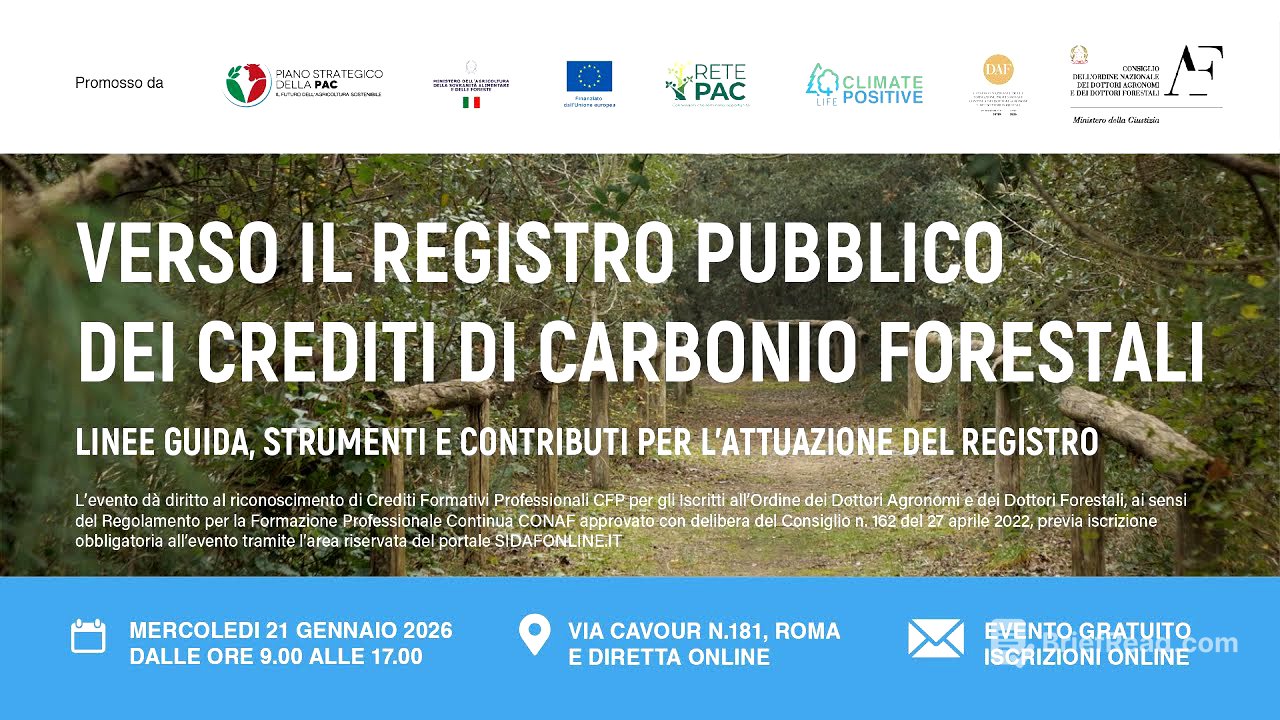
This YouTube video presents the annual report on the state of the voluntary carbon credit market, emphasizing new perspectives following the approval of guidelines for the new national carbon credit registry. It highlights the importance of credible carbon credits versus green washing, and discusses the EU's role in establishing a European registry for the voluntary carbon market. The video also covers the challenges and opportunities in the carbon credit market, including the need for standardized certification methodologies, transparent regulations, and the integration of agricultural and forestry activities.
- The Crea's role in monitoring the voluntary carbon credit market since 2013.
- The importance of institutionalizing a market with clear rules to ensure credibility and prevent green washing.
- The EU's efforts to establish a European registry for the voluntary carbon market by 2028.
- The challenges and opportunities in the carbon credit market, including the need for standardized certification methodologies and transparent regulations.
Introduction and Objectives [0:00]
Ruomano from Crea introduces the annual report on the voluntary carbon credit market, highlighting its publication since 2013. The event combines the market report with new perspectives arising from the approval of guidelines for the national carbon credit registry. He thanks the Rete Rurale and the Life Climat Positive project for their support, emphasizing the Ministry's ongoing oversight. The goal is to foster dialogue with sector operators regarding the registry's new developments, as outlined in the November-approved guidelines.
Ministry's Perspective on the Carbon Credit Market [2:36]
The Director General of Forests acknowledges Crea's support in the effort to establish the carbon credit registry. He mentions the hard-won decree on registry guidelines from October and ongoing work on enrollment and control procedures. The aim is to ensure certainty and transparency in the carbon credit system, facilitating the commercialization of carbon credits. He notes the market's current success and the intention to quickly implement the registry, addressing confusion and aiming for a robust certification scheme.
Clarifying Misunderstandings and the Role of Crea [5:58]
The moderator addresses misunderstandings about the carbon credit market, emphasizing that it predates the 2023 law. This law aims to systematize the existing market, following the lead of other European countries. The Crea has been working with key operators to define voluntary rules, such as the Carbon Forestry Code, to ensure the credibility of carbon credits. The national registry is the culmination of these efforts, aligning with the EU's 2024 regulation for a European registry. The goal is to differentiate between credible credits and green washing.
Crea's Commitment to Future Sustainability [8:00]
Alessandra Pesce from Crea PB expresses excitement about the event and the organization's investment in the topic, viewing it as forward-looking. She sees the day as a step in a long-term journey involving progressive knowledge and system integration. Certification is viewed as key to credibility, and regulation is essential for market stability. She highlights the importance of balancing supply and demand transparently, aiming for sustainability and a positive future for future generations.
Presentation of the Carbon Credit Market Report [12:24]
Teresa Grassi presents the latest report on forestry and sustainability projects in Italy for 2023-2024. The Nucleo Monitoraggio Carbonio, established in 2011, analyzes carbon credit governance, volumes, prices, and certification standards. Data is collected via online questionnaires, divided into sections for developers and buyers. The report analyzes data from 50 responses, detailing carbon sequestration, commercialization volumes, and average prices for 2023 and 2024.
Analysis of Project Developers and Buyers [17:57]
The report analyzes the roles of project developers, mainly as project leaders, owners, or managers, with sustainable forest management as the primary activity. PFC is the most used certification standard. Buyers express interest in purchasing credits from agricultural and forestry projects, aligning with their compensation needs and emission reduction plans. Many companies plan to purchase credits by 2026 and 2030, with a preference for projects generating additional ecosystem services.
Market Trends and Concluding Remarks [20:51]
The analysis of the market since 2011 reveals increasing participation despite quality concerns and a lack of regulation. A stall in 2023 is attributed to critical articles and anticipation of the national registry. Buyers still prefer internationally certified credits from abroad. The report concludes that domestic projects lack third-party certification and face high costs. However, domestic credits command higher prices, indicating a preference for local initiatives. The implementation of the national registry is expected to enhance the value and credibility of Italian carbon credits.
European Framework and National Registry [23:50]
The presentation transitions to a broader European context, introducing Dr. Volpi from DG Clima. The establishment of a national registry is expected to significantly improve the quality and value of carbon credits. While Italy has been slow to enact legislation for a national registry, the EU has also begun working on a regulation for credits generated from agroforestry activities. The national registry currently focuses on forestry, with ongoing efforts to develop methodologies for the agricultural sector. The European registry is projected to launch in 2028, following the release of delegated decrees.
EU Regulation on Carbon Removals: An Overview [27:25]
Dr. Volpi presents the EU's Carbon Removal Certification Framework (CRCF), which aims to address divergent rules and build investor confidence. The framework is based on three pillars: standardized certification methodologies, a certification system, and a European registry. Methodologies are developed by an expert group and adopted through delegated acts, focusing on quantification, additionality, long-term storage, and sustainability. The framework covers permanent, industrial carbon removals, carbon farming, and carbon storage in long-term products.
Implementation and Future Steps of EU Regulation [31:49]
The EU is developing certification methodologies for permanent carbon removals (BioCCS, biochar) and carbon farming (soil management, agroforestry, peatland restoration). A regulation defining the rules for the certification system has been approved, with the Commission set to recognize certification schemes. A European registry will track certified carbon units. The first certification projects are expected to begin next year, with the registry operational by 2028. The EU is also considering a buyers club and a revision of the regulation to include methane emission reductions and industrial removals.
Alignment and Future Opportunities for Italy [44:03]
The Italian system is already well-aligned with the EU regulation. The upcoming delegated acts on sustainable forest management and long-life products are anticipated. The EU is also developing a biodiversity certification system. The Italian national registry aims to recognize the role of sustainable forest management and promote the forest-wood supply chain. The opportunity to sell credits is seen as a value-added for sustainable management and wood production.
Comparative Analysis of European Domestic Markets [50:34]
Saverio presents an analysis of European domestic carbon markets, focusing on the UK, Germany, Spain, France, and Portugal. These markets are managed by national entities with specific rules and standards. The analysis covers activities, baseline methodologies, additionality criteria, permanence requirements, and certification schemes. The study reveals that Italy is well-positioned in terms of alignment with the EU regulation, particularly in additionality and baseline methodologies.
Baseline Methodologies and Permanence [54:44]
The analysis highlights differences in baseline methodologies across European countries. Some countries, like France, use innovative but questionable methods, while others lack transparency. Italy, along with the UK and Portugal, aligns more closely with the EU regulation. In terms of permanence, Italy is more conservative, avoiding the risky practice of ex-ante sales. The UK has long-term projects but uses pending units, while Portugal employs an insurance system.
Certification Schemes and Final Considerations [1:01:29]
The presentation discusses certification schemes, noting that Italy will develop a scheme based on national guidelines, with plans to align with the European scheme later. Other countries have varying approaches, with some lacking robust accreditation processes. Italy and the UK are more aligned with the EU regulation in this area. The analysis concludes that Italy is well-aligned with the fundamental principles of the EU regulation, but work is needed on the certification scheme.
Discussion: Credibility, Human Action, and Forest Management [1:06:54]
The discussion emphasizes that carbon credits are generated by human action, specifically forest management, rather than simply by photosynthesis. Sustainable forest management enhances the forest's capacity to absorb carbon. The sale of ex-ante carbon credits is considered a high risk for green washing. Italy has chosen a 5-year minimum management unit to ensure credibility. Managing a forest involves improving carbon absorption, protecting biodiversity, and mitigating risks from extreme events.
Questions and Answers: Registry Activation and Certification [1:12:19]
The timeline for activating the registry is discussed, noting the release of guidelines in 2025 and ongoing work to publish a second decree. The integration of the registry into the national agricultural information system is underway. The completion of the regulatory framework at the European level is necessary to ensure the validity of the certification scheme. The discussion also touches on the importance of aligning with EU standards and the need for a clear understanding of the certification process.
Discussion: Carbon Neutrality and Additionality [1:17:06]
Laura Severino from Rina emphasizes the importance of adhering to the ISO 140681 standard for carbon neutrality, which does not recognize ex-ante credits. She suggests that ISO 17029 is the appropriate standard for third-party project activities, rather than ISO 17065. She also seeks clarification on financial additionality, which involves improving carbon absorption and providing an anthropogenic contribution.
Discussion: Financial Additionality and Green Marketing [1:21:07]
Saverio explains that financial additionality means that the economic return from carbon credits makes the project economically sustainable, bridging the gap between expenses and revenues. It's suggested that companies interested in buying credits can enter into contracts with landowners, providing resources for project implementation in exchange for a pre-emption on future credits. This approach supports sustainable projects and allows companies to market their involvement in territorial protection.
Discussion: Offtake Agreements and Green Washing [1:25:00]
Sara Antonini from Intesa San Paolo discusses the use of offtake agreements and pre-purchase agreements to finance carbon credit projects. These agreements can provide economic benefits for buyers and capital for projects, but also pose a risk of green washing. It's emphasized that companies buying credits should demonstrate a commitment to emission reduction. The discussion also highlights the importance of recognizing the role of sustainable forest management and the value of local projects.
Discussion: Certification Costs and Technical Expertise [1:32:46]
Daniele Gambetti raises concerns about the costs of certification and the need for technical expertise. He questions the role of certification bodies and the potential for standardization to disadvantage smaller properties. It's emphasized that the role of the agronomist and forestry expert remains fundamental in creating management plans and that the certification body will verify the calculations and methodologies used. The discussion also touches on the importance of associationism and the need for a management approach that considers carbon sequestration.
Discussion: Insurance and Sustainable Forest Management [1:39:26]
Lucio raises the topic of insurance as an alternative to buffer credits, which is being considered in Portugal. It's noted that the buffer varies depending on the risk of the area. The discussion emphasizes the importance of sustainable forest management and the need to adapt to climate change. It's also highlighted that the Italian forest surface is mostly privately owned and fragmented, which poses a challenge for management.
Toolkit for Promoting Associationism Among Forest Owners [1:45:43]
Mauro Masero presents a toolkit developed by the Life Climate Positive project to promote associationism among forest owners. The toolkit addresses the challenge of fragmented land ownership, which hinders active forest management. It offers a 10-step guide for creating or strengthening associations, covering topics such as existing models, legal frameworks, funding opportunities, and certification. The toolkit aims to support sustainable forest management and the valorization of ecosystem services.
Key Steps and Resources in the Toolkit [1:49:31]
The presentation highlights key steps in the toolkit, including identifying existing models for aggregating forest owners, formalizing associations, and securing funding. The toolkit provides resources such as model statutes, FAQs, and video tutorials. It also emphasizes the importance of planning and the role of forest professionals. The toolkit promotes certification, the valorization of ecosystem services, and the long-term sustainability of forest initiatives.
Accreditation and Conformity Assessment [2:01:56]
Carla Sanz from Accredia provides an overview of accreditation and conformity assessment. Accredia is the Italian accreditation body, responsible for ensuring the competence and impartiality of conformity assessment bodies. The presentation explains the concepts of object of conformity assessment, specified requirement, and scheme of conformity assessment. It also outlines the different types of conformity assessment bodies and the relevant standards.
Accreditation and the EU Regulation [2:09:56]
The presentation discusses the EU regulation 2012/30, which emphasizes the role of accreditation in the certification of carbon removals. The regulation specifies that certification bodies must be accredited according to ISO 17065 and may also perform verification activities according to ISO 17029 and ISO 14065. The presentation also highlights the importance of a robust certification scheme and provides guidance on developing such a scheme.
Carbon Tool for Assessing Credit Generation Potential [2:16:51]
Ugo Chiavetta presents a Carbon Tool developed within the Climat Positive project to assess the potential for generating carbon credits. The tool aims to simplify the complexity of the topic and provide an intuitive interface for analyzing credit generation potential. It allows for the comparison of different scenarios and estimates biomass using readily available data. The tool supports associationism by helping to demonstrate the potential of forests for generating carbon credits.
Methodology and Functionality of the Carbon Tool [2:23:04]
The Carbon Tool is based on four main scientific principles: afforestation and reforestation, combating deforestation, promoting the use of durable forest products, and improving carbon stock through sustainable forest management. The tool defines a baseline scenario based on regulatory requirements and allows users to apply alternative management strategies to improve carbon stock. It also considers the concept of additionality and the potential for increasing additionality over time.
Application and Availability of the Carbon Tool [2:37:47]
The Carbon Tool can be applied at the particle level or at the level of the entire compresa. It allows users to calendarize the project and generate a report. The tool is expected to be available by the end of the month, and feedback is welcome. The presentation concludes with acknowledgements to the team involved in developing the tool.
Discussion: Tool Application and Baseline Selection [2:42:29]
The discussion addresses questions about the Carbon Tool and the selection of a baseline. It's clarified that the tool is intended for use by forest technicians and that it utilizes a methodology that is consistent with IPCC guidelines. The choice of a normative baseline is justified by the need to comply with European regulations and to incentivize forest management. The discussion also touches on the importance of considering the specific objectives of the management plan and the need to balance carbon sequestration with other forest products and services.
Discussion: Wood Products and Carbon Sequestration [2:54:18]
The discussion emphasizes the importance of using wood products for long-term storage of carbon and the need to reduce emissions. It's clarified that the use of wood for energy is not discouraged, but that it should be done in a way that maximizes the value of the wood. The discussion also highlights the importance of using local wood and the need to consider the entire life cycle of wood products.
Discussion: Imboschimento and Rimboschimento [3:12:42]
The discussion clarifies the distinction between imboschimento (afforestation) and rimboschimento (reforestation). Imboschimento involves planting trees on land that was not previously forested, while rimboschimento involves replanting trees on land that was previously forested. The discussion also touches on the legal restrictions on rimboschimento in areas affected by fire.
Closing Remarks and Future Steps [3:17:09]
The closing remarks thank the participants and highlight the importance of the discussions. It's noted that the themes are transversal and that the group will work to create a communication more opportune. The importance of the Life program is emphasized. The next steps involve a series of small application reports for individual topics.
Summary of Table Discussions and Future Collaboration [3:26:10]
The summary of table discussions highlights the importance of collaboration and the need to define minimum parameters for communication. The discussion also touches on the need for a robust certification scheme and the importance of considering the costs and benefits of different approaches. The importance of the 17029 and 14065 standards was emphasized.