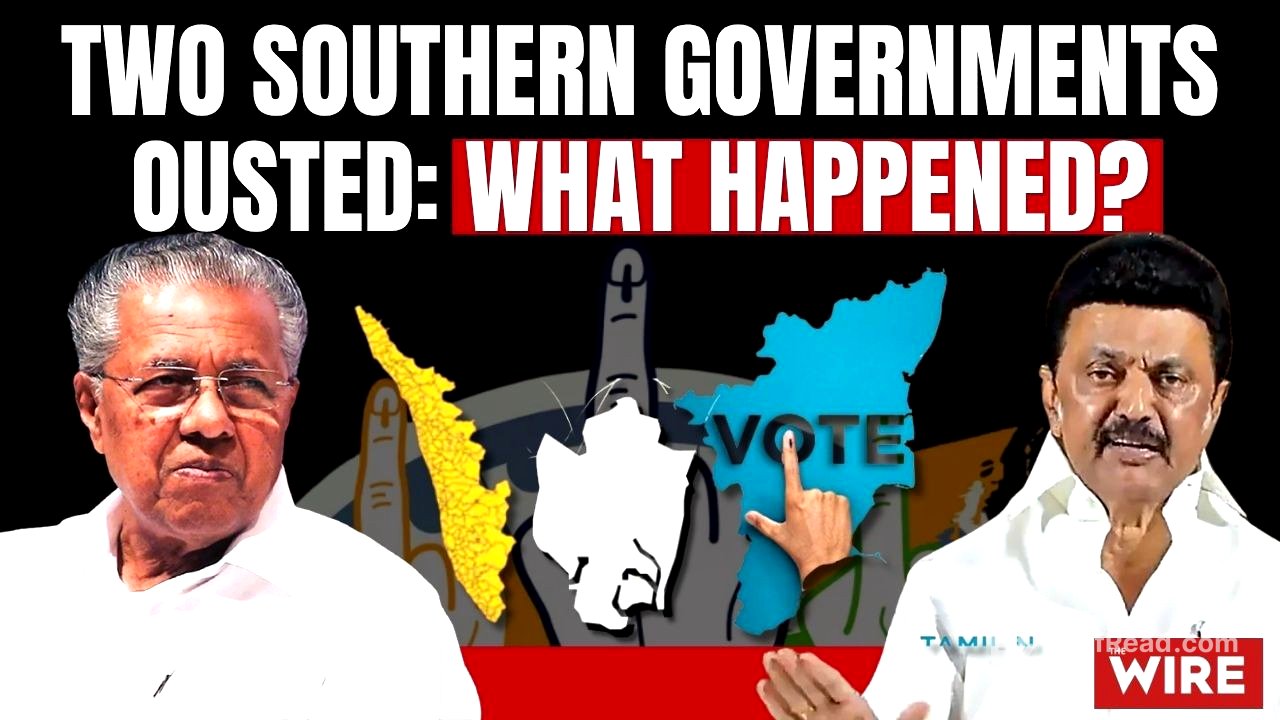
TLDR;
This YouTube video segment from The Wire discusses the surprising election results in the southern states of Tamil Nadu, Kerala, and Puducherry. The panel of journalists and political scientists analyzes the unexpected rise of TVK in Tamil Nadu, the potential reasons behind DMK's decline, and the UDF's victory in Kerala. Additionally, they address the BJP's campaign in Kerala and the depoliticization of student politics in Tamil Nadu. A political scientist raises concerns about the legitimacy of election results in West Bengal due to alleged voter deletions.
- TVK's unexpected surge in Tamil Nadu, potentially leading to a hung mandate.
- DMK's decline attributed to anti-incumbency, nepotism, and failure to resonate with voters on national issues.
- UDF's significant victory in Kerala after 10 years of LDF rule, driven by public anger and anti-incumbency.
- BJP's internal conflicts in Kerala hindering its ability to make a significant impact.
- Concerns raised about the legitimacy of election results in West Bengal due to alleged voter deletions.
Introduction [0:00]
The segment begins by introducing the panel of journalists and political scientists who will be discussing the election results from the southern states and Puducherry. The initial focus is on the surprising results in Tamil Nadu, where the TVK is leading in a significant number of seats.
Tamil Nadu: The Rise of TVK and DMK's Decline [0:20]
The panel discusses the unexpected surge of TVK in Tamil Nadu, with the party leading in 105 seats. Analysts express surprise, noting they missed the anti-incumbency wave and the impact of the younger generation's support for TVK. The DMK is trailing in many constituencies, including that of the Chief Minister, indicating a significant shift in voter sentiment. The DMK's focus on national issues and federalism may not have resonated with the electorate. The DMK's image has been hurt by perceptions of nepotism, cast crimes and corruption.
Kerala: UDF's Victory and BJP's Internal Conflicts [9:45]
The discussion shifts to Kerala, where the UDF is projected to win a significant victory after 10 years of LDF rule. Public anger and anti-incumbency are cited as major factors. The UDF's victory was predicted, but the scale of it was not. The LDF has failed to hold on to its traditional fortresses. The BJP's campaign in Kerala is also examined, with a focus on the party's internal conflicts and its limited impact on the overall results. The BJP is facing a war within itself. The state leaders of the BJP do not like to see eye to eye.
Tamil Nadu: Depoliticization and Vijay's Popularity [22:29]
The panel revisits Tamil Nadu, discussing the depoliticization of student politics and its potential impact on the rise of film personalities like Vijay. The absence of student union politics has created a vacuum filled by film stars. Vijay's popularity is attributed to his connect with women voters. The panel also discusses the potential for Vijay to oppose the BJP, despite his lack of a clear ideology.
West Bengal: Concerns About Election Legitimacy [27:37]
A political scientist raises concerns about the legitimacy of election results in West Bengal due to alleged voter deletions. The process has been skewed against areas and segments of the electorate that were favorable to the triname. The election commission and court system have failed to put an effective adjudication system in place. The changes made to the composition of the electorate have affected the result and cast a great shadow of doubt over the legitimacy of those results.