TLDR;
This YouTube video features a discussion between Jackie Baker and Deon Clark (Clark the Realtor) about the potential impact of banning corporate investors from buying single-family homes, particularly in the Atlanta market. They discuss the high rate of corporate homeownership in Atlanta, the reasons behind it, and the potential consequences for local residents and the housing market. They also touch on related topics such as rental prices, interest rates, and housing affordability.
- Corporate investors own a significant portion of single-family homes in Metro Atlanta, leading to concerns about affordability for local residents.
- There is conflicting information about the actual percentage of homes owned by corporate investors nationwide.
- A potential ban on corporate investors may not have a significant impact on home prices, as it doesn't force them to sell existing properties.
Intro [0:02]
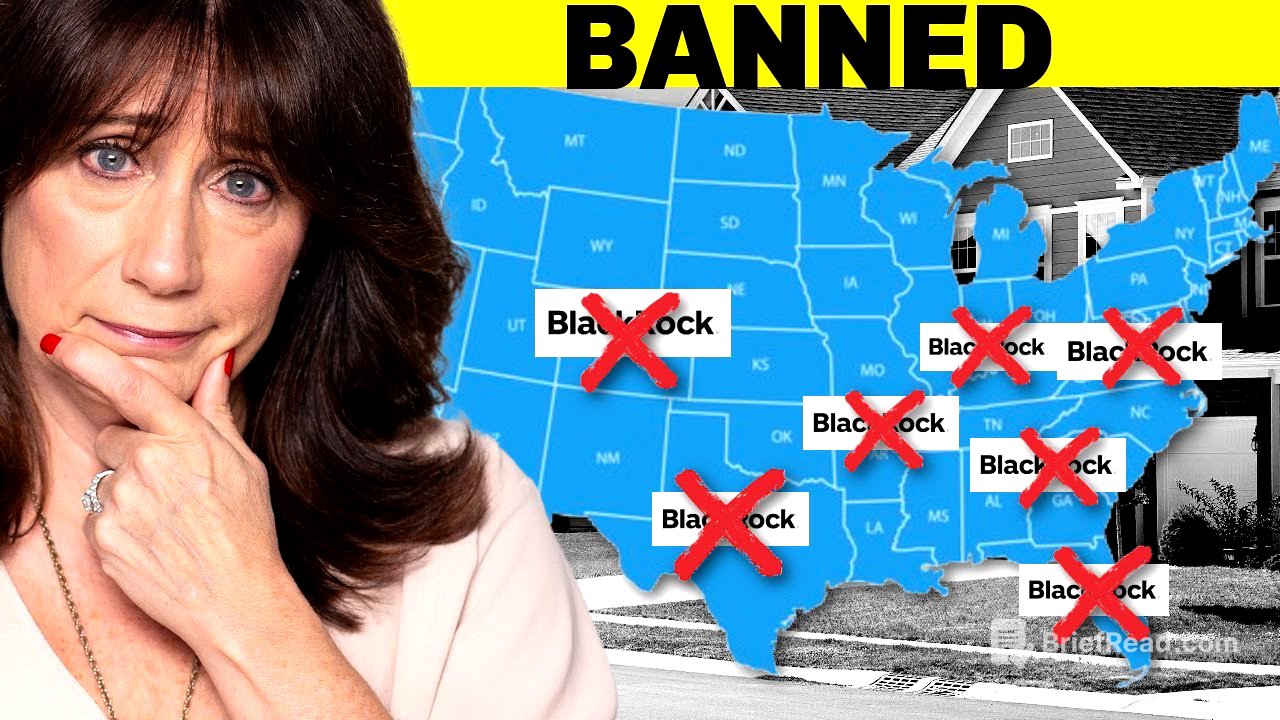
Jackie Baker introduces the topic of President Trump's proposal to ban corporate investors from buying single-family homes. The goal is to provide opportunities for Americans to purchase homes and prevent corporate entities like Black Rock and Blackstone from dominating the market. Deon Clark, an agent in the Atlanta market, joins to share his insights on the impact of corporate investors in the area.
Corporate Home Ownership in Atlanta [1:47]
Jackie shares a report from May of the previous year indicating that Metro Atlanta has the highest rate of corporate home ownership in the nation. Large companies have bought over 70,000 properties across metro Atlanta in the last 15 years, accounting for over 30% of the region's single-family rental properties, which is about 10 times the national rate. Blackstone, Progress Residential, and Amherst Holdings use various names and addresses to obscure their ownership.
Impact of Corporate Investors on the Housing Market [3:52]
Jackie and Deon discuss whether banning corporate investors will impact the housing market and bring home prices down. Deon confirms that corporate investors have been dominating the Atlanta market for at least 15 years. He identifies Invitation Homes, Progress Residential, and Amherst (Main Street Renewal) as major players. These companies own a significant number of properties in specific counties around Atlanta, such as Henry County, where they own about 7-8% of the homes.
Reasons for Corporate Investment in Atlanta [6:33]
Deon explains that corporate investors were attracted to Atlanta due to low prices at the time and a shift of migration to the area. Corporate companies like Google and Microsoft, along with the film industry, were drawn to Atlanta because of tax incentives. This influx of people from other states led investors to buy up properties, increasing prices and making it unaffordable for locals.
Rental Prices and Investor Activity [7:54]
Rental prices vary by county, with Gwinnett County seeing prices between $2,100 and $3,500, while Henry County ranges from $1,700 to $2,800. Deon notes that high rental prices make it difficult for people to save and eventually purchase homes. The total number of units owned by institutional investors in metro Atlanta is about 70,000, but this number may be decreasing as investors silently sell and reorganize their portfolios.
Consequences of Investor Sales [11:32]
The homes being sold by investors are often not well-maintained, leading to price reductions of $20,000 to $150,000 or even $200,000, depending on the area. Many are selling for less than what they bought the properties for two or three years ago, which negatively impacts the equity of other homeowners in the community. While some investors are still buying, they are slowing down and focusing on areas where they can still make a profit.
Debate on the Impact of Banning Investors [14:17]
Jackie and Deon discuss the conflicting information about the percentage of homes owned by investors, with some experts claiming it's only 1%. Deon believes the true number is hidden. They address questions from viewers, including the impact on specific areas like Inman Park and Old Fourth Ward, where condo prices are dropping due to high HOAs.
News Articles on Banning Investors [18:26]
Jackie shares an ABC News article about Trump's proposal to ban Wall Street ownership of homes. Analysts are skeptical that the ban will significantly reduce home prices nationwide, as institutional investors own a small fraction of single-family homes. The article notes that institutional investors own about 450,000 homes, roughly 3% of the single-family market. However, in certain areas like Jacksonville, Florida, and Charlotte, North Carolina, institutions own a much larger percentage of homes.
Truth About Investor Ownership [22:22]
Deon and Jackie express their skepticism about the accuracy of the reported numbers on investor ownership. Deon points out that even if investors are banned from buying, they won't be forced to sell their existing properties. He notes that institutional buyers have slowed down recently and are silently selling to reorganize their portfolios.
Legal and Financial Implications [23:59]
Jackie mentions that her preferred lender believes a ban on corporate investors could face legal challenges. Deon adds that the current situation is ironic, as these investors were encouraged to buy properties during the Great Financial Crisis. The price reductions from investor sales are now negatively affecting the equity of other homeowners.
Condo Market and Interest Rates [25:30]
Jackie and Deon discuss the condo market and interest rates. Jackie notes that she is seeing a slowdown in some areas of New Jersey. She is surprised that there weren't multiple offers on a condo she showed to a client, even with interest rates around 6%.
Taxes and Investor Practices [27:06]
The discussion shifts to potential solutions, such as assessing additional taxes on investor-owned properties. Deon mentions that investors in Atlanta already pay more in property taxes due to the homestead exemption. They also address whether builders sell to investors at a discount, concluding that it's unlikely to be a significant discount.
Agent Responsibilities and Home Inspections [29:28]
Jackie and Deon discuss a situation where a realtor provided a list of inspectors and suggested picking from the top down, resulting in the buyer finding $20,000 in problems. They agree that the inspector is the one who should be held accountable. They also emphasize the importance of agents providing referrals but allowing clients to do their own due diligence.
Neighborhood Safety and Agent Referrals [31:53]
Jackie and Deon advise viewers to research neighborhood safety using resources like citydata.com and niche.com. They stress that agents cannot provide opinions on neighborhood safety and that buyers must make their own decisions. They also discuss the importance of clients being comfortable with their agent and making their own decisions about buying a house.
Interest Rates and Market Competition [33:46]
Jackie and Deon discuss the unpredictability of interest rates. Jackie expresses surprise that interest rates are already at 6% and below, despite analysts predicting mid-6% rates for the year. She worries that lower interest rates will bring more competition and drive prices back up.
Shell Companies and Market Manipulation [35:18]
Deon explains how corporations can circumvent regulations by creating multiple LLCs and using shell companies. He describes how they trade properties between these companies to manipulate prices.
Questions for Prospective Agents [36:38]
Jackie and Deon provide advice on questions to ask prospective agents, including their communication style, market awareness, negotiation skills, and references. They emphasize the importance of interviewing multiple agents and finding someone who communicates effectively.
Impact of Low Interest Rates and Investor Ban [40:43]
Jackie and Deon discuss the impact of low interest rates on homeowners locked in at low rates and whether a war on Black Rock will affect them. They agree that those homeowners are unlikely to sell. They also discuss whether saying "okay, thanks" to a realtor offering to send listings means you're locked in with them, clarifying that a buyer agency agreement is required to be locked in.
Financial Advice and Down Payment Assistance [42:54]
Jackie and Deon advise against buying a new car while in the process of getting a mortgage. They also discuss the possibility of requiring private equity firms to pay into a home buyers program as a form of down payment assistance.
Data Centers and Housing Inventory [44:07]
Jackie and Deon touch on the impact of data centers on housing and infrastructure. They also discuss the low housing inventory in some areas and the need for more affordable housing options.
Right of First Refusal and Rental Communities [45:03]
Jackie suggests allowing American people the right of first refusal on homes before investors can buy them. Deon notes that some companies are building rental communities with single-family houses, raising concerns about the future of homeownership.
Utility Bills and Foreclosure Processes [47:15]
Jackie and Deon share stories about high utility bills and advise viewers to check their meters. They also discuss the foreclosure process and the need for more accessible pathways for end-users to purchase foreclosed properties.
Foreclosure Auctions and Bank-Owned Properties [1:02:00]
Deon explains that foreclosures in Georgia require cash payments at the courthouse steps. Jackie shares her father's experience flipping foreclosed homes in the 90s. They agree on the need to re-examine the foreclosure process to make it more accessible.
Housing Inventory and New Construction [1:05:37]
Jackie and Deon discuss the lack of land for new construction in New Jersey and the abundance of new construction in Atlanta. Deon notes that builders in Atlanta are offering incentives to buyers and agents to boost sales.
Market Trends and Overpriced Flips [1:07:17]
Jackie and Deon discuss market trends in Bergen County, New Jersey, and the prevalence of overpriced flips. They share examples of flips that are selling for exorbitant prices despite questionable locations and features.
Manufactured Homes and Tiny Houses [57:17]
Jackie and Deon discuss the potential of manufactured homes and tiny houses to bring down housing costs. They note that manufactured homes often come with land leases, and tiny homes can be surprisingly expensive.
Final Thoughts on Investor Ban [1:09:33]
Deon reiterates his belief that a ban on corporate investors is unlikely to happen and may not have a significant impact on home prices. Jackie agrees that the burning question is how much they really own. They express their support for the American dream of homeownership and the need to prevent corporations from stealing it.