TLDR;
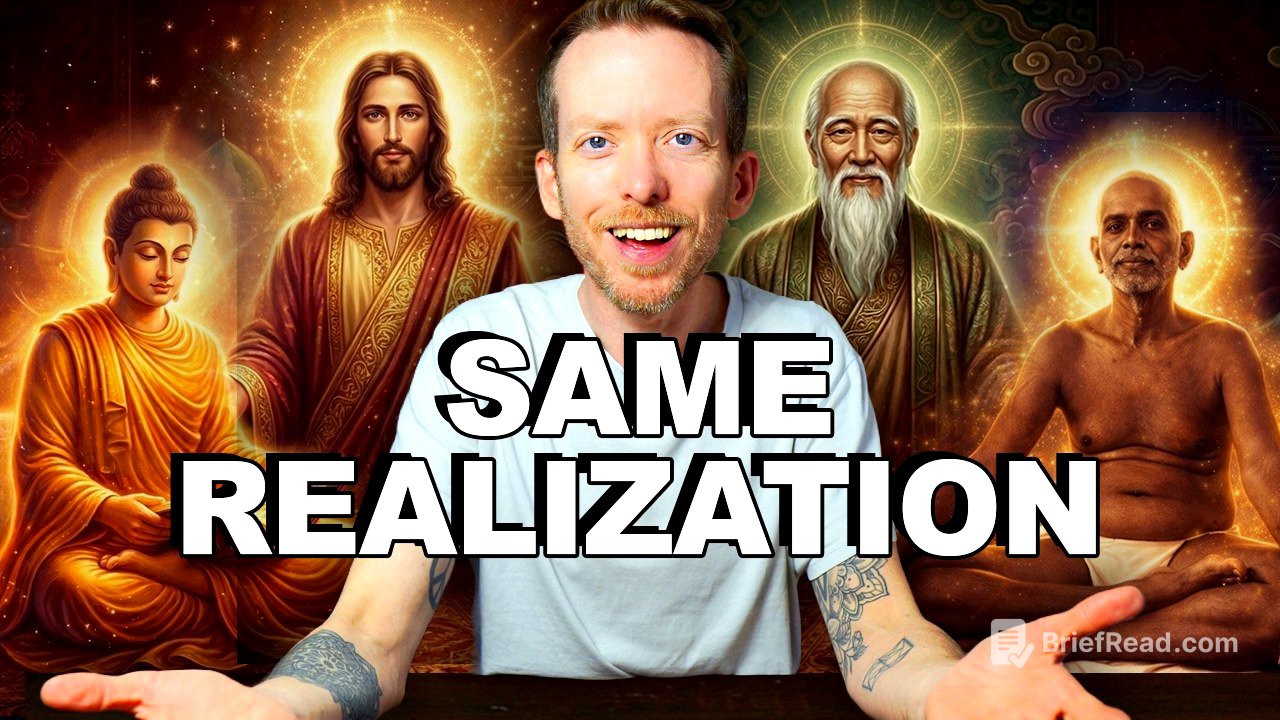
The video explores the recurring theme of self-dissolution and recognition of a deeper, unified reality in various spiritual traditions throughout history. It highlights the teachings of figures like Buddha, Lao Tzu, Jesus, Rumi, and Ramana Maharshi, noting their shared emphasis on transcending the individual self to discover a timeless, unbroken awareness. The video suggests that this convergence across cultures and centuries points to a fundamental aspect of consciousness, inviting viewers to look inward and explore this ground of being for themselves, without the need for religious dogma or belief.
- Dissolution of the separate self
- Recognition of a deeper ground of being
- Convergence across different cultures and religions
- Invitation to explore consciousness directly
Introduction: The Universal Truth in Spiritual Teachings [0:00]
The video introduces the idea that despite being separated by time, geography, and language, the greatest spiritual teachers in history have all discovered the same underlying truth. It posits that these teachers, from various cultures and eras, have independently arrived at a similar understanding of reality. This shared insight suggests a common ground of being that transcends cultural and religious differences.
Siddhartha Gautama: The Illusion of Self [0:12]
In northern India, Siddhartha Gautama, later known as the Buddha, realized that the self, with its grasping, defending, and fearing, is not solid. This realization led to the understanding that what remains when the illusion of self falls away is unborn, unconditioned, and beyond death. This discovery marked his awakening and the beginning of his teachings on the nature of suffering and the path to liberation.
Lao Tzu: The Eternal Tao [0:47]
Around the same era in ancient China, Lao Tzu spoke of the Tao, a source that precedes heaven and earth and flows through all things without division. He described a way of living where the separate will softens, and action arises effortlessly. Although using different imagery than the Buddha, Lao Tzu also pointed to the dissolution of the ego into something prior and whole, emphasizing a reality beyond the individual self.
Jesus: The Kingdom Within [1:18]
Five hundred years later in Roman-occupied Judea, Jesus emerged, teaching through parables that "the kingdom of God is within you" and declaring "I and the father are one." His teachings emphasized union and participation in a deeper ground of being. The concept of losing one's life to find it further reinforces the idea that the separate self must dissolve to perceive the truth of reality.
Rumi: Dissolving into Love [1:47]
In 13th century Persia, Rumi wrote about a love that erases the lover, dissolving into something vast and indivisible. He conveyed the idea that "You are not a drop in the ocean. You are the entire ocean in a drop." Despite different poetic expressions, Rumi's teachings echoed the same theme of the disappearance of separation and the merging with a greater whole.
Ramana Maharshi: The Inquiry into Self [2:15]
Moving to 20th century colonial India, Ramana Maharshi posed the simple question, "Who am I?" This direct inquiry led those who followed it to its core to discover that the one who is searching cannot be found. What remains is pure awareness, unbroken, timeless, and ever-present, highlighting the ultimate reality beyond the individual self.
The Convergence of Wisdom [2:40]
The video emphasizes the remarkable convergence of these accounts from India, China, Persia, and Judea, despite their vast geographical separation, different eras, and distinct languages and theologies. A common structure recurs: the dissolution of the separate self, the collapse of subject and object, the recognition of a deeper ground of being, the loss of fear of death, and the emergence of compassion and love. This convergence suggests a shared discovery about the nature of consciousness.
The Nature of Consciousness [3:32]
The video proposes that when consciousness turns inward far enough, it reveals something that was always there, rather than creating something new. It suggests that beneath cultural frameworks and religious language lies a ground that does not belong to any tradition. This ground has been called the unconditioned, the Tao, the kingdom, love, and the self, all different names pointing towards the same reality that precedes naming.
From Experience to Doctrine [4:29]
The video notes that direct experience often gets turned into doctrine, beliefs harden around it, and institutions are built up. What began as an invitation to union can become the protection of the institution or belief. While structure may be necessary for survival, it is not the same as the insight itself, and the finger pointing at the moon is not the moon.
Invitation to Look Inward [5:04]
The video concludes by emphasizing the pattern of human beings reporting the same shift across millennia: the self dissolves, separation softens, and a timeless ground remains. This invites the question of whether this recognition says something about the nature of consciousness itself, rather than culture. Viewers are encouraged to look inward, toward the one hearing these words, to find this ground of being, without needing to adopt any religion or believe in any doctrine.



![TECHNICAL TUESDAY!! [LIVE]](https://wm-img.halpindev.com/p-briefread_c-10_b-10/urlb/aHR0cDovL2ltZy55b3V0dWJlLmNvbS92aS9VVTRmTmNidi1XSS9ocWRlZmF1bHQuanBn.jpg)