TLDR;
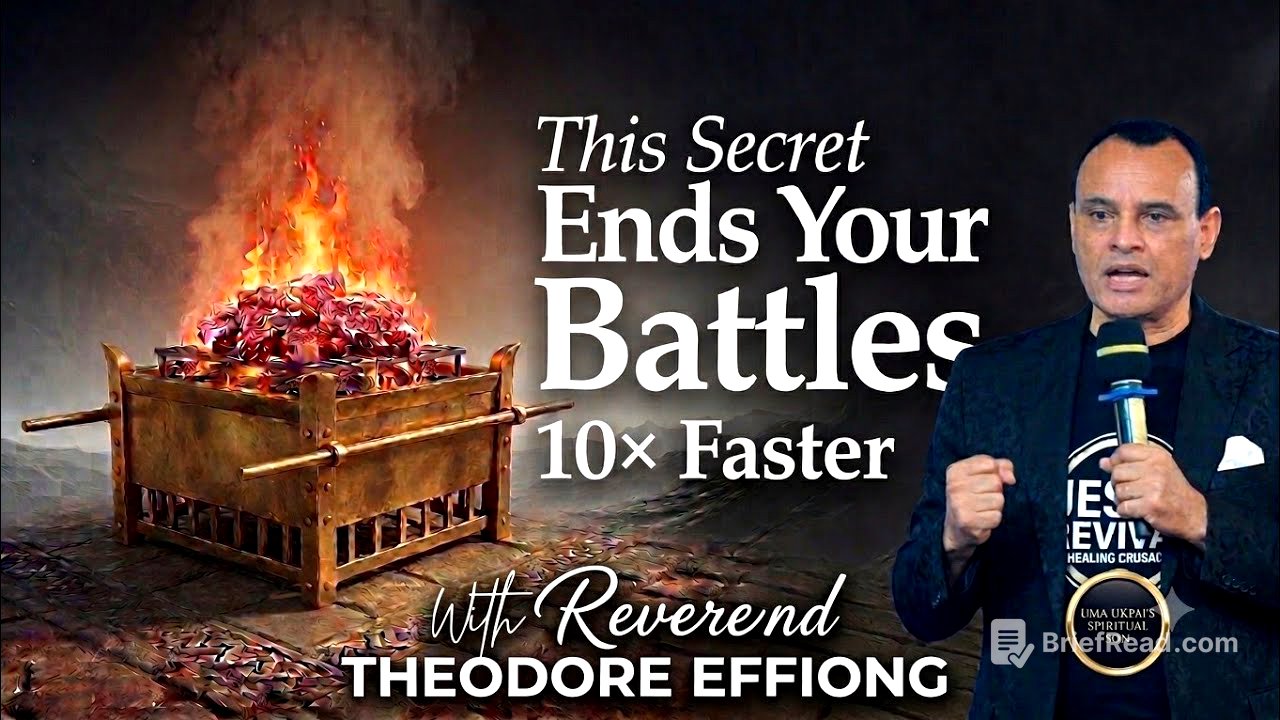
The video discusses the importance of sacrifice in spiritual contexts, emphasizing its higher importance compared to prayer and offerings. Key points include the spiritual hierarchy of sacrifice, the concept of the Courts of Heaven, and testimonies of miraculous interventions related to sacrifices. It highlights the transformative power of spiritual sacrifices and the necessity of commitment in worship.
- Sacrifice is the highest form of engagement in the spiritual realm.
- There are courts in heaven where only blood and sacrifice can enter, superseding traditional prayer and prophecy.
- Personal testimonies illustrate the impact of sacrificial giving in overcoming challenges and securing divine intervention.
Introduction [0:00]
The video opens with a gripping account of a terrorist incident on a flight, where the bomb failed to detonate due to the presence of a man of God on board. This sets the stage for discussing the power of sacrifice, demonstrating how prayer and prophetic words can be ineffective without the elevation of sacrifice.
The Spiritual Hierarchy of Sacrifice [1:05]
This chapter explains that sacrifice is the highest level in the spiritual realm, with money representing sacrifice due to the hard work behind it. The speaker elaborates that sacrifice can surpass prayers, prophecy, and worship, serving as a vital aspect for entering the impossible arenas of divine courts. Testimonies from the Bible are shared to illustrate how battles can shift dramatically through the act of sacrifice.
The Courts of Heaven Explained [2:25]
The narrator describes the concept of the Courts of Heaven, emphasizing that certain spiritual matters require sacrifice for entry. Examples from biblical history highlight times when God’s intervention was achieved only after the Israelites offered sacrifices when prayers and fasting failed.
Scriptural Keys: When Fasting and Prophecy Fail [3:29]
Here, the distinction is made between unsuccessful prayers and the power of sacrifice in turning spiritual battles. Biblical examples illustrate that when all else fails, earnest sacrifice becomes the key to triumph, implying that it activates supernatural change.
Worship and Sacrifice: The Law of First Mention [6:23]
This chapter discusses the connection between worship and sacrifice as foundational principles. Referring to Genesis, the speaker emphasizes that true worship does not exist without sacrifice, advocating that one should always approach worship with a sacrifice, reinforcing the idea that God honors sacrifices.
The 4 Dimensions of a Battle Seed [10:56]
Four significant effects of sacrifice are outlined: it bruises the head of the enemy, draws God's presence, changes circumstances, and procures blessings. The speaker highlights that sacrificial acts have tangible spiritual consequences.
Modern Proof: The Church Roof Financial Breakthrough [15:57]
A real-life example is shared about a pastor who, while desperately needing a church roof, obeyed God’s directive to sacrifice all church funds. He received an unexpected influx of donations afterward, demonstrating the financial breakthroughs associated with sacrificial giving.
The Philistine Secret to Disarming Plagues [19:01]
This chapter recounts how the Philistines utilized sacrifices to resolve a plague, showing that even in pagan traditions, the principle of sacrifice as a solution to dire problems holds true. The chapter points out that genuine transformation often comes through sacrifice rather than rituals.
Supernatural Flight Protection & Angelic Interventions [27:41]
The speaker further elaborates on divine protection stories, illustrating how sacrifices led to supernatural interventions that prevented calamities. Personal testimonies showcase how individuals have confidently faced dangers through the power of sacrificial acts.
Overcoming Territorial Warfare: 11 Years in Calabar [35:25]
The speaker shares a narrative about their struggles against spiritual forces in Calabar and how a covenant of sacrifice helped to establish their ministry and break generational curses that had hindered progress. It emphasizes the importance of making a commitment to God through sacrificial acts.
The Gideon Turnaround: Breaking vs. Making Altars [46:48]
Gideon’s story is used to illustrate that pulling down old altars is equally important as raising new ones. The act of creating an altar through sacrifice is framed as a pivotal moment in transforming one's life and spiritual authority.
A Warning to Believers: Redeeming Vows & Consecration [51:17]
In the final chapter, the speaker warns against neglecting vows made to God, stressing that fulfilling such vows through sacrifice is critical for spiritual accountability. The chapter concludes with a call for personal repentance and a renewed commitment to sacrifice in one's faith journey.