TLDR;
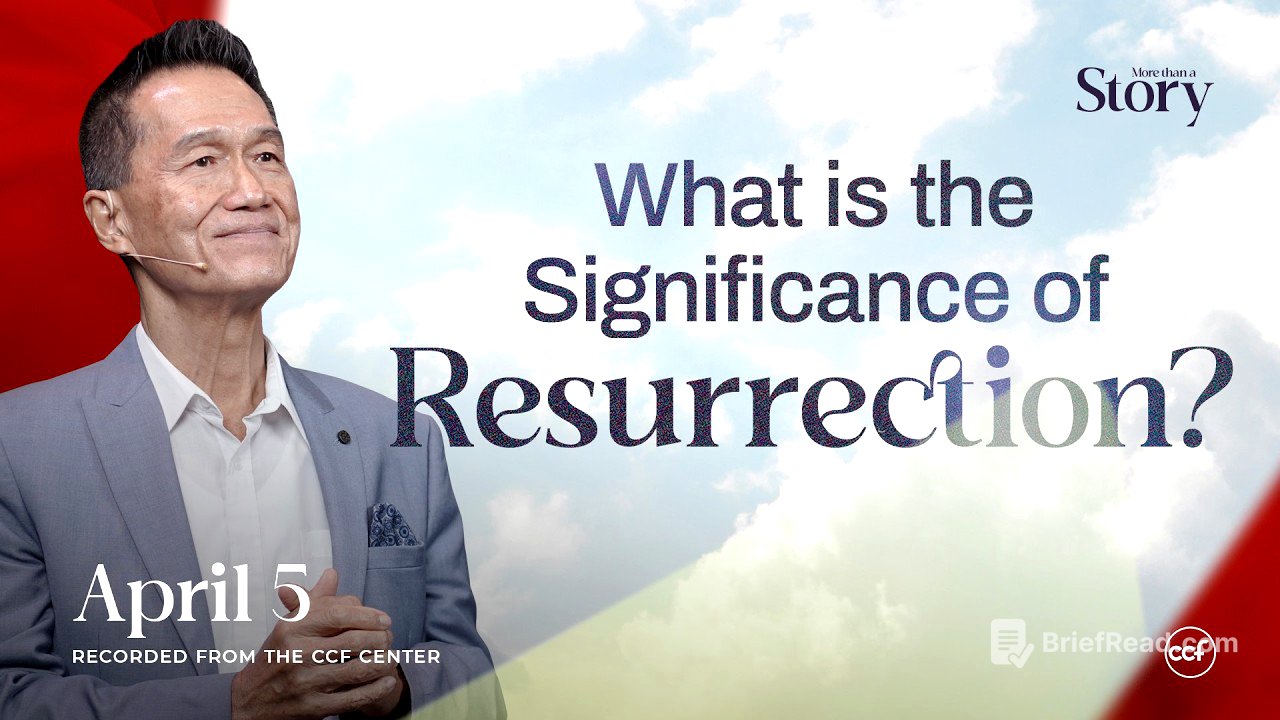
This sermon emphasizes the significance of Jesus Christ's resurrection, asserting it as the cornerstone of Christianity. It highlights that the resurrection validates Jesus' claims, proves the Bible's truth, assures life after death, and establishes accountability to Christ. The sermon encourages believers to recognize their purpose in life through Christ, share the gospel, and understand the profound impact of the resurrection on their lives.
- The resurrection validates Jesus' claims and the Bible's truth.
- Believers should recognize their purpose in life through Christ.
- Sharing the gospel is a key mission for Christians.
Opening [0:00]
The speaker introduces the celebration of Resurrection Sunday, emphasizing its critical importance. If the resurrection of Jesus did not occur, Christianity is based on a lie. However, if Jesus died and rose again, it confirms his identity and promises, urging listeners to explore the significance of this event for personal transformation.
1. The Promise of God [4:53]
The sermon explores the gospel through Romans 1, highlighting the promise of God, the proof of resurrection, and the purpose it gives. Paul, a bond servant of Christ, was set apart for the gospel of God, which was promised beforehand through prophets. The gospel originates from God, is promised, and is not a human invention. This promise was foretold in scriptures and concerns God's son, a descendant of David, fulfilling prophecies like the Davidic covenant in 2 Samuel 7, which promised an eternal kingdom through David's descendant, Jesus Christ.
Prophecies About Jesus Christ [21:47]
The discussion continues by emphasizing Jesus Christ as both 100% human and 100% God, a concept known as the hypostatic union. This dual nature allows him to die for sins and redeem humanity. The gospel, originating from God and prophesied in scriptures, centers on Jesus, with the resurrection being integral to it. The fact that the gospel is promised indicates God's continuous thought and care for humanity. The speaker shares personal anecdotes to illustrate the impact of thoughtful actions, paralleling it with God's planning for salvation.
The speaker references 1 Corinthians 15:3-4, highlighting the gospel message that Christ died for our sins according to the scriptures, was buried, and rose again on the third day, also according to the scriptures. This uniqueness of Jesus Christ is emphasized, contrasting it with other religious figures. Isaiah 53 is cited to illustrate prophecies about Jesus' suffering and death. Peter Stoner, a mathematician, calculated the odds of eight prophecies being fulfilled in one person as one in 10 to the 17th power, illustrating the improbability of these prophecies being fulfilled by chance.
2. Proof of Resurrection [27:16]
The resurrection serves as proof of Jesus being the Son of God, supported by eyewitness accounts and the transformation of the Apostle Paul. Jesus willingly laid down his life and had the authority to take it up again. Paul's transformation from persecutor to apostle is highlighted, emphasizing his encounter with Jesus on the road to Damascus. This encounter led Paul to recognize Jesus as Lord and to question his purpose, illustrating that knowing Jesus as Lord is essential for discovering one's mission in life.
The Resurrection Was the Core Message of the Early Church [43:11]
The early Christians' core message was the resurrection of Jesus, with apostles like Peter and Thomas martyred for their faith. Legal and historical figures like John Singleton Copley and Lord Darling affirmed the overwhelming evidence supporting the resurrection.
3. Purpose of Life [47:16]
The resurrection provides grace and a new purpose, which is to bring about the obedience of faith. Paul felt obligated and eager to preach the gospel, not being ashamed of it as it is the power of God for salvation. The speaker encourages listeners to share their personal testimonies and experiences of Christ, emphasizing that people are hungry for Christ, not just religion. The speaker shares anecdotes of leading people to Christ in Rome, highlighting the importance of recognizing Jesus as the coming judge and sharing the gospel to open people's eyes to the truth.
The speaker challenges the audience to accept Jesus' words and commit to sharing the gospel with at least five people, aiming to evangelize the country and reduce corruption by making people followers of Jesus. The speaker concludes with a prayer, inviting listeners to recognize Jesus as their Lord and Savior and to commit to sharing the gospel.
Closing [1:00:51]
The speaker challenges the audience to accept Jesus' words and commit to sharing the gospel with at least five people, aiming to evangelize the country and reduce corruption by making people followers of Jesus. The speaker concludes with a prayer, inviting listeners to recognize Jesus as their Lord and Savior and to commit to sharing the gospel.
Sunday Fast Track [1:07:56]
Bianca Calderon and Dr. Peter Tantry discuss the significance of the resurrection.
Q1. What makes Holy Week more than just tradition? [1:08:31]
The resurrection is the cornerstone of Christianity, proving Jesus' claims and divinity.
Q2. How can we intentionally live a life that shows what Christ has done? [1:09:31]
By committing to the mission of making disciples and sharing the gospel, as Paul exemplified.
Q3. How do we defend the truth of resurrection to skeptics? [1:10:15]
By studying and understanding the evidence, such as the empty tomb, eyewitness accounts, and the transformation of the disciples, while respecting others' choices to believe or not.