TLDR;
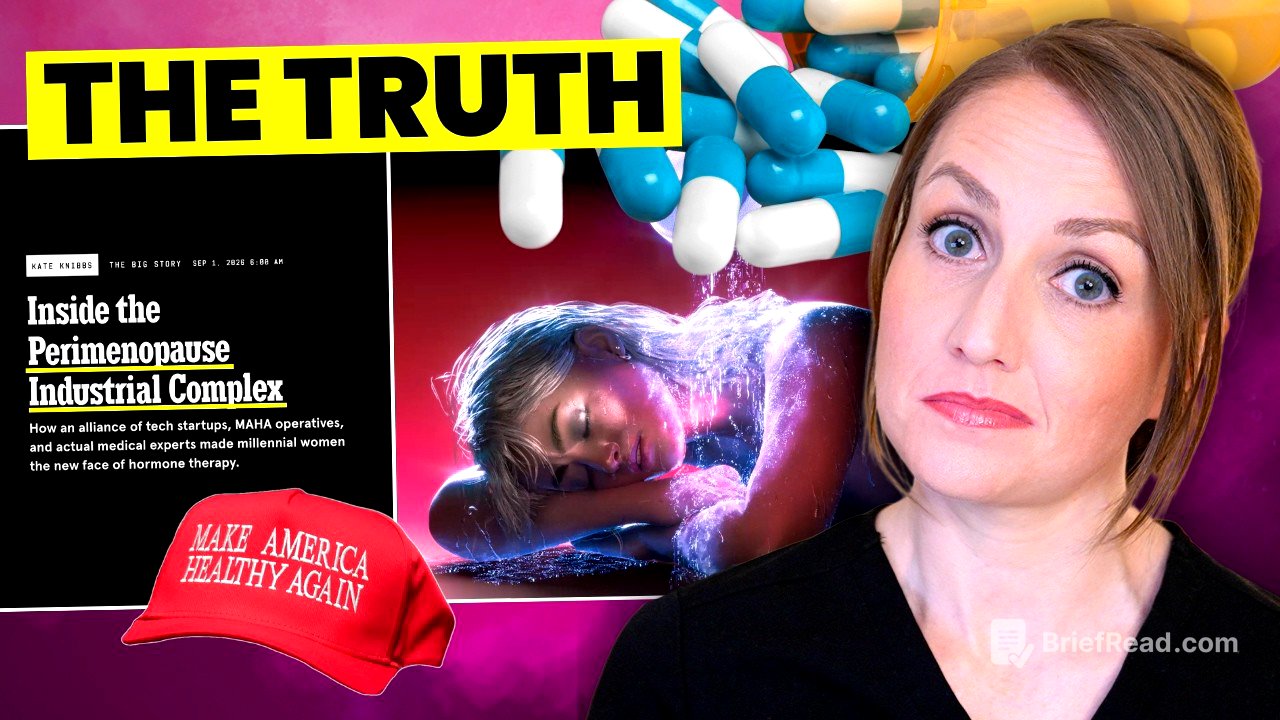
The video discusses the concept of the perimenopausal industrial complex, highlighting how various companies and influencers profit from the vague symptoms associated with perimenopause. The speaker shares a story about Lisa Shrek, who considered hormone therapy to address her symptoms and ultimately found relief. The video critiques the lack of legitimate diagnosis for perimenopause and raises concerns about the commercialization of hormone therapy, its accessibility, and the implications for women's health.
- The perimenopausal industrial complex is a growing market influenced by societal discussions.
- There are significant overlaps between symptoms of perimenopause and other life factors, complicating diagnosis.
- The speaker highlights the risks associated with prescribing hormone therapy without adequate knowledge and the potential dangers of over-prescription.
Introduction to Perimenopause and the Industrial Complex [0:00]
The discussion begins by introducing the perimenopausal industrial complex and its impact on individuals seeking help for hormonal symptoms. It references an investigation revealing the growing number of companies profiting from vague perimenopausal symptoms, which are often indistinguishable from other life issues.
Lisa's Story: A Personal Journey with Hormone Therapy [1:02]
The video shares Lisa's story of considering hormone therapy after experiencing severe depression and anxiety, paralleling her experiences with other hikers discussing their treatment. It explains that there is no specific test for diagnosing perimenopause, leading to the proliferation of various unregulated testing and treatment options in the market.
Understanding Hormone Therapy Options [3:16]
Lisa's attempt to seek help from her primary care provider is detailed, emphasizing her struggles to gain access to appropriate hormone therapy. The speaker explains the difference between traditional hormone replacement therapy and bioidentical hormones, highlighting the marketing tactics and the lack of evidence supporting the latter as superior.
The Role of Telehealth in Women’s Midlife Care [5:05]
The video discusses the emergence of telehealth services like Midi, which provide virtual consultations for women in midlife. Lisa's journey involves using Midi, where she experienced significant improvements in her mental health after adjusting her treatment, raising questions about the effectiveness of medication versus the importance of empathetic care.
The Impact of FDA Changes on Hormone Therapy [9:30]
The FDA's decision to remove the black box warning on hormone therapy medications is examined, detailing how the 2002 Women’s Health Initiative study had previously caused stigma and fear around these treatments. There has since been a resurgence in demand for hormone therapy among women, aided by changing perceptions.
Commercialization and Challenges in Women’s Health [14:06]
The rise of commercialization within women's health is critiqued, highlighting how the increasing number of telehealth providers capitalizes on conditions that often lack clear definitions. This chapter outlines concerns about the accessibility of safe hormone therapy amid a surge in prescribing practices aimed at profit rather than patient care.
Symptoms and Overlapping Conditions in Perimenopause [19:29]
The speaker elaborates on the wide array of symptoms tied to perimenopause, many of which overlap with other health issues. This ambiguity complicates the diagnosis process and raises ethical concerns about the treatment of patients based solely on subjective symptoms without proper oversight.
Expert Opinions on Hormone Therapy Practices [21:28]
This section features commentary from experts who warn against the unregulated prescribing of hormones and the implications of equating common life challenges with perimenopausal symptoms. Concerns are raised regarding the safety of prescribing practices that lack a thorough understanding of patient backgrounds and conditions.
Final Thoughts on the Perimenopause Industrial Complex [33:00]
The video concludes with a critique of the commercialization surrounding perimenopause and the urgency for a balanced approach in prescribing hormone therapy. The speaker emphasizes the real need for appropriate care without exploiting women's health concerns for profit.