TLDR;
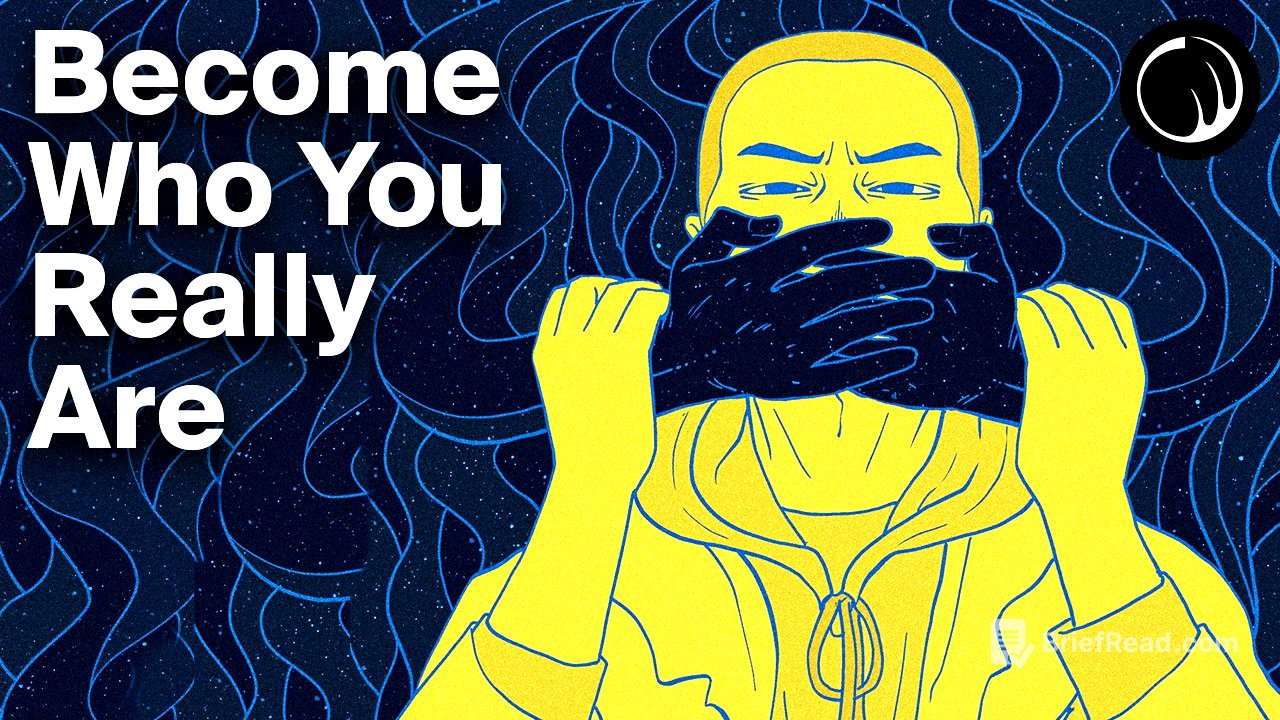
This video explores Osamu Dazai's "No Longer Human," a semi-autobiographical novel that delves into themes of loneliness, social anxiety, and self-destruction through the eyes of the protagonist, Yozo. The video discusses Yozo's profound sense of alienation from humanity, his use of a "jester" persona to fit in, and his eventual descent into self-denial and destruction. It also examines the book's broader commentary on society's treatment of those who struggle to conform and the role of art as a means of connection and understanding.
- The novel is a stark depiction of loneliness, despair, and social anxiety.
- Yozo's alienation leads to self-destructive behaviors and a loss of identity.
- The book serves as a commentary on society's treatment of those who struggle to conform.
- Art and literature can provide a bridge between individuals and the world.
Blinkist Sponsor [0:00]
The video is sponsored by Blinkist, a summary app that provides 15-minute summaries and key takeaways from over 9,000 books across various topics. Blinkist allows users to refresh themselves on classic literature and discover new books, helping them become lifelong learners and refine their mental toolbox. The app offers both reading and listening options, even offline, making it easy to find wonder and knowledge in everyday moments.
Introduction to "No Longer Human" [0:11]
"No Longer Human" is presented as a powerful and accurate portrayal of loneliness, despair, social anxiety, and self-destruction. The novel places the reader inside these states, evoking a sense of unease through mundanity and heightened awareness of simple thoughts and human activities. The book highlights the distance between who we are and how we act, compelled to both portray and hide ourselves in a society with limited patience and tolerance.
Osamu Dazai and the Novel's Context [0:53]
Osamu Dazai, a prominent Japanese author, wrote "No Longer Human" (originally titled "Disqualified as a Human Being") in 1948, the same year he died, adding a layer of meaning to the title. The book is considered a classic of Japanese literature, with its dark themes and the main character's experiences deepened by the fact that the work is semi-autobiographical, exploring a fictionalized version of Dazai's own confessions.
Yozo's Early Disconnection from Humanity [1:30]
The novel follows Oba Yozo through a series of notebooks, revealing his fundamental disconnection from humanity. From an early age, Yozo struggles to understand people, finding their actions and concerns strange or terrifying. He lacks a functional bridge between himself and others, as illustrated by his initial confusion about the purpose of a bridge.
The Persona of the Jester [3:27]
As an adolescent, Yozo goes to great lengths to please others and appear normal, creating an entire persona to do so. He adopts the role of a jester, using humor to gain acceptance without being questioned. This persona becomes a kind of Trojan horse, trapping him inside as he hides his true self. Yozo recognizes that society functions on mutual deceit and participates in it for survival, further distancing himself from his true self.
Yozo's Calcified Mask and Self-Rejection [4:59]
By adulthood, Yozo's mask has calcified, and he becomes stuck to the character he's been playing. The unique perspectives and interests he once had are diluted and dissolved, leading to increased depression and anxiety. His interactions become filtered through a false self, leaving him with little ownership over his experiences. Yozo's fear of rejection leads him to constantly modify himself, ultimately rejecting himself and becoming unknowable.
Yozo's Descent and Societal Neglect [6:33]
Yozo's alienation and self-destruction manifest in his addiction to alcohol and drugs. The pressure of maintaining a false self becomes unbearable, leading to chaos. Eventually, he is removed from society and placed in a mental institution. The story highlights how society often neglects those who struggle to understand, engage with, or produce value for it, leaving them isolated and without support.
Authenticity vs. Functionality [7:04]
The story can be interpreted as a call to authenticity, urging individuals to express themselves and confront themselves honestly. However, the video argues that the truth is more complex, as a degree of pretense is intrinsic to human interactions. Yozo's problem is not that he's wrong about the world, but that the gap between his perception and his true self seems unbridgeable, leading to a conflict between authenticity and functionality.
The Tragedy of Yozo and Dazai's Bridge [8:56]
Yozo's tragedy lies in his inability to be himself and function in society. The epilogue reveals that even those who knew him perceived him as easygoing and amusing, highlighting the hidden suffering of those who feel a profound sense of alienation. Dazai, through his work, built a bridge that offers insight into the human psyche, providing a means of connection and understanding.
The Power of Art and Shared Experience [11:34]
"No Longer Human" is not a cheerful book, but its effect is deeply moving and inspiriting. Art has the power to transfigure what is ignoble or depraved, offering a way to triumph over despair. Dazai provides an honest communion with the absurdity of our relationship with ourselves and the world, a relationship that is often tragic but deeply common and real. The video concludes by urging viewers to discover and share their true selves while they still can.
Blinkist Recommendation [13:28]
The video reiterates the recommendation for Blinkist, emphasizing its ability to help readers engage with books more effectively and discover new titles. Blinkist is presented as a valuable tool for lifelong learning and refining one's mental toolbox.