TLDR;
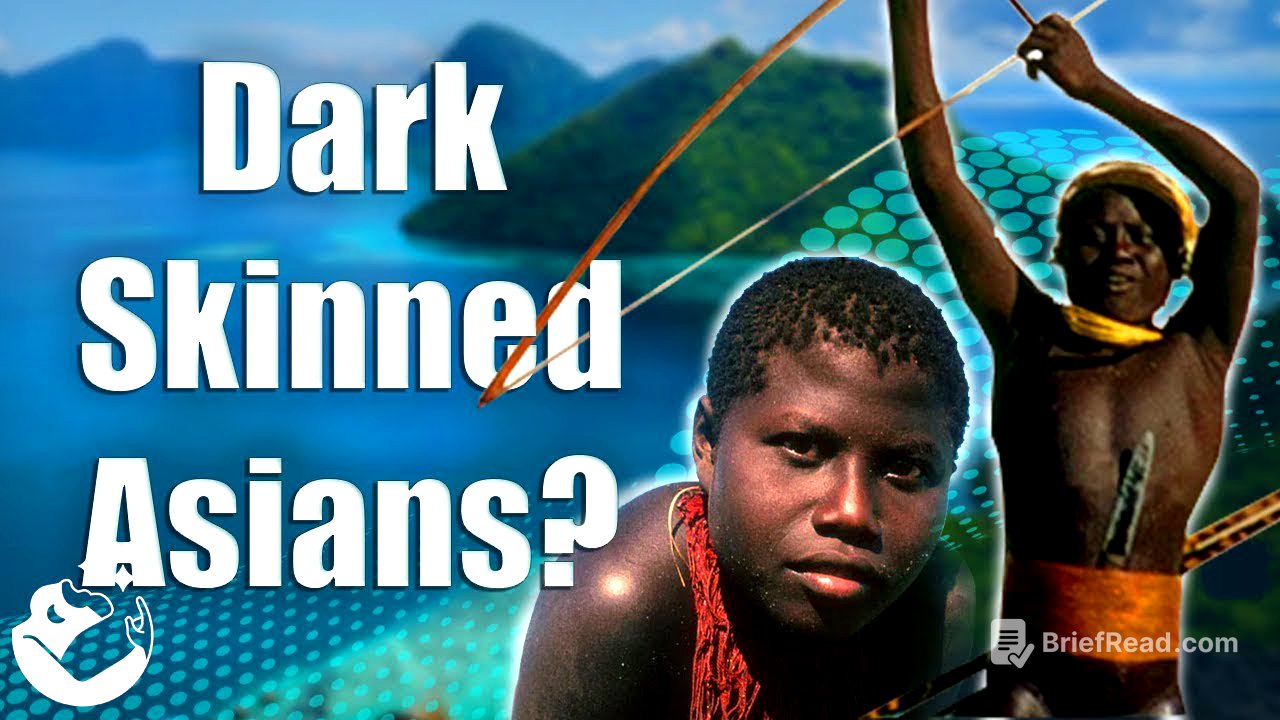
This video explores the diverse negrito populations of Southeast Asia, challenging racial classifications and highlighting their unique genetic history. It covers their origins as some of the first modern humans in the region, their interactions with Denisovans, and their relationships with other indigenous groups. The video also discusses the impact of austronesian migrations and the superficial similarities between negritos and African populations due to convergent evolution.
- Negrito populations are genetically closer to East Asians than Africans, despite physical resemblances.
- They have high levels of Denisovan ancestry, particularly in the Philippines.
- Austronesian migrations significantly impacted negrito populations, forcing them into more isolated areas.
Introduction to Negrito Populations [0:00]
The video begins by addressing the complexities of human diversity and the limitations of racial classifications. It introduces the negrito populations of Southeast Asia, emphasizing that despite their dark skin, they are more closely related to East Asians than Africans. The term "negrito" is presented as the appropriate general term for these indigenous groups.
Origins and Early Migrations [1:43]
Evidence from caves in the Philippines and Malaysia suggests that Southeast Asia was first inhabited between 50,000 to 70,000 years ago. A large-scale genomic study in 2009 indicated that East and Southeast Asians originated from a single migration wave along the southern coastal route. This migration led to interbreeding with Denisovans and the replacement of other hominins.
Denisovan Admixture and the Wallace Line [2:51]
Negrito populations, particularly those in the Philippines, exhibit high levels of Denisovan ancestry. The Wallace Line, a biogeographical boundary, marks a significant difference in Denisovan DNA levels, with higher concentrations found east of the line. This suggests that Denisovan admixture occurred after 50,000 years ago, likely around 44,000 years ago, and that some negrito groups have remained isolated for extended periods.
Other Indigenous Groups and Migrations [5:17]
Besides negritos, other indigenous groups in Southeast Asia, such as the Orang Asli in Malaysia, have distinct genetic profiles. A 2012 study proposed that these populations resulted from an early train migration from Mainland South Asia between 10,000 to 30,000 years ago. These immigrants interbred with negrito populations to a limited extent, with negrito ancestors remaining quite distinct.
Hoabinhian Hunter-Gatherers and Taiwan [6:19]
A recent study on the Manny negritos of Thailand revealed their close genetic relationship to the Samang people and ancestry linked to the Hoabinhian hunter-gatherers. This culture, dating back 12,000 years, suggests that dark-skinned negrito peoples once had a larger geographical range throughout Southeast Asia. Taiwan, first inhabited around 30,000 years ago, was also originally home to negrito people, who were later replaced by Neolithic farmers from China.
Austronesian Expansion and Its Impact [7:52]
Taiwan is identified as the birthplace of the austronesians, who developed complex sailing technology and spread their Neolithic culture throughout Island Southeast Asia. This expansion had a disastrous effect on indigenous populations, including negritos, who were forced to retreat inland or to remote areas as the austronesians cultivated coastal lands.
Genetic Relationships and Convergent Evolution [9:14]
Negrito populations are genetically Eurasian, descending from a single wave that migrated along the southern coastal route. Their physical resemblance to African populations is superficial, resulting from convergent evolution due to similar tropical rainforest environments. Genes causing traits like dark skin, curly hair, and broad noses independently developed within Asia.
Relationships with Neighboring Populations [11:06]
A 2012 study indicated that other indigenous groups from Malaysia have some genetic affinity to Malaysian negritos, though this may be due to recent introgression. Negritos from Malaysia show a higher genetic affinity to Andaman Island negritos, supporting the view that they are descendants of the Pleistocene Hoabinhian hunter-gatherers. The Andamanese have mainly basal East Asian ancestry, distinguishing them from Australian melanesians.
Contemporary Negrito Groups [12:18]
The video highlights several contemporary negrito groups, including the Andamanese peoples of India, the Maniq of Thailand, and various populations in Malaysia and the Philippines. Many of these groups have faced decimation due to contact with the modern world. The Ita people of Luzon are noted for their dark skin, short stature, curly hair, and high levels of Denisovan DNA.
Conclusion [15:09]
The negrito people of Southeast Asia are presented as fascinating populations that represent some of the earliest modern humans in the region. Some researchers suggest referring to them as "first Sunderland people" instead of "negrito." These diverse groups have provided valuable insights into human history, evolution, and admixture. Despite facing troubled histories, many now receive government support, offering hope for the future.