TLDR;
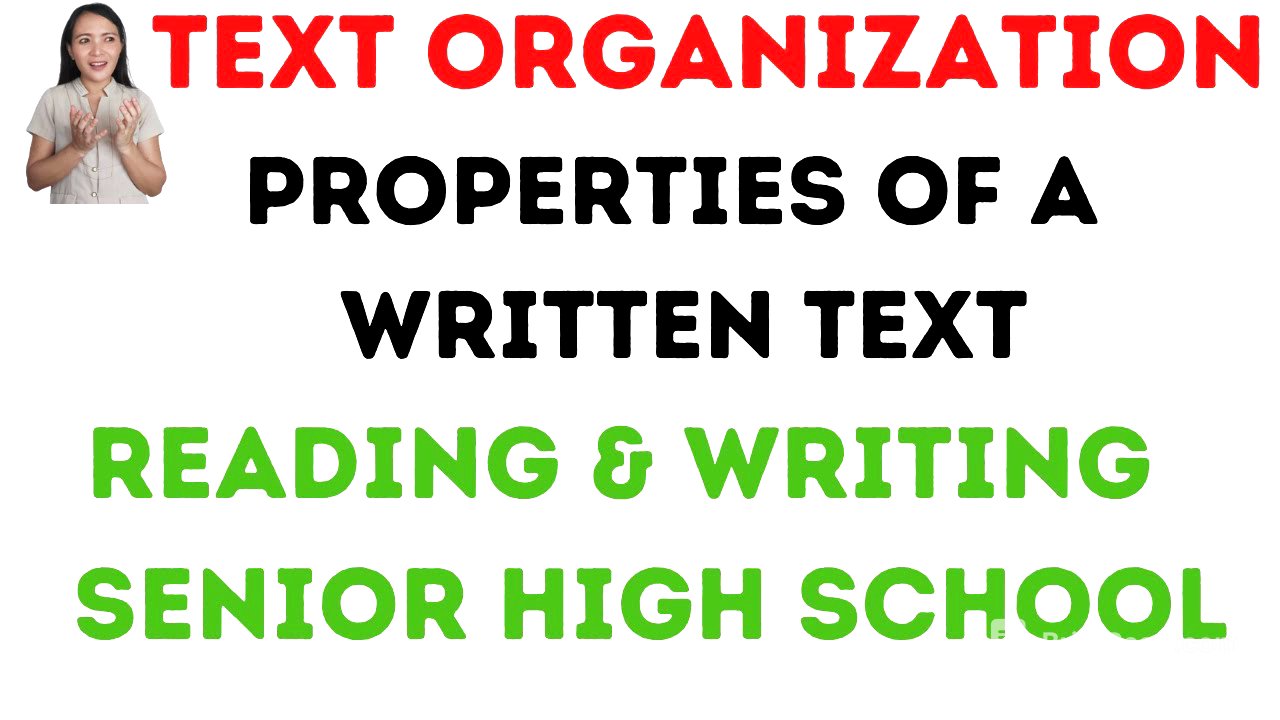
This video explains the importance of organization in written texts. It covers the components of text organization, including physical presentation (headings, subheadings, signal words, chunking) and text structure (expository, narrative, grammar). The video also discusses the key elements of an organized text: focus, development, and unity, providing examples and explanations for each. The formula for an organized essay is summarized as STTC (Single idea, Topic sentence, Appropriate technique, Connectives).
- Text organization consists of physical presentation and text structure.
- Key elements of an organized text are focus, development, and unity.
- The formula for an organized essay is STTC (Single idea, Topic sentence, Appropriate technique, Connectives).
Introduction [0:00]
The lesson introduces the concept of organization in written texts. The aim is to understand what constitutes a well-organized text.
Lesson objectives [0:34]
By the end of the lesson, learners should be able to define a well-organized text, identify the components and structure of an effective essay, and write and organize text effectively.
Understanding the components of text organization [1:59]
Text organization includes physical presentation and text structure. Physical presentation involves textual cues like headings, subheadings, location of main ideas (topic sentences, thesis statements), and signal words. Chunking of text, which means breaking down difficult text into manageable pieces, is also part of physical presentation. Text structure includes expository and narrative forms, and the text should be grammar-free. Expository essays include directions, scientific articles, and texts following cause-effect structures, while narratives tell a story and aim to entertain.
Focus [5:08]
Focus is a key element of an organized text. A paragraph should concentrate on a main topic without confusing it with different subjects. The example paragraph initially lacks focus due to a lack of proper transition and unclear references. Adding sentences to clarify the main topic improves the paragraph's focus.
Development [6:26]
Development is another essential aspect of text organization. Each paragraph should support the central idea of the main paper, and individual sentences should support the main idea. A paragraph should have at least four sentences to explain and elaborate on the topic sentence. While there's no strict limit, a paragraph with seven sentences can still be effective if the sentences are concise and contribute to the main idea.
Unity [7:17]
Unity in a paragraph means oneness of idea. A good paragraph possesses unity when all sentences develop the topic or central idea. Unity is achieved through a topic sentence with its controlling idea, supporting details, and a clinching or concluding sentence. The topic sentence contains the central idea, and the controlling idea consists of keywords that delimit the scope of the topic. Supporting details elaborate on the topic sentence, and a clinching sentence restates the topic sentence or provides a summary or conclusion.