TLDR;
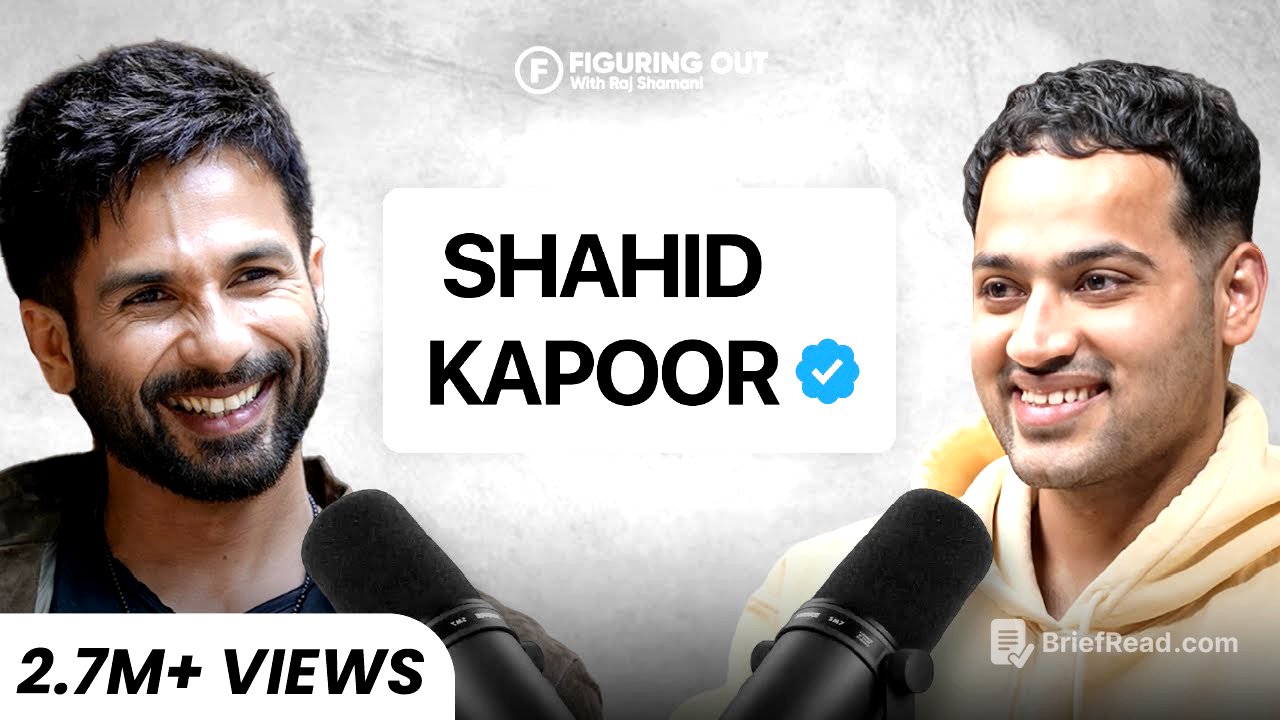
In this conversation with Raj Shamani, Shahid Kapoor shares personal life lessons and experiences, discussing humility, power dynamics, and the importance of intent. He touches on overcoming feelings of inadequacy, dealing with imposter syndrome, and the constant need for self-improvement. Shahid also explores the impact of childhood memories, parental expectations, and the absence of a strong male presence in his early life. He shares his perspectives on parenting, marriage, and finding personal fulfillment, as well as his views on heartbreaks, faith in new filmmakers, and his biggest fears.
- Humility and Intent: The importance of genuine intent over power dynamics in relationships and work.
- Overcoming Inadequacy: How Shahid dealt with feelings of being lesser and victimized by circumstances.
- Childhood Impact: The lasting influence of childhood experiences on his adult life and decision-making.
- Personal Growth: Continuous self-improvement, learning from failures, and maintaining a balance between contentment and ambition.
- Relationships: Insights on parenting, marriage, and the significance of mutual respect and understanding.
Intro [0:00]
Raj Shamani introduces Shahid Kapoor as a guest, emphasizing the episode's unique, brotherly vibe where Shahid openly shares life lessons and emotions. The conversation covers Shahid's childhood, feelings of inferiority, and his journey to becoming a star. Raj encourages viewers to subscribe to the channel for more valuable insights and to watch the episode till the end to understand Shahid's mindset.
Shahid Kapoor on Humility [3:35]
Shahid defines humility as essential for self-definition, preventing negativity. He believes humility allows one to face challenges without feeling entitled or inadequate. Shahid explains that feeling undeserving implies blaming life, while embracing challenges empowers one to overcome them.
Why Power Dynamics Don’t Work for Him [7:28]
Shahid discusses the challenges of maintaining humility in his career, where extreme situations exist, such as being placed on a pedestal or constantly being compared to others. He emphasizes the importance of intent behind actions, distinguishing between genuine love and support from family and friends versus those seeking personal gain. Shahid values authenticity and warns against faking it, as it disconnects one from their true self.
What Is Operating Through Power? [8:48]
Shahid explains operating through power involves setting expectations and demands based on one's status, such as specific requirements for meetings. He contrasts this with preferring honesty and organic interactions. Shahid acknowledges that while power dynamics are prevalent, it's up to the individual to reject, manage, or succumb to them, with the latter potentially leading to a loss of self.
Feeling of Discontentment [10:42]
Shahid admits he is never content with himself, which he sees as both a disease and a motivator. He references a Harvard study indicating that a feeling of discontentment is a common trait among top performers, driving them to improve. Shahid acknowledges the value of contentment but leans towards continuous striving for improvement.
How He Instantly Scans People [11:55]
Shahid explains that he can quickly sense people's intentions, noting that those seeking transactions often try to establish power dynamics. He emphasizes that while power dynamics exist in every room, one can choose to reject, strategically manage, or be dominated by them. Shahid believes that succumbing to power dynamics may lead to desired outcomes but at the cost of one's true self.
The Aura Surrounding Shahid Kapoor [14:04]
Raj recalls meeting Shahid at an event and being struck by his secure and charismatic aura. He notes that Shahid didn't rely on typical star trappings like bodyguards or height but exuded authenticity and happiness. Raj compliments Shahid on his humility and genuine nature.
Looking for Growth Within Failure [15:47]
Shahid explains that he doesn't define failure as an end but rather seeks growth and opportunities within it. He believes that focusing on growth allows one to use failure positively to propel forward. Shahid notes that complacency can hinder drive, while negative situations can offer positive attributes if one shifts their focus.
Feeling Victimized by Circumstances [17:00]
Shahid discusses how driven people often draw motivation from negative emotions. He shares his personal journey of feeling victimized by his circumstances, particularly due to constant comparisons and perceived lack of opportunities. Shahid explains that he has recently flipped this mindset, attributing it to age, experience, and a willingness to accept change.
Feeling of Being Lesser [22:37]
Raj asks Shahid to pinpoint a moment when he felt like a failure and how he transformed that into a lesson. Shahid recalls feeling "lesser" before "Kabir Singh," not due to anyone's direct actions but from being put in situations where he felt inadequate as an artist and individual. He emphasizes his survivor mentality, which helped him overcome these feelings.
Imposter Syndrome [25:09]
Shahid admits to experiencing imposter syndrome, particularly when receiving excessive praise for his films. He sometimes feels he doesn't deserve the recognition, despite putting in effort in every project. Shahid describes himself as a simple person who dislikes overcomplicating things and prefers authenticity.
Constant Need to Prove Himself [28:23]
Shahid acknowledges a constant need to prove himself with every character, stemming from his past experiences with numerous auditions and rejections. He sees each role as a privilege and strives to honor it. Shahid believes this drive is inherent and natural, and he prefers the challenge and effort over complacency.
Improvement as an Actor [29:13]
Shahid discusses how he improves with each character and movie. He believes that the beauty of cinema lies in its ability to show the unsaid and provide viewers with a bird's-eye view of complex emotions. Shahid aims to create films that help people understand and accept themselves and others, drawing from his own experiences of being moved by cinema.
Learnings from His Characters [32:54]
Shahid shares that playing certain characters has taught him about himself, such as realizing his own dark and hectic side. He explains that to portray intense characters, he taps into something within himself, even if it doesn't manifest in his real life. Shahid emphasizes the importance of honesty in his performances.
Diversity in Roles [34:15]
Shahid attributes his ability to play diverse roles to his strong imagination, akin to a child's. He explains that he triggers himself emotionally before certain scenes, drawing from personal experiences and relationships. Shahid emphasizes that strong emotions come from deep hurt and pain, which he channels into his performances.
How Childhood Memories Shape Your Life [35:55]
Shahid believes that childhood experiences significantly shape one's adult life, with 90% of personality formed by age seven. He emphasizes the importance of early influences and destiny, noting that fundamental aspects of life are often predetermined. Shahid explains that understanding this allows him to find context, resolve issues, and forgive himself.
Living Up to Parents' Expectations [38:33]
Shahid reflects on feeling like a "parentified son," trying to fulfill his parents' expectations and taking responsibility for their emotional needs. He acknowledges that this can lead to forgetting oneself. Shahid shares that he has realized that most of who he is comes from his childhood, which has helped him find context and resolve issues.
Was He a Parentified Child? [40:00]
Shahid avoids using the term "parentified child" but acknowledges that his parents were not together from a young age, and he lived primarily with his mother. He recognizes the impact of the limited male presence in his life, comparing it to his own experiences as a father. Shahid emphasizes the importance of accountability and the relationship between actions and consequences.
Lack of Male Presence in Life [43:53]
Shahid reflects on the absence of a strong male figure during his childhood and how it may have affected him. He believes that a male presence provides security for sons. Shahid uses the analogy of two feet to explain the importance of both parents in a child's life, noting that the absence of one parent creates imbalance.
Memories with His Grandfather [44:58]
Shahid shares fond memories of his maternal grandfather, who he believes filled the void left by his father's absence. He describes his grandfather as unconditionally supportive and a deep influence in his life. Shahid recalls simple memories, such as his grandfather's golf hat and cracked watch, and how he walked him to school every day.
Feeling of Void [48:50]
Shahid discusses the void he felt growing up without a consistent male presence, noting that children can be mean and make one feel abnormal. He acknowledges that he is still discovering the emotional impact of this void, which may be reflected in his performances. Shahid emphasizes focusing on what one can give in relationships and trusting that others are good people.
Confidence Issues [51:30]
Shahid admits to having confidence issues and being shy due to his circumstances. He believes that a male presence could have increased his confidence. However, he also acknowledges that his circumstances have contributed to his deeper understanding of life and his need to explore deeper emotions. Shahid emphasizes the importance of seeing voids as opportunities and believing in the power of love.
Relationship With His Brother [57:55]
Shahid discusses his role as an elder brother, noting that he has become accustomed to taking the lead and facing challenges head-on. He describes his relationship with his brother Ishaan as one where he offers support but doesn't take full ownership. Shahid believes in allowing others to have their own journey and make mistakes to grow stronger.
Learnings from younger brother [1:04:54]
Shahid shares what he has learned from his younger brother, Ishaan, including his dedication to fitness, his cinematic mind, and his strong-headedness. He admires Ishaan's ability to stick to his beliefs and his commitment to spending time with their mother. Shahid also appreciates Ishaan's adventurous spirit and his relationship with Mira.
Ideal Parenting [1:06:22]
Shahid believes there are no fixed rules for parenting, as every child and situation is unique. He emphasizes the importance of balance between parents, with one being strong and the other soft. Shahid sees the role of parents as allowing children to fall softly and make mistakes within a loving home. He stresses the importance of a strong moral code, unconditional love, and teaching children to earn their circumstances.
The Idea of a Perfect Marriage [1:15:59]
Shahid avoids the term "perfect marriage," emphasizing that it is an ongoing journey of understanding, acceptance, and mutual respect. He believes a healthy marriage involves worrying about what matters to each other and giving space for individual growth. Shahid highlights the importance of recognizing each other's individuality and different phases in life.
His Views on Life and Personal Achievement [1:20:45]
Shahid believes in having a vision beyond personal achievements, representing something larger through behavior and actions. He emphasizes the importance of making the world a slightly lighter place by taking people's load off. Shahid acknowledges the need to be strong-headed and focused on one's journey but also stresses the importance of not pressuring others and being mindful of their feelings.
Shahid’s Unwinding Time [1:29:45]
Shahid shares that he unwinds by listening to music, training, riding motorcycles, and dancing. He keeps his life simple and enjoys playing cricket and pickleball occasionally. Shahid finds that spending time with friends is therapeutic.
His Views on Heartbreaks [1:33:16]
Shahid acknowledges experiencing heartbreaks and how they have changed him. He notes that heartbreaks can lead to losing self-respect and dignity. Shahid believes heartbreaks are evolutionary processes that help one decide who they want to become. He emphasizes the importance of understanding what kind of person one can tolerate and not being needy in relationships.
His Faith in New Filmmakers [1:39:29]
Shahid explains that he puts faith in new filmmakers because he loves their work and wants to support talent. He compares it to investing in a stock that is expected to grow. Shahid emphasizes the importance of filmmakers believing in his talent before he has achieved success. He is open to working with talented people and will always support them.
Shahid on His Biggest Fear [1:43:23]
Shahid reveals that his biggest fear is anything outside his immediate comfort zone. He acknowledges that artists often have complications and struggles that fuel their expression. Shahid believes that the child within him drives him to express himself and pursue his dreams.
Closing Thoughts [1:47:28]
Shahid emphasizes the importance of enjoying the moment of creation like a child and maintaining a pure state of art. He acknowledges that he is not always able to do this 100% of the time but strives to do so. Shahid advises against taking on too much responsibility and to only take on what one can do with happiness.
Outro [1:50:50]
Raj thanks Shahid for the conversation and appreciates his beliefs. He encourages viewers to subscribe, comment, and share the episode.







![Digimon The Movies Collection: Our War Game, Hurricane Touchdown Blu-Ray/New Dub Review [Soundout12]](https://wm-img.halpindev.com/p-briefread_c-10_b-10/urlb/aHR0cDovL2ltZy55b3V0dWJlLmNvbS92aS9LdFZJckdkdHZROC9ocWRlZmF1bHQuanBn.jpg)