TLDR;
This video provides a detailed examination of the female reproductive system, highlighting its complexity and functionality compared to the male system. Key points include:
- The structure and functions of gonads, the process of reproduction, and genetic inheritance.
- Understanding ovulation, menstrual cycles, and hormonal roles.
- The anatomy of the female reproductive organs and their specific functions in fertility, gestation, and childbirth.
Female Reproductive System Overview [0:20]
The video begins with an introduction to the female reproductive system and its importance in sexual reproduction. It explains the roles of genes inherited from both parents and how they combine to form offspring. The process of sexual reproduction involves two sexes — male and female.
Genetics and Inheritance [0:30]
The video discusses how genes, which carry genetic information such as eye color, are inherited from parents through combinations of dominant and recessive alleles. It explains the concept of homozygous (same genes) and heterozygous (different genes) and emphasizes the probability of traits in offspring, such as the chances of having brown or blue eyes.
Gonads and Gametes [3:55]
Gonads are the specialized organs for producing gametes; males have testes producing sperm, while females have ovaries that produce eggs. The video reviews the male reproductive system briefly, then transitions to the female reproductive system, emphasizing the ovaries’ role in producing and releasing eggs.
Ovaries and Follicles [10:20]
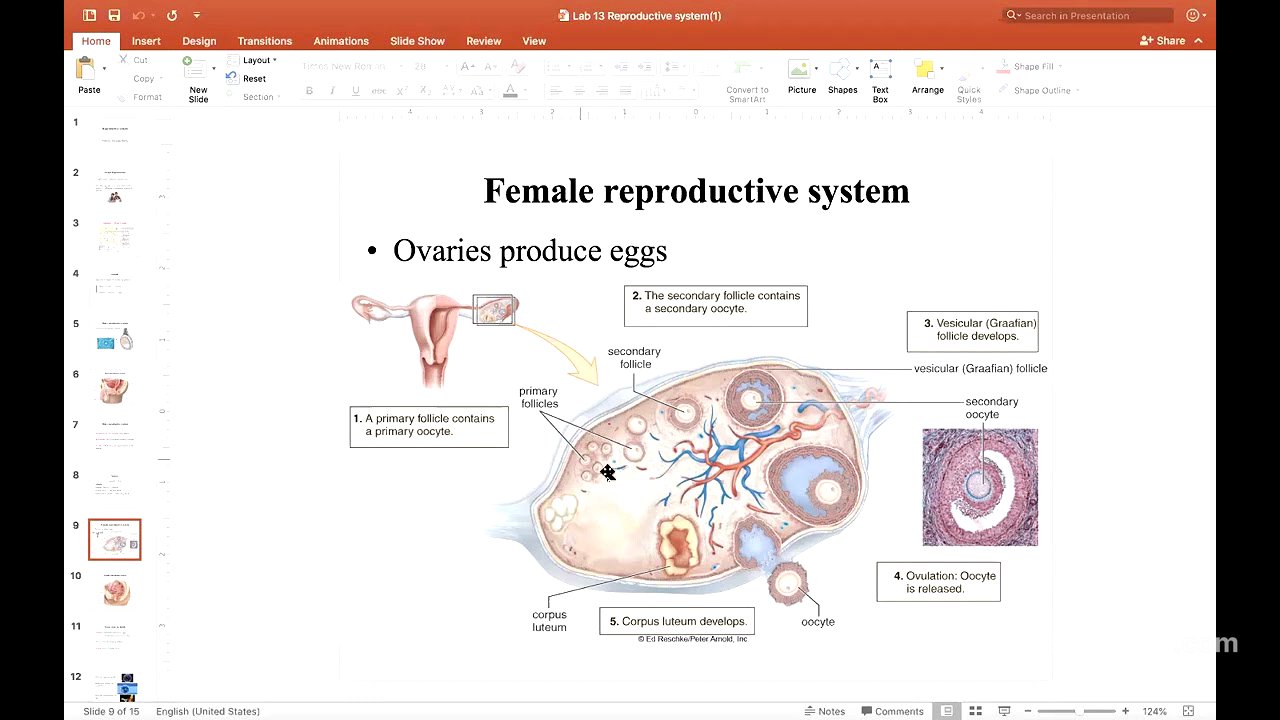
Each ovary contains primary follicles, which house eggs. The thread of development is explained, detailing how follicles mature and the number of eggs decreases over a female's lifetime. A woman is born with approximately two million eggs, which diminish during menstrual cycles until reaching menopause.
Female Menstrual Cycle [15:10]
The video details the menstrual cycle, which includes the monthly release of an egg from a follicle and the importance of the hormonal balance during this process. Ovulation is described as the bursting of the follicle and the role of the corpus luteum in hormone production following egg release.
Fallopian Tubes and Fertilization [19:55]
The fallopian tubes play a critical role in transporting the egg from the ovary to the uterus. The video explains the structure of the fallopian tubes and emphasizes that fertilization occurs there when sperm meet the egg. It highlights the importance of the fimbriae in guiding the egg.
Uterus Structure and Function [28:30]
The uterus is depicted as a muscular chamber vital for fetal development. The video goes through its anatomy, identifying parts like the fundus, body, and cervix, and explaining the layers of the uterine wall — the perimetrium, myometrium, and endometrium. It details how the endometrium prepares for potential pregnancy.
Vagina and Birth Canal [34:30]
The video describes the vagina as the birth canal that also allows for menstrual fluid discharge and receives the penis during sexual intercourse. It emphasizes its muscular structure and how it enables childbirth.
External Female Genitalia [43:20]
The external organs, collectively known as the vulva, include the labia majora and minora. The anatomy and function of these structures are briefly discussed, along with cultural aspects regarding virginity and the hymen.
Breast Anatomy [59:10]
The video concludes with information about breast anatomy, particularly during puberty and lactation. It discusses the role of mammary glands in milk production and emphasizes the importance of breastfeeding for infants.