TLDR;
This video discusses the anatomy and physiology of the female reproductive system, focusing on the mammary glands, breast cancer, the menstrual cycle, pregnancy, and childbirth, along with contraceptive methods.
- It details breast structure and function, explaining how mammary glands produce milk and their connection to breast cancer risks.
- The video elaborates on puberty, the hormonal changes during the menstrual cycle, and how these relate to breast and endometrial health.
- It explains stages of pregnancy, labor, and postpartum recovery, emphasizing the hormonal changes and their implications for a woman’s body.
- Different contraception methods are also presented, along with their effectiveness and potential side effects on health.
Mammary Glands and Breast Anatomy [0:13]
The section introduces the mammary glands, which develop during pregnancy and consist of 15 to 20 lobes around the nipple. Each lobe contains lactose ducts, which lead to the milk sinus, facilitating milk secretion. The presentation includes images illustrating the structure of the breast and how fat contributes to breast size.
Breast Cancer Overview [3:53]
Breast cancer is highlighted as a significant health issue, with one in eight women in the U.S. diagnosed. The discussion includes causes such as genetic factors (BRCA1, BRCA2 genes) and environmental influences like estrogen exposure. Symptoms include lumps, changes in breast texture, and abnormal discharge from the nipple. Risk factors like aging, radiation exposure, and high alcohol and fat intake are also discussed.
Puberty and Menstrual Cycle [10:58]
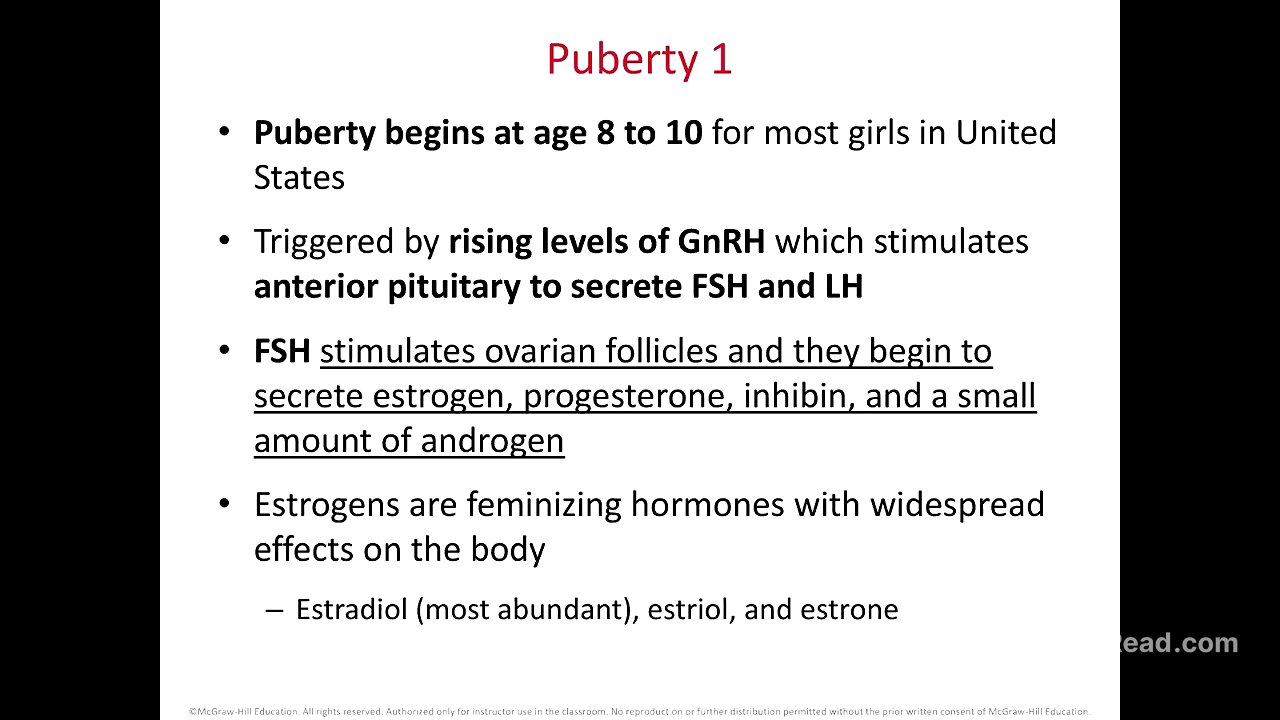
Puberty in girls starts between 8 and 10 in the U.S., driven by hormones from the hypothalamus. The chapter details how FSH and LH influence menstrual cycles, with the onset of breast development being the first sign of puberty. It explains the thickening of the endometrium, driven by estrogen, preparing for potential pregnancy each cycle.
Pregnancy and Labor Stages [31:13]
The video explains the stages of pregnancy from conception to childbirth, emphasizing hormonal changes that support fetal development. It details labor stages: dilation, expulsion, and the placental stage, with a focus on the physiological processes and contractions involved in childbirth.
Postpartum Recovery [2:06:15]
Postpartum, the uterus shrinks through involution, and breastfeeding promotes recovery and hormonal balance. The chapter discusses the significance of prolactin and oxytocin in milk production and uterine contraction after childbirth.
Lactation [2:07:24]
Lactation covers the synthesis and ejection of milk from the mammary glands. The release of colostrum occurs shortly after birth, rich in antibodies vital for the newborn. Prolactin increases during breastfeeding, facilitating milk production, while the video discusses how the composition of breast milk changes over time and its superiority over cow's milk.
Contraceptive Methods [2:15:33]
The video covers various contraceptive methods, including hormonal birth control (pills, patches, rings), IUDs, and emergency contraception. It emphasizes how hormonal contraceptives prevent ovulation by inhibiting FSH and LH and briefly discusses behavioral methods.
Pregnancy and Hormones [2:17:40]
This segment discusses how hormonal changes during pregnancy, primarily due to the corpus luteum and later the placenta, support fetal development and maternal health, including the implications of hormonal feedback mechanisms on ovulation and menstruation.
Labor Induction and Stages of Labor [2:01:00]
Labor, marked by contractions, consists of three stages: dilation, expulsion, and placental. Dilation can last several hours while the expulsion stage is typically shorter for women with previous births. The roles of contractions and hormonal feedback throughout labor, including positive feedback involving oxytocin, are highlighted.
Postpartum Changes and Recovery [2:12:39]
The final part outlines the changes women undergo postpartum, including uterine shrinkage and hormonal adjustments that stabilize the body after pregnancy, emphasizing the importance of breastfeeding in promoting recovery and hormonal balance.




![So You Want to Be an ANESTHESIOLOGIST [Ep. 12]](https://wm-img.halpindev.com/p-briefread_c-10_b-10/urlb/aHR0cDovL2ltZy55b3V0dWJlLmNvbS92aS96OGgxbVJxSTNfSS9ocWRlZmF1bHQuanBn.jpg)