TLDR;
This video discusses the recent market downturn, highlighting the S&P 500's five-week losing streak and comparing the current situation to past market tops and corrections. It emphasizes the unreliability of expert opinions and the potential for the Fed to panic and cut rates despite rising inflation. The analysis includes key indicators like crude oil prices, bond yields, and the dollar's strength, suggesting a continued market correction before a potential rebound.
- Market downturn with five consecutive weeks of losses for the S&P 500.
- Comparison of current market behavior to past tops and corrections, particularly 2000 and 2008.
- Expectation of a continued market correction followed by a potential rebound.
Market Overview and Recent Performance [0:06]
The S&P 500 has experienced a five-week losing streak, with the Dow Jones down nearly 800 points and the S&P 500 down 108 points. The NASDAQ and Russell also saw significant declines, while the VIX, a measure of market volatility, increased. Despite earlier predictions of market consolidation and continued gains, the market has entered correction territory. The Fear Greed Index has dropped to 10, indicating extreme fear in the market. The VIX suggests an 85% chance of an update or attempted bounce in the S&P 500 in the next two trading sessions, although further declines are expected.
Contrasting Expert Opinions and Market Reality [1:41]
Financial experts who previously predicted market consolidation and Dow 50,000 are now claiming the downturn is just a correction. This shift mirrors the behavior of Bitcoin experts who advised buying the dip as it continued to fall. The speaker suggests the market is playing catch-up to Bitcoin's decline, with a potential decoupling in the future, similar to 2022. The financial media's narrative of a "healthy correction" is questioned, given their previous incorrect predictions.
Crude Oil, Yields, and Fed Policy [3:21]
Despite extended negotiations, crude oil prices are rising, leading to increased probability in the futures market that the Fed will raise rates by the end of 2026. The speaker doubts the Fed will raise rates, predicting a market collapse instead. The speaker believes the Fed will eventually have to choose between fighting inflation and supporting the economy, and will likely choose to support the economy by implementing jumbo rate cuts. Rising crude oil prices and long-term yields are creating problems for the economy, contradicting earlier predictions of declining crude oil, dollar, and yields.
Historical Parallels and Future Fed Actions [5:38]
The speaker anticipates the Fed will panic and implement jumbo rate cuts, similar to what occurred during the bursting of the tech bubble in 2000 and the financial crisis in 2008. Despite rising inflation, the Fed may prioritize supporting the economy, as it did in 2008. The speaker argues that the Fed will have to choose between fighting inflation and supporting the economy, and will likely choose to support the economy.
Market Signals and Support [7:47]
The speaker highlights that the signals have accurately predicted the recent market downturn, with the S&P 500, NASDAQ, and Dow dropping significantly. The speaker encourages viewers to support the channel. The speaker plans to post another video with different indicators, focusing on the NASDAQ. A market bounce is expected at some point, but it will likely be a counter trend rally followed by more aggressive selling.
Factors Influencing Market Decline [9:53]
The market is declining due to rising crude oil prices, concerns about a prolonged Iran war, and a weak Treasury auction. Rising yields and concerns about inflation are also contributing factors. The speaker reiterates the prediction that the 10-year yield will reach new highs, potentially exceeding 5%, which will likely cause market panic. The speaker believes the market will realize the Fed has lost control, leading to a collapse and subsequent jumbo rate cuts.
Dollar and Yields Analysis [11:24]
The stock market is beginning to crash to catch up to Bitcoin's decline. The speaker predicted the bottoming of yields in a consolidation triangle, contrary to expert predictions of collapsing yields and a weakening dollar. The dollar has broken out of a bullish falling wedge and is finding support, indicating further gains. The speaker warned about divergences in the monthly time frame, suggesting the dollar will continue to rise and potentially make new highs.
Contrarian Predictions and Market Dynamics [12:58]
Experts predicted a bullish stock market, consolidating for further gains, and declining dollar and yields. However, the market reversed, completing a topping pattern. The speaker warned about the warning signs in the bond market, the double bottom with crude oil, and the risks associated with the dollar going higher. The speaker notes that the herd has been proven wrong, and experts are now attempting to justify their incorrect predictions by claiming it's just a correction.
Crude Oil Analysis and Potential Targets [14:24]
The speaker warned about crude oil, which is now trying to bounce off the 20-day moving average. Despite a divergence, crude oil may move above $119 and potentially reach $150, $180, or even $200 a barrel before the commodity cycle ends. The speaker draws parallels to 2008, where crude oil rose sharply while the stock market collapsed. Crude oil is currently closing above $100 a barrel, rattling markets further.
Crude Oil Divergences and Geopolitical Factors [15:36]
A larger divergence may develop in the weekly time frame for crude oil, with the MACD potentially forming a larger divergence along with the RSI stochastic turning back up. The speaker warns against those claiming crude oil's rise is over due to negotiated settlements and the reopening of trade routes. The speaker emphasizes the warning signs in the bond market, the double bottom with crude oil, and the risks associated with the dollar going higher.
Market Distribution and Divergence [16:55]
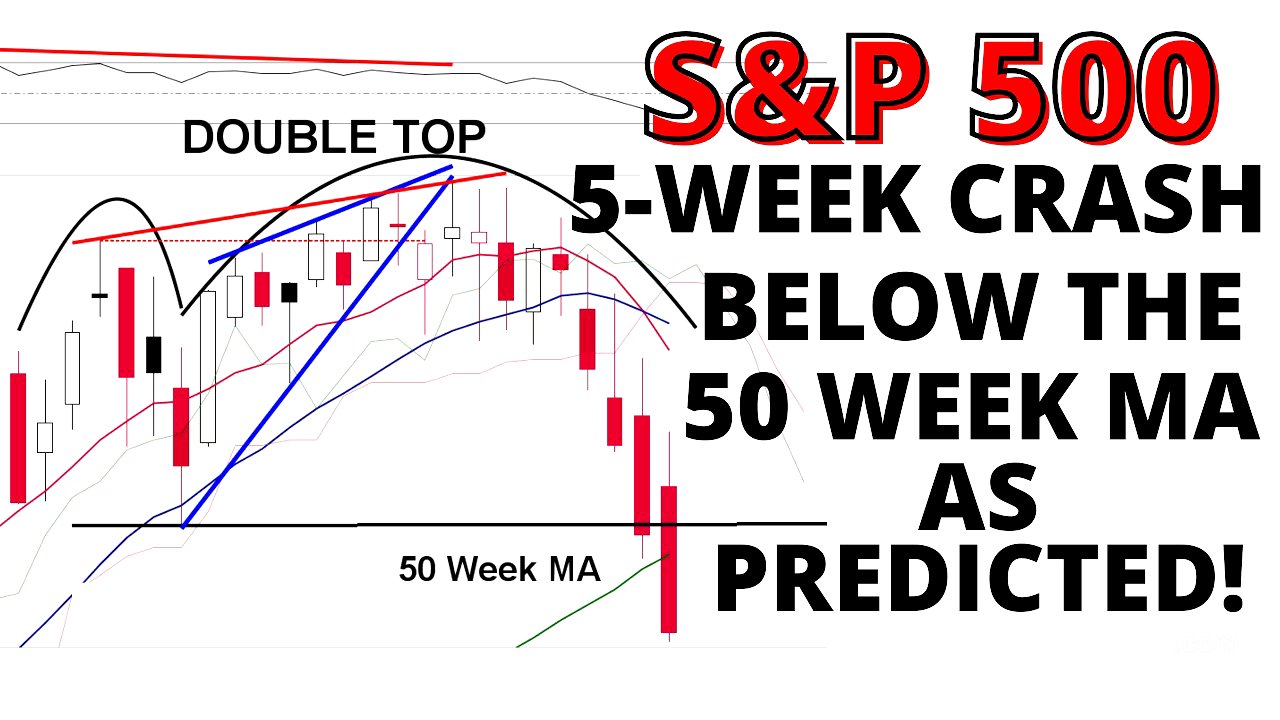
The speaker discusses the distribution pattern observed in the market, where rallies were consistently sold off. The herd and experts misinterpreted this as consolidation, while the speaker identified it as a double top at major resistance levels. The NASDAQ peaked, and if the S&P 500 didn't immediately follow, a divergence similar to 2021-2022 was expected. The S&P 500 made a slight new high, while the NASDAQ couldn't, confirming the divergence.
Institutional Manipulation and Market Structure [19:19]
Institutions created a buyside liquidity sweep, causing the herd to buy the top, which then fueled the move down as institutions sold their positions. Both bulls and bears were manipulated, with retail traders who went short getting squeezed. The speaker called a top on January 28th, noting that the NASDAQ stalled at the previous high. The speaker highlights the Adam and Eve double top pattern and the institutions' strategy of allowing the market to go sideways to induce complacency before larger distribution took place.
Moving Averages and Market Breakdown [21:25]
The market continues to drop below the 10-period moving average, with topping tails observed around the 10 and 20 moving averages. The 50-day moving average has dropped below the 100-period moving average, and the 10-day has dropped below the 200-day, indicating a bearish trend. The 100-period moving average, which previously acted as support, has now been broken and back tested. The speaker notes that those who previously touted Dow 50,000 and S&P 7,000 are now advising to buy the dip.
Trend Line Analysis and Potential Targets [22:54]
The speaker discusses the broken trend line from the April low, which acted as support before being broken and back tested. The speaker called a top on January 28th due to the market slamming into those trend lines. The market broke down from a rectangle trading range and is now taking out the 200-period moving average. The speaker anticipates a potential drop to the February 2025 peak, which would be a 4% drop from last week's close.
Historical Comparisons and Future Expectations [24:09]
The speaker compares the current market situation to 2022 and 2025, noting that a drop below the 50-week moving average typically leads to a significant decline. The speaker expects a drop below the 50-week moving average, followed by a rebound and then further selling. The speaker anticipates a potential rally back up to back test the confirmation line of the double top or even move back into the trading range. A death cross is likely in the future.
Market Structure and Supply Overcoming Demand [25:23]
There has been a change of behavior in the market, with a failed breakout and lower highs and lower lows. The speaker believes the market will drop to at least 5300. Supply is now overcoming demand, with institutions selling as the herd was buying. The speaker warns against trying to catch the falling knife, as institutions continue to sell.
50-Week Moving Average and Potential Rebound [26:18]
The speaker notes that in 2022 and 2025, the market moved just above the 50-week moving average before dropping significantly. A similar pattern is expected, with a potential 4-5% drop below the 50-week moving average. The speaker anticipates a bottoming tail next week, followed by a relief rally and then further declines. The speaker draws parallels to Bitcoin's divergence with the S&P 500.
Potential Bottom and Market Targets [27:31]
The speaker suggests the market may bottom around 6240 or potentially closer to 6150 on the S&P 500 daily chart. A rally back up is expected, possibly back into the trading range or to back test the confirmation line. The speaker reiterates that the top is playing out as predicted.
Weekly Chart Analysis and Rebound Attempts [29:06]
Analyzing the weekly chart, the speaker notes that in 2022, the market broke the 50-week moving average, got a bottoming tail, and bounced at the lower end of the cloud. A similar pattern is possible, with a potential recovery back up to try to get back above the 50-week moving average. The speaker suggests that the market will likely back test the confirmation line of the double top.
Bear Market Rally and Economic Concerns [30:06]
The speaker anticipates a drop of more than 20%, possibly closer to 25% or 30%, followed by a bear market rally triggered by the Fed's emergency cuts. Concerns about higher oil prices may be the final nail in the coffin for the economy. The speaker will be looking for some type of bottoming process and a rebound attempt to back test the confirmation line or get back above the 50-week moving average.
Market Outlook and Key Indicators [31:06]
The market has experienced a five-week losing streak after being told how bullish everything was. The speaker will be watching the jobs report and CPI data for further insights. A potential bounce is expected, followed by further sell-offs. The speaker highlights the importance of the 2025 February peak and the distribution volume. The MACD is moving towards the center line, forming its own divergence.
Oversold Conditions and Potential Rebounds [32:57]
The market is becoming very oversold, but this doesn't necessarily mean the sell-off is over. A rebound is possible, potentially next week, but the market could go lower first. The speaker notes that a bottoming tail may form in the daily or weekly time frame. In both 2022 and 2025, the market back tested the confirmation line after dropping below the 50-week moving average. The speaker expects a back test of the confirmation line, but after moving further away from it first.