TLDR;
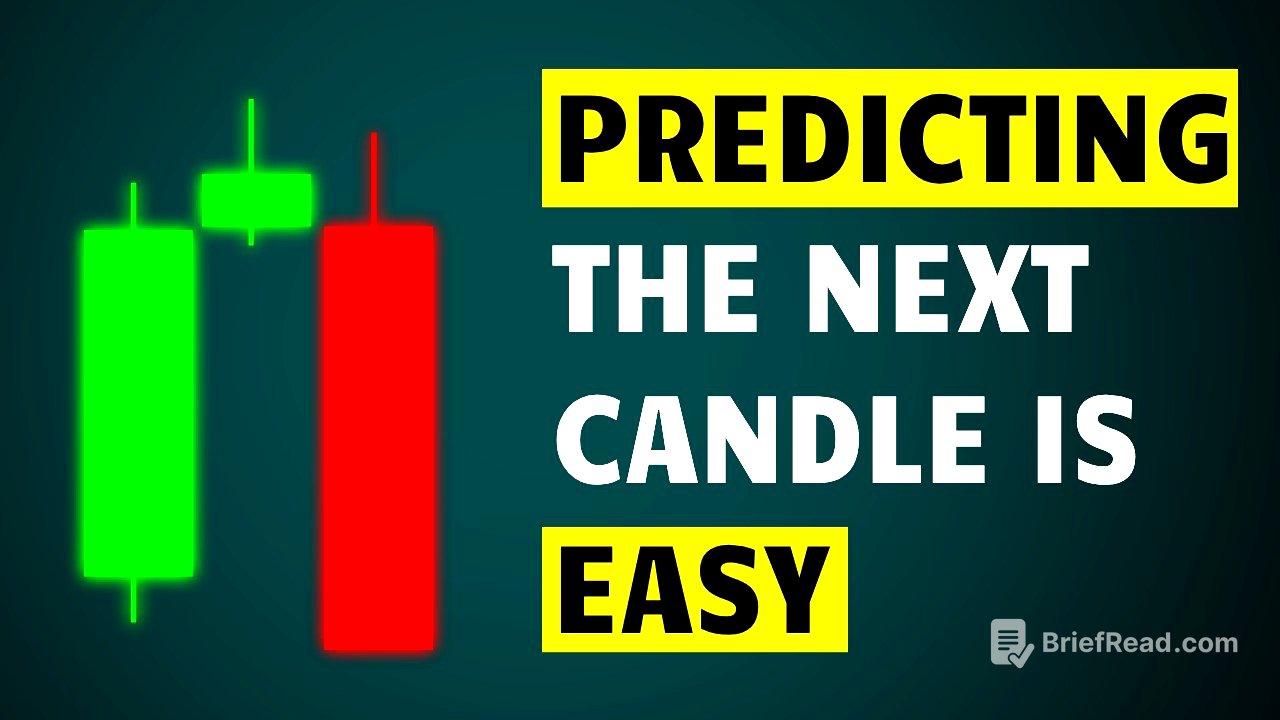
This video explains how to predict market movements using candlestick patterns within the context of continuation and reversal models. It emphasizes understanding candle anatomy, identifying liquidity sweeps and fair value gaps, and using higher time frame candles to predict lower time frame movements. The "three-stick predict model" is introduced, using specific candle times (1 AM, 5 AM, and 9 AM) to anticipate market direction, and live examples are provided to illustrate these concepts.
- Price action typically follows either a continuation or reversal pattern.
- Key elements include identifying fair value gaps, liquidity sweeps, and candle anatomy.
- The "three-stick predict model" uses specific candle times to anticipate market direction.
Reversal vs. Continuation Models [0:00]
Price action typically sways between two scenarios: reversal and continuation. A reversal model begins with price following a market incentive until it reaches a point of interest (POI) or a premium discount array (PDA) like a fair value gap, order block, or previous week high. Rejection from this zone signals a reversal, with price then targeting the next strong liquidity at the lows. Conversely, a continuation model displays a clear direction with strong candles and fair value gaps supporting price movement. Even in a continuation, liquidity sweeps are necessary to ignite the next move, often involving a two-in-one setup that fulfills a value gap and sweeps liquidity at prior highs or lows.
Candle Anatomy and Time Frame Examples [1:58]
Understanding candle formation is crucial. An impulsive move involves opening, pushing lower, and then distributing to the upside, indicating a clear direction. A rejection or reversal candle shows significant bearish rejection, signaling a potential reversal. Comparing higher time frame candles (daily or 4-hour) with lower time frame movements provides context. Failure to close above a daily high suggests that sellers will take priority, leading to a reversal candle targeting the next draw on liquidity.
Applying the Models with Examples [3:55]
The presenter provides examples of high and low time frame movements. Observing the first candle's behavior (bearish or bullish) and the second candle's consolidation helps predict the third candle's movement. Price aims to sweep liquidity and fill fair value gaps. Identifying these patterns makes it easier to predict and trade the next candle, using market context to inform intuition. The presenter also references a full ebook explaining various candlestick schematics and their relation to lower time frame movements.
Live Trading Examples and Bias Detection [6:21]
The presenter transitions to live examples, focusing on recent candle data to detect bias. For example, if price has been rejecting off a fair value gap, the next step is to sweep liquidity. The presenter uses the 5:00 candle (UTC-4) as a key reference for candle ranges, aligning with the 6 AM Eastern Standard Time candle for futures traders. The "three-stick predict model" is further explained, using the 1:00 AM, 5:00 AM, and 9:00 AM candles to predict market direction, which corresponds to 2:00 AM, 6:00 AM, and 10:00 AM Eastern Standard Time for futures.
Advanced Examples and Daily Time Frame Analysis [10:15]
The presenter analyzes more complex scenarios, such as identifying order blocks supporting price. Wick rejections indicate strong rejections on lower time frames, stemming from a specific level like a prior order block. The third candle should react to the upside, continuing the trend. The presenter also demonstrates using the daily time frame, marking out fair value gaps and liquidity points to predict the next candle's direction. Even with initial losses, sticking to the established bias can lead to a net positive outcome. The goal is to have a repeatable framework for gaining perspective, direction, and bias, and following through despite market fluctuations.