TLDR;
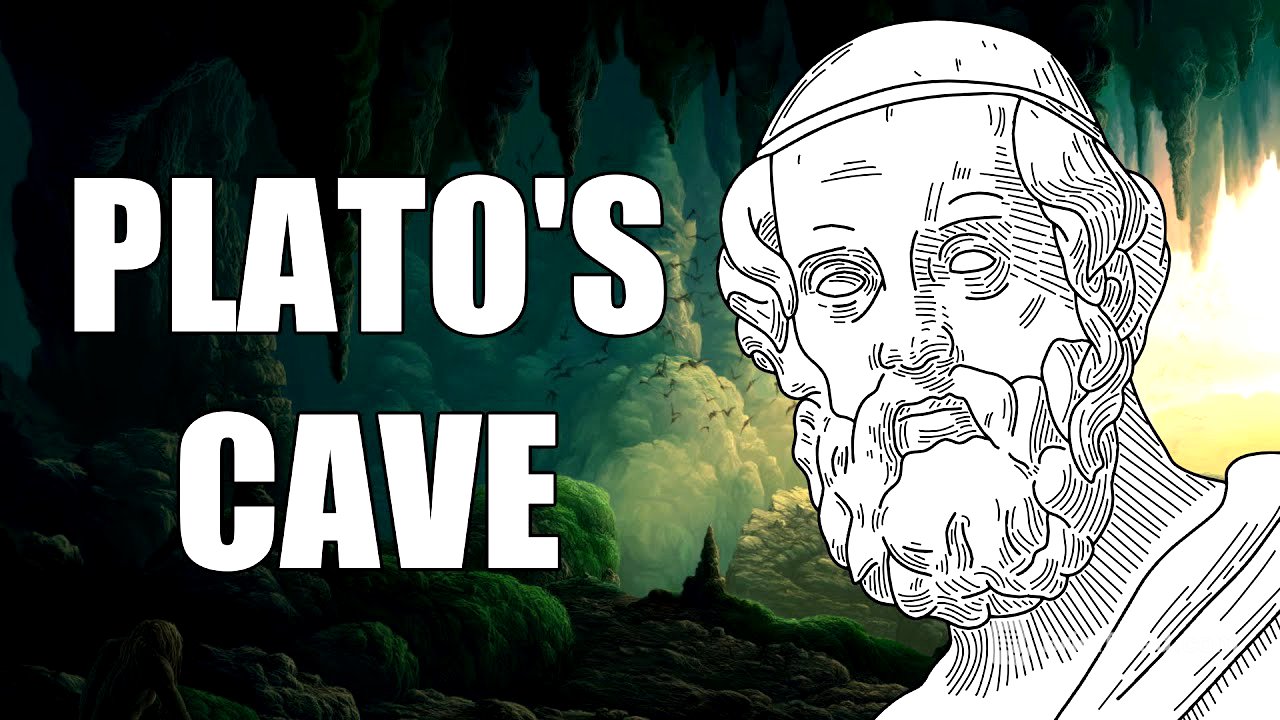
This video explains Plato's allegory of the cave, found in Book 7 of "The Republic," and explores its meaning. It details the allegory's narrative, where prisoners in a cave mistake shadows for reality, and discusses two main interpretations: the allegory as a representation of Plato's theory of forms and as a general call to philosophical learning.
- The allegory illustrates the difference between perceived reality (shadows) and true reality (forms).
- Education and philosophical inquiry are presented as means to escape the cave and discover truth.
- The video highlights the importance of understanding Plato's theory of forms for interpreting the allegory.
Introduction to Plato's Allegory of the Cave [0:00]
The video introduces Plato's allegory of the cave as a famous philosophical story from Book 7 of "The Republic." It notes that while many people recognize the allegory, they often have a vague understanding of its meaning. The video aims to explore the actual text of Plato's allegory and discuss two popular interpretations to aid in understanding its philosophical significance. An allegory is defined as a narrative with a hidden meaning, using the example of "The Boy Who Cried Wolf" to illustrate this concept. Plato reveals that the allegory is about the effect of education and the lack of it on our nature.
The Cave Scenario [1:07]
Plato asks us to imagine a cave where humans have been chained since birth, able only to see a wall. Behind them, a fire casts shadows on the wall, created by people carrying statues and artifacts. These prisoners perceive the shadows as their entire reality. If a prisoner were to escape, the initial exposure to light would be painful, potentially causing a desire to return to the cave. However, with time, the escaped prisoner would adjust and recognize the real objects and entities that were merely represented by the shadows. Eventually, the prisoner would see the sun and understand its importance as the source of seasons, years, and everything in the visible world.
Hierarchy of Sources [3:05]
Plato establishes a hierarchy of sources, with shadows being the lowest form of reality as representations of real things. Above shadows are the real things themselves, such as people, trees, and animals. Highest of all is the sun, which is the cause of everything.
Interpretation: Prisoners and the Theory of Forms [3:27]
The prisoners in the cave represent humanity, perceiving the world through senses and mistaking it for true reality. This interpretation connects to Plato's theory of forms, which posits that the true essence of objects is unchanging and perfect. The objects we perceive are merely phenomena or imperfect representations of these true forms. For example, while there are many variations of pencils, the true "pencil" exists as an unchanging, perfect form. The world of forms contains the perfect source, while the world of phenomena consists of imperfect products. Through education and philosophizing, individuals can discover these forms, or true sources, behind the phenomena.
Interpretation: Philosophy as a General Pursuit [5:52]
The allegory can also be seen as a call to learn philosophy in general, not just to discover Plato's forms but to explore other theories and thoughts that can change one's perspective. While acknowledging the theory of forms as the primary interpretation, the video suggests that the allegory's broad applicability allows for personal philosophical interpretations.