TLDR;
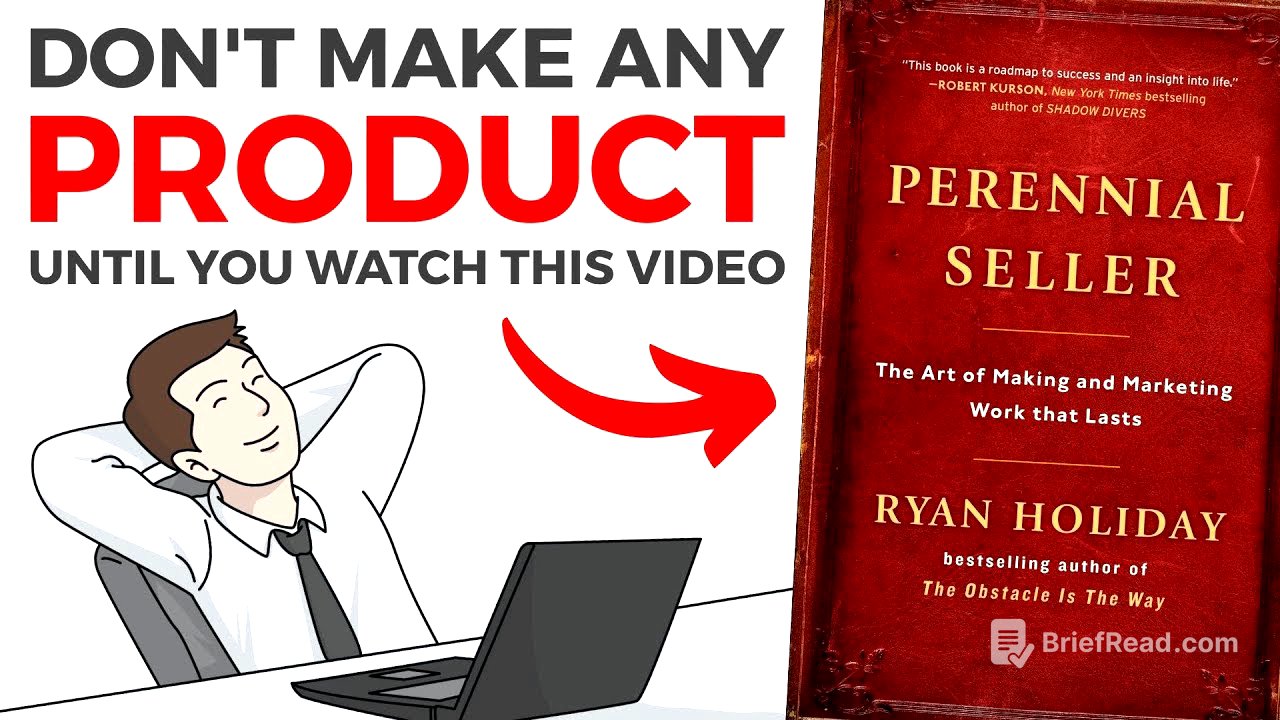
This video discusses the concept of "Perennial Sellers," products that continue to sell well for years without advertising, using Ryan Holiday's book as a guide. It highlights three key principles for creating such products: making them timeless by addressing enduring problems, specific by catering to a dedicated fan base, and accessible by ensuring they are easy to obtain. The video emphasizes the importance of "word of mouth" marketing and focuses on both the "making" and "marketing" aspects of creating perennial products, advocating for a focus on building an audience rather than immediate profit.
- Timelessness: Address enduring problems that remain relevant over time.
- Specificity: Cater to a dedicated fan base who love the product.
- Accessibility: Ensure the product is easy to obtain and share.
Storyline [0:00]
The video introduces the concept of "Perennial Sellers," which are products that continue to sell for many years without advertising. Examples include the movie "DDLJ," the book "How to Win Friends & Influence People," and products like Tom & Jerry and Parle-G. Ryan Holiday studied these classic products to understand why they sell for years and identified key principles used in their creation. The video aims to help creators make products that are well-liked, sell for years, and command high prices, even if they are not as renowned as someone like Steve Jobs. The key to a product becoming a "word of mouth" success lies in designing it based on three principles: timelessness, specificity, and accessibility.
Make It Timeless [2:00]
The first principle is to "Make it Timeless" by solving problems that don't become outdated. Dale Carnegie's book "How to Win Friends & Influence People" is an example because it addresses social anxiety, a problem that persists across generations. When creating a product, one should ask, "Why will people buy my product even after 10 years?" The focus should be on recurring human problems rather than temporary trends. Robert Greene's "The 48 Laws of Power" is another example of a perennial seller because it addresses enduring human issues related to power dynamics.
Make It Specific [3:04]
The second principle is to "Make it Specific." People share products they genuinely love, and they love products that are specifically made for them. Enthusiastic recommendations from satisfied customers are powerful marketing tools that generate "word of mouth" interest, leading to continuous growth in the product's audience. Paul Graham of Y Combinator suggests that it's better to create a product that 100 people love than one that 1 million people merely like. The initial goal is to acquire "Raving Fans" who become marketers themselves because the product is specifically tailored to their needs. Marketing expert Seth Godin emphasizes that "word of mouth" begins with a single customer, so finding one person, offering them the product for free, and exciting them can lead to exponential growth as they recruit others.
Make It Accessible [4:16]
The third principle is to "Make It Accessible." Many useful resources are available for free on the internet, but people may not know about them if they are not easily accessible. TED Talks, with millions of subscribers and billions of views on YouTube, are a prime example. Their accessibility has led to widespread sharing and recognition, allowing TED conference organizers to charge significant fees for attendance. Major FMCG companies have grown by making their products available in small villages and big towns at low prices. Amazon's Jeff Bezos became the richest person by making shopping easily accessible. Generally, the more accessible a product is, the easier it is to market.
The self-sustaining aspect of any perennial product is "word of mouth," which is generated by making the product timeless, specific, and accessible. Creating such products involves two main parts: "Making" and "Marketing." Instead of tracking progress in microseconds, focus on long-term development. Timeless products cannot be outsourced; they require personal effort. To create a perennial masterpiece, aim high from the start, building layer by layer. Songwriters like Max Martin use methods like the "La Cart Test" to understand how listeners experience their music and make necessary changes before release.
Taking care of the making stage of perennial products is the most important, because if the product is useless, then no matter how much marketing you do, that product won't survive. Paulo Coelho, author of "The Alchemist," uploaded his book on pirated sites to reach a wider audience, especially in hard-to-reach countries like Russia. A genuine creator should focus on building an audience instead of immediate profit, as audiences can generate significant revenue. Perennial products sell because they address timeless problems, cater to specific users (Raving Fans), and are easily accessible.