TLDR;
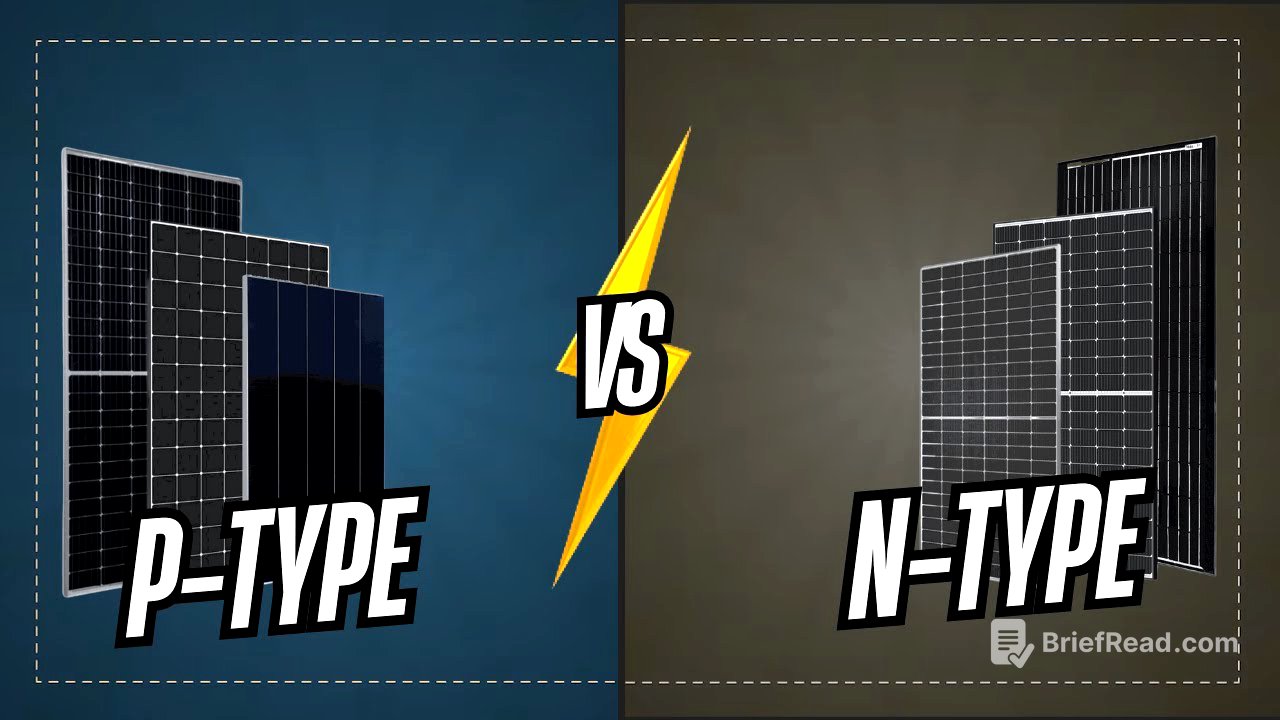
This video explains the differences between P-type and N-type solar panels, providing insights into their composition, efficiency, durability, and cost-effectiveness. The discussion helps potential solar users decide which type is suitable for their needs.
- P-type panels, which make up 90% of the market, use boron-doped silicon and are known for reliability but have some degradation issues.
- N-type panels, with phosphorus doping, are newer, more efficient, and more durable, though they come at a higher initial cost.
Introduction to Solar Panel Types [0:00]
The video begins by introducing P-type and N-type solar panels, highlighting their importance in the solar market and prompting viewers to consider which type suits their needs.
P-type Solar Panels [0:18]
P-type solar panels, where "P" stands for positive, use silicon wafers doped with boron to create a positive charge. These panels have dominated the market for decades, accounting for about 90% of solar panels. When sunlight hits the panels, it excites electrons, producing electricity. P-type panels are known for their cost-effectiveness and wide availability, making them a reliable choice.
N-type Solar Panels [0:57]
N-type solar panels, designated with "N" for negative, use silicon doped with phosphorus, which results in a negative charge. Although these panels are more expensive to manufacture, they are considered more advanced and are gaining popularity due to their ability to maintain high efficiency over time. Many homeowners prefer N-type panels for their longevity and greater efficiency.
Key Differences between P-type and N-type Panels [1:26]
The video outlines several key differences between the two types of solar panels. P-type panels are prone to light-induced degradation (LID), losing efficiency shortly after installation, while N-type panels are resistant to this issue. Additionally, N-type panels achieve higher efficiency levels (20-24%) compared to P-type (17-20%), perform better in high temperatures, and are more durable against potential induced degradation (PID). The upfront cost of P-type panels is lower (10-20% cheaper), but N-type panels often present better long-term value due to their longevity and higher efficiency.
Choosing the Right Solar Panel [3:12]
In conclusion, potential buyers looking for a budget-friendly option and sufficient roof space may choose P-type panels. However, for those prioritizing maximum performance, better long-term value, and adopting the latest technologies, investing in N-type panels is advisable.