TLDR;
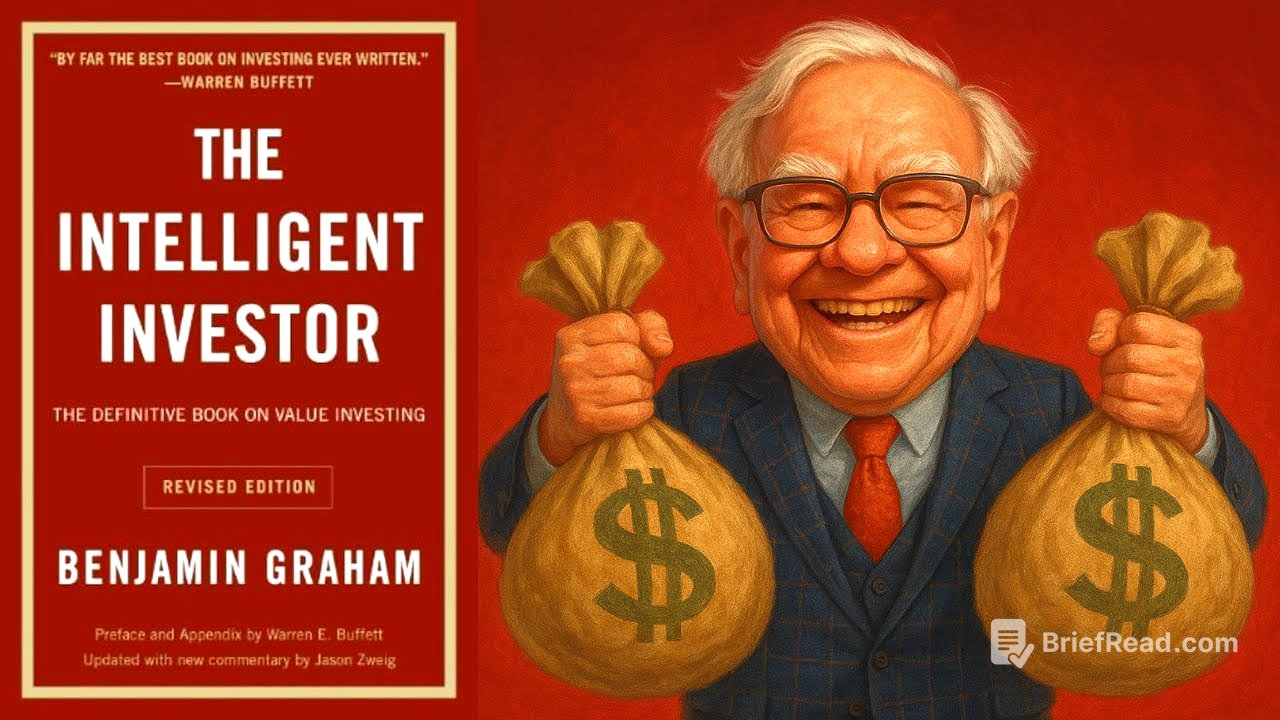
This video summarizes "The Intelligent Investor" by Benjamin Graham, a book that Warren Buffett credits with teaching him the fundamentals of investing. The video outlines key concepts such as the difference between investors and speculators, defensive versus aggressive investing, understanding market fluctuations through the persona of "Mr. Market," and the importance of the margin of safety. The core message is to focus on intrinsic value, ignore trends, and prioritize a margin of safety to become a successful investor.
- Investors vs. Speculators
- Defensive vs. Aggressive Investing
- Market Fluctuations and "Mr. Market"
- Margin of Safety
Introduction [0:00]
The video is sponsored by viewers and followers of the "جيل يقرأ" channel, encouraging support through platforms like PayPal, YouTube, and Patreon. Viewers can also support the channel by liking and sharing the video. Additionally, the episode is sponsored by Kursat.com, an online learning platform where viewers can use a provided code for a 70% discount on any course. Viewers are invited to suggest future book summaries by choosing from three books displayed on the screen.
Warren Buffett's Early Life and Influences [1:15]
Warren Buffett was born on August 30, 1930, in Omaha, Nebraska, during the Great Depression. His father, Howard Buffett, worked as a financial analyst and later entered politics. Buffett's mother was a homemaker who faced financial difficulties during the Depression. At age six, Buffett started buying and selling Coca-Cola for profit. By 11, he bought his first stock in Cities Service. Unlike his peers, Buffett spent time analyzing stock prices. He experienced an early loss when his first stock declined, teaching him the importance of patience over intelligence in investing, a key lesson from value investing principles taught by Benjamin Graham. Graham's teachings were instrumental in shaping Buffett into a successful and intelligent investor.
Investors vs. Speculators [4:41]
Benjamin Graham distinguishes between investors and speculators. Many who consider themselves investors are actually speculators. Speculators focus on short-term price movements, driven by fear of missing out (FOMO) when prices rise and selling when prices fall. They rely on immediate news and public opinion, neglecting long-term financial analysis. True investors, however, base decisions on thorough analysis, studying earnings, assets, debts, and management. They focus on long-term prospects and are not swayed by market fluctuations or immediate news. For example, an investor might buy more of a company's stock if its price drops due to poor short-term results, understanding the company's underlying value.
Defensive Investor [7:54]
The video discusses two types of investors: defensive and aggressive. A defensive investor seeks safety and simplicity, allocating investments across stocks and bonds (typically 50/50, adjusting to 75/25 as needed). They use low-cost index funds and focus on stable, large companies. Defensive investors employ dollar-cost averaging, investing a fixed amount regularly to buy fewer shares when prices are high and more when prices are low, avoiding market timing. The video advises Muslim viewers to consider religious guidelines when investing. The defensive approach prioritizes diversification, risk reduction, and investing in reliable stocks.
Aggressive Investor [10:19]
An aggressive investor, also known as an enterprising investor, dedicates significant time and effort to analyzing companies and identifying rare opportunities. Their goal is to outperform the market, even by a small margin like 5%. They seek bargain stocks undervalued by the market, strong companies facing temporary issues, and industries experiencing widespread panic. They look for stocks selling at less than two-thirds of their actual value. For example, an aggressive investor might see the airline industry during the COVID-19 pandemic as an opportunity. They have less strict criteria than defensive investors, potentially accepting companies with lower earnings or smaller market caps, provided the price is low and the fundamentals are solid.
Market Fluctuations and "Mr. Market" [12:59]
Market fluctuations are driven by investor emotions rather than a company's true value. To understand these fluctuations, one must understand "Mr. Market," a fictional character representing the market's irrational behavior. Mr. Market offers to buy high one day and sell low the next, reflecting mood swings. The intelligent investor uses Mr. Market's behavior to their advantage, buying when Mr. Market is pessimistic and selling when he is optimistic. For example, Amazon's stock dropped over 80% in 2001 despite the company's continued growth due to fear after the dot-com bubble burst. The key is to use the market, not be used by it.
Margin of Safety [16:35]
The margin of safety, a principle Warren Buffett learned from Benjamin Graham, involves buying assets only when the price is significantly below their intrinsic value. This provides a buffer against errors and unforeseen circumstances. It's like building a bridge to hold 10,000 tons but engineering it to handle 30,000 tons. For example, if a toy company makes a $4 profit per toy, a margin of safety exists if the company can still profit even if earnings drop to $1 per toy. When investing, consider the potential for loss and ensure a margin of safety to withstand adverse conditions.
Conclusion [19:13]
The video summarizes key concepts from "The Intelligent Investor," emphasizing the differences between investors and speculators, defensive and aggressive investing strategies, understanding market volatility through the lens of "Mr. Market," and the critical importance of a margin of safety. The intelligent investor focuses on intrinsic value, avoids following trends, and always seeks a margin of safety. By applying these principles consistently, one can become a more successful investor. A written summary of the episode is available via a Telegram channel, accessible through a link in the video description or by scanning a QR code.