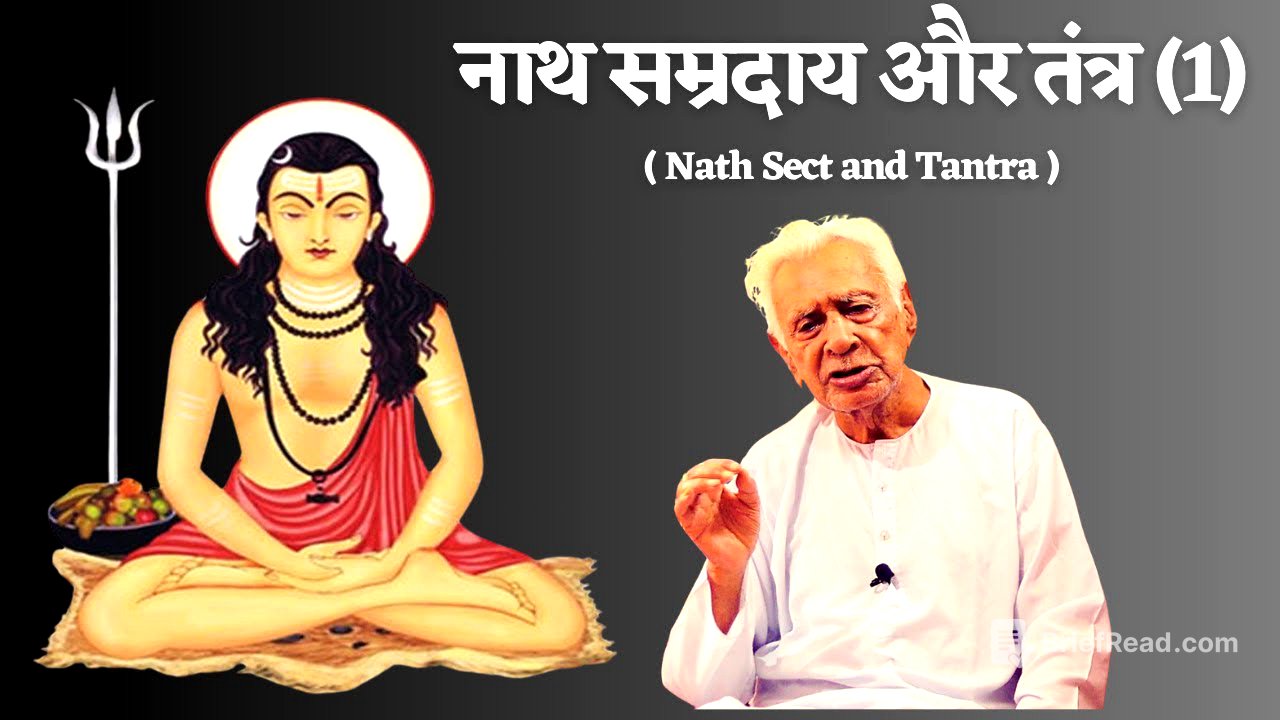
TLDR;
This video explores the essence of spirituality in India and the paths to self-realization as taught by various saints and traditions. It focuses on the Nath Sampradaya, its origins with Adinath (considered an incarnation of Shiva), and the lineage of prominent Naths like Matsyendranath and Gorakhnath. The video also discusses the significance of yoga, tantra, and the challenges faced by practitioners in their spiritual journeys.
- Spirituality and self-realization in India
- The origins and key figures of the Nath Sampradaya
- The importance of yoga and tantra in spiritual practice
- The challenges and pitfalls in the pursuit of enlightenment
Introduction to Spirituality in India [0:00]
India is portrayed as a land where spirituality is deeply ingrained, with numerous saints and mahatmas striving to understand the soul and God. The concept of "re-ligion" is introduced, emphasizing the reconnection of individuals with their origin or a supernatural power governing the universe. This power is referred to by various names across different faiths. Some advocate integrating spirituality into daily life, balancing worldly concerns with the pursuit of the afterlife. This integration has led to the emergence of diverse sects, each following the path shown by its respective founder.
The Significance of the Guru [1:55]
The importance of the Guru is highlighted through a Persian couplet, emphasizing unwavering faith in the Guru's guidance, even if it seems unconventional. This belief is central to certain paths where the Guru is revered as the highest deity, whose grace is essential for spiritual upliftment. The Guru tradition is particularly strong within the Nath Sampradaya.
Origins of Nath Sampradaya [4:18]
The founder of the Nath Sampradaya is considered to be Adinath, also known as Shrinath. He is depicted with Brahma (Shiva) on his left and Shakti (Mahamaya) on his right, symbolizing his complete mastery and role as a guide to liberation. Adinath is credited with establishing yoga as a fundamental practice, essential for spiritual attainment across various Indian traditions, including Vedanta, Samkhya, and Mimamsa. Yoga's principles are reflected in the ethical codes of Buddhism and Jainism.
The Lineage of Naths [7:27]
The Nath Sampradaya boasts a lineage of accomplished gurus, with nine Naths and eighty-four Siddhas being particularly revered. The nine Naths include Bharthari, Krishnapad, Gopichand, Charpatinath, Kanhapa, Jalandharnath, and Gorakhnath. Adinath, through intense penance in the Himalayas, received Shiva's essence, becoming Shiva himself. Shiva bestowed his divine earrings, symbols of dispelling ignorance, to Adinath, making it mandatory for all Naths to wear similar Kundals, leading to the practice of piercing the ears.
Matsyendranath: The Fish-Born Guru [11:30]
Adinath passed his knowledge to Matsyendranath, also known as Machindranath. One story recounts how Kartikeya threw the Kulagam (tantra of the goddess) into the sea, leading to a decline in the worship of Shakti. अभिनव गुप्त emphasized the importance of Shakti, stating that without it, Shiva is merely a corpse. To restore Shakti's prominence, Shiva dove into the ocean and found the Kulagam inside a fish. He extracted it, and Matsyendranath was born from the fish.
The Legend of Matsyendranath and the अमरकथा [14:44]
Another legend tells of Shiva imparting the अमरकथा (immortality story) to Parvati on a boat in the middle of the ocean. Parvati falls asleep, but a fish under the boat continues to respond with "hum," leading Shiva to believe Parvati is still listening. Upon realizing the fish had learned the secret knowledge, Shiva blessed it, and it became Matsyendranath. However, due to learning the knowledge through deception, Matsyendranath was destined to forget it.
Matsyendranath as Alakh Niranjan [18:58]
अभिनव गुप्त presents an alternative interpretation, stating that Matsyendranath isn't born from a fish but is one who has conquered the जाल (net) of माया (illusion), आता (sorrow), and विधा (ignorance). He transcends आकार (form) and निराकार (formless), becoming Alakh Niranjan – unseen and perfect.
The Teachings and Challenges of Matsyendranath [20:55]
Matsyendranath, having received direct knowledge from Adinath, spread it through various scriptures like the Hatha Yoga Pradipika and Gheranda Samhita. He emphasized the importance of yoga and introduced the concept of three bandhas (Mula Bandha, Uddiyana Bandha, and Jalandhara Bandha) to awaken Kundalini Shakti. While propagating yoga, Matsyendranath reached Kamakhya, a region known for its association with tantric practices.
The Fall and Redemption of Matsyendranath [22:58]
In Kamakhya, Matsyendranath was influenced by distorted Buddhist tantric practices, particularly the Pancha Makara (five Ms): Madya (alcohol), Mansa (meat), Matsya (fish), Mudra (gestures), and Maithuna (sexual intercourse). He became infatuated with the 16,000 women in Kadalivan, forgetting the knowledge imparted by Shiva. Gorakhnath, his disciple, found him in this state. Disguised as a dancer, Gorakhnath entered Kadalivan and used coded messages in his dance to remind Matsyendranath of his true purpose, ultimately leading to his redemption.