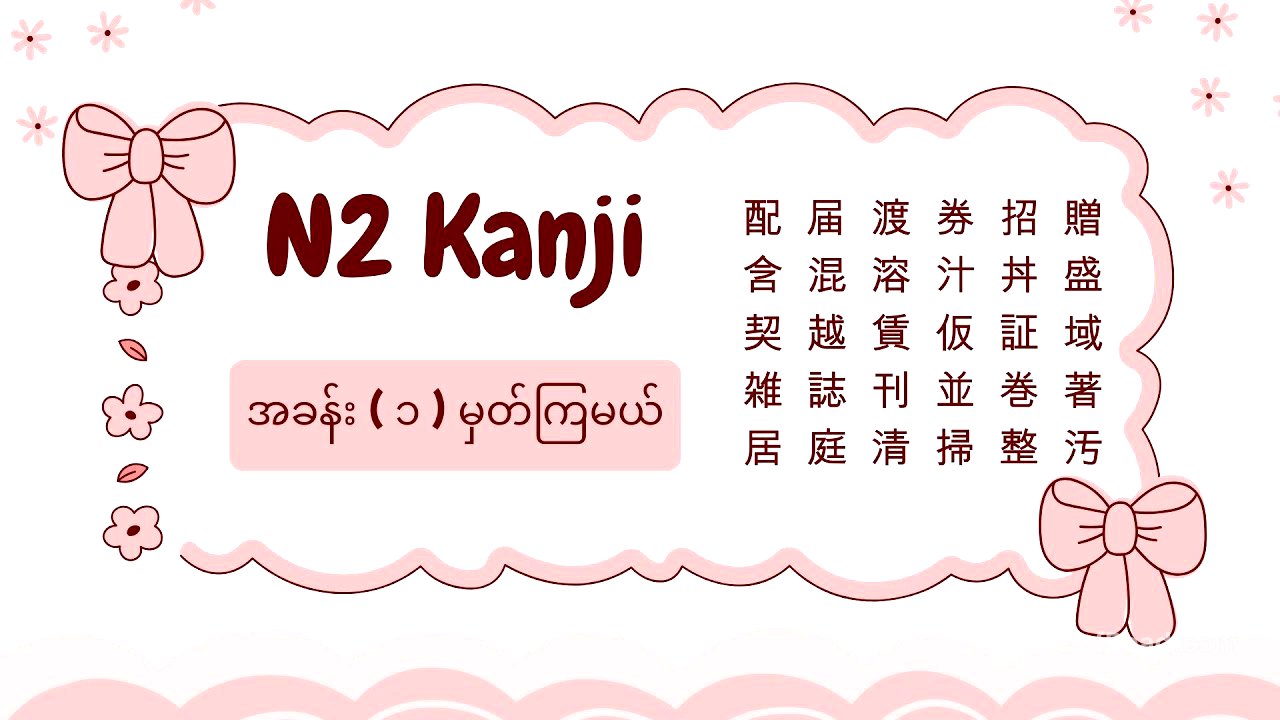
TLDR;
This video provides a comprehensive Japanese vocabulary lesson, focusing on the nuances and usage of various words through example sentences and scenarios. It covers topics such as distribution, delivery, transfer, tickets, invitations, sending gifts, inclusion, mixing, melting, juices, serving, cutting, crossing, payment, borrowing, assumptions, proof, areas, noises, magazines, gardens, purity, cleaning, arrangement, and pollution.
- The lesson uses real-life situations to illustrate the meanings of the words.
- It includes practical examples to help learners understand the context in which these words are used.
- The video covers a wide range of vocabulary, from basic to more complex terms.
Distributing and Handing Out [0:01]
The lesson starts with the verb "配る" (kubaru), which means to distribute or hand out. Examples include distributing papers, paying attention to others, newspaper delivery, worrying, and allocating profits. These examples show the different contexts in which "配る" can be used, from physical distribution to abstract concepts like attention and concern.
Delivering and Reaching [0:21]
The video explains the verb "届ける" (todokeru), which means to deliver. It is demonstrated through examples such as a letter arriving, delivering souvenirs, and safely delivering children to kindergarten. Additionally, the term "欠席届け" (kesseki todoke), meaning absence report, is introduced.
Passing and Crossing [0:42]
The lesson covers the verb "渡る" (wataru), which means to cross or pass, and "渡す" (watasu), which means to hand over. Examples include crossing a road, handing something to someone, migratory birds (渡り鳥, wataridori), a ferry (渡し舟, watashibune), and overseas travel (渡航, tokou) along with the procedures for it.
Tickets and Invitations [1:04]
This section focuses on "券" (ken), meaning ticket, and "招く" (maneku), meaning to invite. Examples include train tickets (乗車券, joushaken), admission tickets (入場券, nyuujouken), commuter passes (定期券, teikiken), passports (旅券, ryoken), stock certificates (株券, kabuken), and securities (証券, shouken). The lesson also covers inviting someone to a birthday party, beckoning, invitations (招待, shoutai) to a wedding, receiving an invitation card, and convening a parliament (議会を招集する, gikai wo shoushuu suru).
Sending Gifts and Including [1:52]
The video explains the verb "送る" (okuru), which means to send, and "含める" (fukumeru), which means to include. Examples include sending a present, gifts (贈り物, okurimono), gift sections in stores (贈答品売り場, zoutouhin uriba), donating (寄贈する, kizousuru), holding water in the mouth, including oneself among siblings, calcium content in milk, and the term "含有量" (ganyuu ryou), meaning content.
Mixing and Melting [2:30]
This section covers verbs related to mixing and melting: "混じる" (majiru), "混ざる" (mazaru), "混ぜる" (mazeru), "混む" (komu), "溶ける" (tokeru), "溶かす" (tokasu), and "溶く" (toku). Examples include barley mixed in rice, stirring well, mixing flour and eggs, crowded trains, confusion (混乱, konran), ice melting, melting butter, dissolving paint, fitting into a new class, and lava (溶岩, yougan).
Juices and Serving [3:27]
The lesson explains the word "汁" (shiru), meaning juice or soup, and "盛る" (moru), meaning to serve. Examples include miso soup (味噌汁, misoshiru), fruit juice (果汁, kajuu), ramen soup stains on clothes, donburi (丼), serving side dishes, large servings (大盛り, oomori), thriving (育ち盛り, sodachimori), lively cheers (盛んな声援, sakan na seien), and grand weddings (盛大な結婚式, saidai na kekkonshiki).
Cutting and Crossing Over [4:25]
This section covers "ちぎる" (chigiru), meaning to tear or pluck, "越す" (kosu) and "越える" (koeru), meaning to cross over. Examples include making a contract, contract documents (契約書, keiyakusho), signing a contract, cake, entering a tennis club, julienning (千切り, sengiri), crossing a mountain pass, crossing a border, eating toshikoshi soba on New Year's Eve, overtaking a car, and having a sense of superiority (優越感を持つ, yuuetsukan wo motsu).
Payment and Borrowing [5:20]
The lesson explains vocabulary related to payment and borrowing: "払う" (harau), "賃" (chin), and "借り" (kari). Examples include paying rent, high bus fares (運賃, unchin), paying wages (賃金, chingin), rental apartments (賃貸マンション, chintai manshon), borrowed housing (借り住まい, kari sumai), and a provisional license (仮免許, kari menkyo).
Assumptions and Proof [5:48]
This section covers "仮定" (katei), meaning assumption, and "証明" (shoumei), meaning proof. Examples include making assumptions, forming a hypothesis (仮説を立てる, kasetsu wo tateru), proving innocence, testimony (証言, shougen) in court, a guarantor (保証人, hoshounin), and identification documents (身分証明書, mibun shoumeisho) such as a driver's license (免許証, menkyosho).
Areas and Noises [6:31]
The video explains terms related to areas and noises: "地域" (chiiki), "領域" (ryouiki), "流域" (ryuuiki), and "雑音" (zatsuon). Examples include restricted areas (立入禁止区域, tachiiri kinshi kuiki), a country's territory, river basins, noise, chatter (雑談, zatsudan), and complex calculations (複雑な計算, fukuzatsu na keisan).
Magazines and Gardens [7:03]
This section covers "雑誌" (zasshi), meaning magazine, and "庭" (niwa), meaning garden. Examples include using a dust cloth (雑巾, zoukin), poetry magazines (詩雑誌, shizasshi), reading magazines, fashion magazines (ファッション誌, fasshonshi), diaries (日誌, nisshi), literary magazines (文芸誌, bungeishi), publishing literary magazines, and planting flowers in the garden.
Purity and Cleaning [7:40]
The lesson explains "清い" (kiyoi), meaning pure, and "掃除" (souji), meaning cleaning. Examples include government officials (長官, choukan), daily magazines (日刊誌, nikkan shi), weekly magazines (週刊誌, shuukan shi), repatriation (送還, soukan), tourism (観光, kankou), tourist attractions, a pure heart (清い心, kiyoi kokoro), purifying the mind, cleansing oneself at a waterfall, cleaning (清掃, seisou), a clean sweep (一掃, issou), sweeping up fallen leaves, cleaning a room, cleaning a classroom, and eradicating organized crime (暴力団を一掃する, bouryokudan wo issou suru).
Arrangement and Pollution [9:48]
This section covers "整える" (totoreru), meaning to arrange, and "汚れ" (yogore), meaning dirt or pollution. Examples include tidying up a bookshelf, preparations being in order (準備が整う, junbi ga tototou), organizing (整理, seiri) the contents of a drawer, tidying up (整理整頓, seiri seiton), dirty hands, polluted water (汚水, osui), and defaming a name (名前をけがす, namae wo kegasu).
Lining Up and Winding [8:05]
The video explains "並ぶ" (narabu), meaning to line up, and "巻く" (maku), meaning to wind. Examples include arranging desks and chairs in a classroom, lining up to wait for a bus, eating a wave portion of a beef bowl (牛丼の波を食べる, gyuudon no nami wo taberu), living an average life (人並みに生活する, hitonami ni seikatsu suru), series and parallel (直列と並列, chokuretsu to heiretsu), winding a bandage, nori巻き (norimaki), right-handed winding (右巻き, migimaki), upper volume (上巻, joukan), lower volume (下巻, gekan), and complete volume (全巻, zenkan).
Books and Dwellings [8:52]
This section covers "本" (hon), meaning book, and "居る" (iru), meaning to be or dwell. Examples include a complete guide (虎の巻, toranomaki), representing a book, remarkable progress (著しい進歩, ichijirushii shinpo), famous people (著名人, chomeijin), books (著書, chosho), authors (著者, chosha), classic literature masterpieces (古典文学の名著, koten bungaku no meicho), being at home watching TV, using a virus (ウイルスを使う, uirusu wo tsukau), a play (芝居, shibai), residence (居住, kyojuu), public residence (公居, koukyo), and living with parents (親と同居する, oya to doukyo suru).