TLDR;
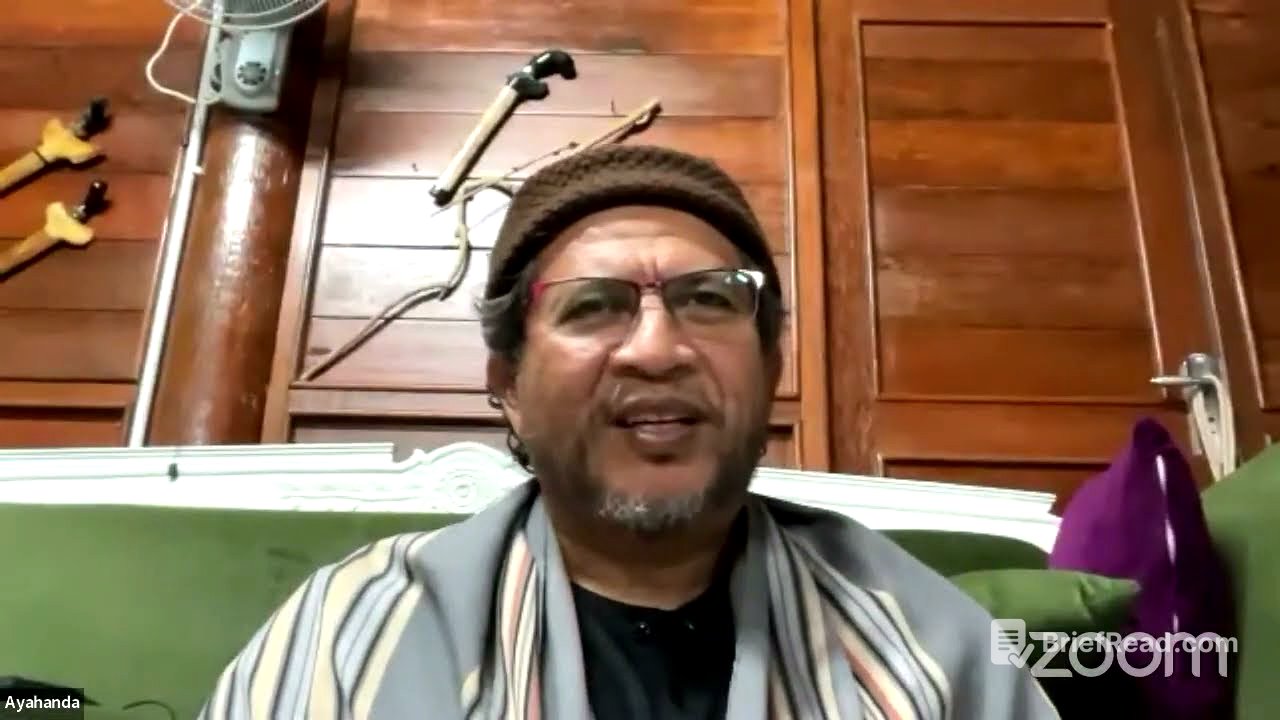
This YouTube video features a religious lecture and discussion focusing on Islamic theology, specifically the concept of "Tauhid Ibrahim" (Abrahamic monotheism). The speaker emphasizes the importance of combining knowledge and spiritual experience in understanding God, and explores the nuances of Islamic faith, including the nature of God, the role of prophets, and the interpretation of religious texts. The lecture also touches on the significance of "sanad" (chain of transmission) in ensuring the authenticity of religious knowledge, and the relationship between divine law, natural law, and human intellect.
- The essence of Tauhid Ibrahim lies in the integration of knowledge and spiritual experience.
- Understanding God involves recognizing His attributes through His creations.
- The "sanad" validates the authenticity of our faith.
- Divine law surpasses human intellect and natural law.
Introduction [0:00]
The session begins with an introduction, expressing gratitude to the speaker for sharing his knowledge and emphasizing the opportunity for attendees to deepen their understanding of Islamic teachings. The host outlines the format of the session, which includes a lecture followed by a Q&A segment, and reminds participants of the etiquette expected during the online gathering, such as refraining from interrupting the speaker with comments.
Tauhid Ibrahim: Knowledge and Spiritual Experience [4:00]
The speaker begins by explaining that "Tauhid Ibrahim" emphasizes a combination of knowledge and spiritual experience ("zauk" or "syuhudi zauk"). He clarifies that intellectual understanding alone is insufficient without a corresponding spiritual connection, and vice versa. The speaker notes that while basic knowledge of Islamic tenets is sufficient for the general public, advanced study is aimed at deepening understanding and addressing complex theological questions. He stresses that the pursuit of knowledge should lead to a more profound appreciation of God's attributes and actions.
Clarification on Islamic Theology [8:38]
The speaker quotes Imam as-Sanusi, emphasizing that while basic knowledge of "Lailahaillallah" (There is no god but Allah) and "Muhammad Rasulullah" (Muhammad is the Messenger of Allah) is sufficient for faith, detailed study is for perfecting faith and avoiding heretical interpretations. He explains that advanced study is necessary to counter misleading ideologies and strengthen one's understanding of God and the prophets. The speaker draws an analogy to Islamic jurisprudence ("fiqh"), where advanced study reveals the complexities and nuances of religious law.
The Importance of Sanad in Islamic Knowledge [17:18]
The speaker presents a diagram illustrating the "sanad" (chain of transmission) of Islamic knowledge, tracing it back to key figures such as Saidina Ali Bin Abi Talib and Saidina Abdullah bin Umar. He emphasizes the importance of ensuring that one's beliefs are rooted in the teachings of the Prophet Muhammad and his companions. The speaker clarifies that while specific formulations like the "20 attributes of Allah" may not have existed during the Prophet's time, the underlying concepts are derived from his teachings. He stresses that these formulations are tools for understanding and defending the faith against misinterpretations.
Understanding the Attributes of God [24:04]
The speaker explains that the "20 attributes of Allah" are a systematic way of understanding God's nature, including attributes of negation ("salbiah") and attributes of meaning ("maani"). He emphasizes that these attributes are not innovations but rather elaborations on the teachings of the Prophet Muhammad. The speaker addresses the question of whether the Prophet Muhammad adhered to the Ash'ari school of theology, clarifying that while the Prophet predated the formalization of Ash'ari theology, his teachings are consistent with its principles. He stresses that the goal is to understand the Prophet's teachings, not to blindly adhere to a particular school of thought.
Avoiding Extremism in Theological Debates [29:53]
The speaker cautions against condemning those who hold differing theological views, emphasizing that their intentions may be sincere even if their understanding is flawed. He explains that differing interpretations often stem from attempts to glorify God, even if they lead to anthropomorphic or other problematic conceptions. The speaker stresses the importance of focusing on strengthening one's own understanding rather than attacking others.
The Three Laws: Intellect, Custom, and Divine Law [33:28]
The speaker introduces three types of laws: intellectual law ("hukum akal"), customary law ("hukum adat"), and divine law ("hukum syarak"). Intellectual law refers to logical principles, customary law to natural laws and societal norms, and divine law to religious commandments. He explains that a sound mind must acknowledge God's existence and attributes.
Intellectual Law and the Limits of Reason [34:31]
A participant asks about the claim made by philosophers that humans can find God through intellect, while in Islamic understanding, intellect has limitations. The speaker responds that intellect can grasp God's actions, names and attributes, but not His essence. He emphasizes that intellect must be guided by divine law to avoid deviation.
Customary Law and the Natural Order [45:23]
The speaker explains that customary law refers to the natural order and the laws of physics. He notes that scientific inquiry is essentially the study of God's established patterns in the universe. The speaker emphasizes that customary law is not absolute but can be superseded by divine intervention.
Divine Law and the Supremacy of Revelation [58:06]
The speaker explains that divine law, as revealed in the Quran and the teachings of the Prophet Muhammad, takes precedence over intellectual and customary law. He cites examples such as the miraculous birth of Jesus and the Prophet Muhammad's night journey to illustrate the limitations of human reason and the supremacy of divine revelation. The speaker cautions against using science to validate the Quran, emphasizing that the Quran is the ultimate source of truth.
The Role of Prophets and the Limits of Human Understanding [1:07:30]
The speaker emphasizes the importance of prophets in conveying knowledge that is beyond the reach of human intellect and customary law. He explains that belief in the unseen, such as the existence of angels and the afterlife, is based on trust in the prophets. The speaker recounts the story of Abu Bakr's unwavering belief in the Prophet Muhammad's account of the night journey, even when others doubted it.
The Importance of Divine Assistance [1:29:23]
A participant asks about a situation where some individuals, through their own practices, have their "kashf" (spiritual vision) opened, leading them to question their teachers. The speaker responds that this is often a deception by "jinn" (spirits). He explains that true "kashf" from God does not occur frequently and does not lead to arrogance or belittling others. The speaker emphasizes the importance of verifying spiritual experiences with knowledgeable and trustworthy teachers.
Extraordinary Events: Miracles, Charisma, and Divine Favor [1:35:17]
The speaker discusses extraordinary events that defy the natural order, distinguishing between miracles ("mukjizat") granted to prophets, charisma ("karamah") granted to saints, divine assistance ("maunah") granted to righteous individuals, and "istidraj" (a deceptive blessing) granted to evildoers. He explains that miracles and charisma are signs of divine favor, while "istidraj" is a means of leading evildoers further astray.
The Essence of God: Ilah and Rabb [1:56:18]
The speaker explains that "Ilah" refers to the God who is worthy of worship, while "Rabb" refers to the God who creates, sustains, and governs the universe. He emphasizes that true faith involves recognizing God as both the object of worship and the source of all blessings. The speaker quotes a saying that whoever fulfills the rights of God's servants, God will fulfill their rights as their Lord.
The Attributes of God and the Purpose of Creation [2:09:18]
The speaker explains that God's attributes are inseparable from His essence. He emphasizes that God created the universe to manifest His attributes and make Himself known to humanity. The speaker draws an analogy to human creativity, explaining that artists express their character through their works. He emphasizes that by reflecting on God's creation, we can gain insight into His attributes and deepen our love for Him. The speaker concludes by stressing the importance of recognizing God's presence in every aspect of our lives.