TLDR;
This video explores the Sinai Covenant and the Ten Commandments, revealing a divine pattern that extends from Eden to the Tabernacle and foreshadows the coming of the Messiah. It emphasizes the concept of sacred space, the importance of covenants, and the role of mediators, ultimately connecting these themes to Jesus Christ and the opportunity for all to enter God's presence.
- The Sinai Covenant establishes Israel as a holy nation set apart.
- The Tabernacle mirrors Mount Sinai, providing a portable sacred space.
- This pattern of sacred space echoes back to Eden and is fulfilled in Jesus Christ, who mediates a new covenant.
Introduction to the Sinai Covenant [0:00]
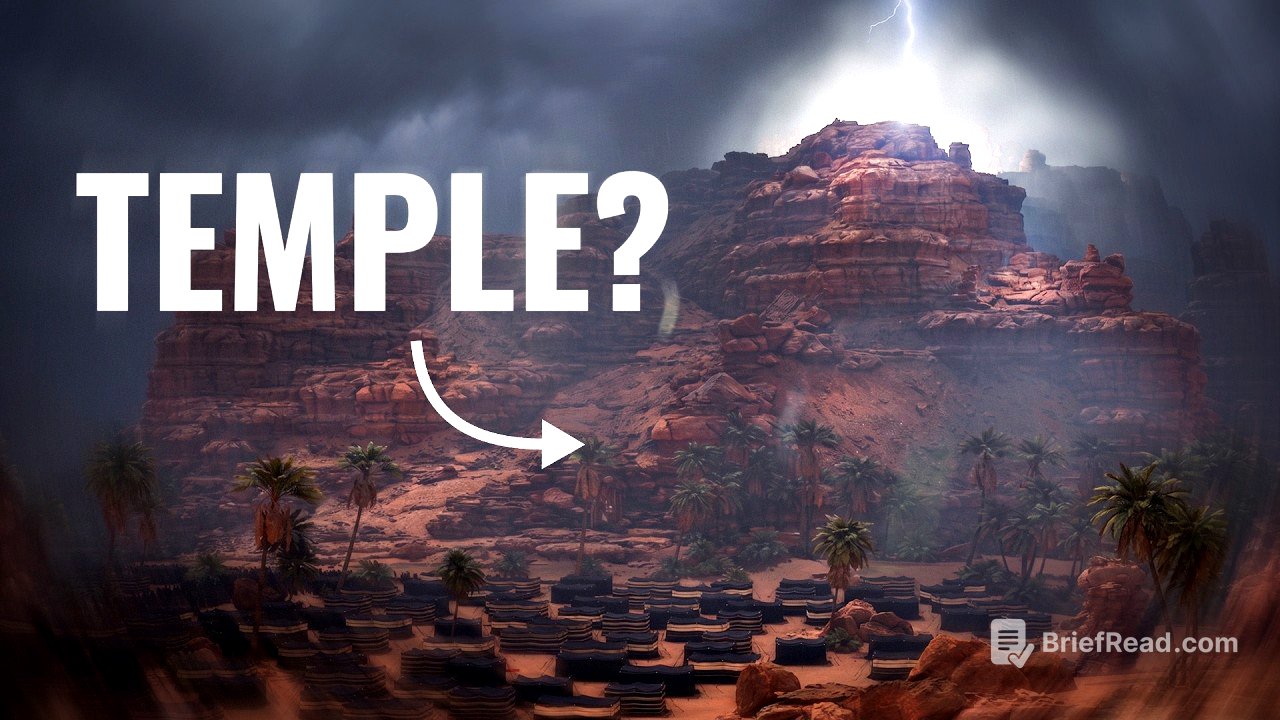
Around 1450 BC, at Mount Sinai, God descends in thunder, lightning, and fire, marking a pivotal moment for Israel. The Sinai Covenant and the Ten Commandments are presented as a complex but crucial narrative, revealing a divine pattern that stretches from the beginning of time, prefigured in the Ark, echoed in the Tabernacle, and ultimately foreshadowing the promised Messiah. Sinai is depicted as a sacred space, accessible only to those purified and set apart, divided into zones of increasing holiness, with Moses acting as the mediator who can enter God's presence.
The Covenant Proposal and Preparation [1:47]
Moses ascends Mount Sinai and meets with God, who proposes a covenant with Israel after redeeming them from slavery. God promises that if Israel obeys, they will be His treasured possession, a kingdom of priests, and a holy nation. To achieve this state of holiness, Israel must prepare by washing their clothes, abstaining from marital relations, and setting a boundary around the mountain, marking it as sacred space where no one can touch it on pain of death.
The Arrival of God and the Ten Commandments [3:18]
On the third day, God arrives at Mount Sinai amidst thunder, lightning, and a dark cloud, causing the mountain to shake. A ram's horn sounds, summoning Israel to the mountain, where they stand with Moses as God speaks the Ten Commandments. These commandments summarize the laws designed to set Israel apart and make them holy. Overwhelmed by God's presence, the people ask Moses to mediate on their behalf.
Ratification of the Covenant [5:22]
The covenant is accepted by the people, but it needs ratification. Moses builds an altar and offers sacrifices, splashing half the blood on the altar and half on the people, symbolizing the binding of the people to God and to each other through the covenant. This act secures a horizontal communal binding and a vertical spiritual binding, perfectly symbolized by Mount Sinai.
Ascension and Revelation [7:01]
Moses ascends the mountain again, this time with Aaron, his sons, and seventy elders, who see God enthroned in glory and celebrate the covenant with a meal in His presence. Moses is then called to the summit, where he waits for six days before entering the fiery darkness and receiving the stone tablets with the Ten Commandments and instructions to build the Tabernacle.
The Tabernacle: A Portable Sinai [8:35]
The Tabernacle, designed as a dwelling place for God, is divided into three zones: the outer courtyard, the Holy Place, and the Holy of Holies. Each zone mirrors a part of Mount Sinai, with the courtyard representing the base, the Holy Place the midpoint, and the Holy of Holies the summit. The Tabernacle allows Israel to reenact the Sinai covenant, experiencing God's presence in their midst, making it a portable version of Sinai.
Echoes of Sacred Space [11:23]
The three-zone pattern of sacred space extends beyond Sinai, echoing in the creation of the world, the Garden of Eden, and Noah's Ark. Eden is depicted as a mountain with the Garden at the summit, and Noah's Ark, with its three levels, mirrors the Tabernacle, coming to rest on a mountain where Noah makes a covenant with God. Sinai is thus a return to the sacred mountain of Eden, inviting Israel back to God's presence.
Jesus Christ: The New Moses [12:58]
Moses promised a prophet like himself, foreshadowing Jesus Christ, the Messiah, who would bring true redemption. Jesus mediates between God and humankind, just as Moses mediated between God and Israel. He fasted for forty days before revealing the "higher law" on the Mount, and He is the mediator of a new covenant, sealed not by the blood of animals but by His own blood.
The Torn Veil and Open Access [15:06]
With the shedding of Jesus' blood on the cross, the veil of the Temple is torn, symbolizing the breaking down of barriers between God and man. Through Jesus, the new Moses, the presence of God becomes accessible to all, inviting everyone to worship at the holy mountain. This is a return to Eden, offering all the opportunity to seek God's presence by repenting, keeping His commandments, and helping others, so that through His blood, they might be holy.