TLDR;
The video discusses the tradition of "bogwa," an exhumation practice among the Ifugao people in the Philippines. This ritual involves the careful excavation and cleaning of the remains of deceased relatives, reflecting cultural beliefs and respect for the dead. Family members engage in this tradition to ensure that the spirits of the deceased are at peace and to honor their memories.
- The "bogwa" ritual involves retrieving and cleaning the bones of deceased family members.
- The practice has become more accepted within the community, blending traditional and Christian beliefs.
Bogwa: The Ritual of Exhumation [0:00]
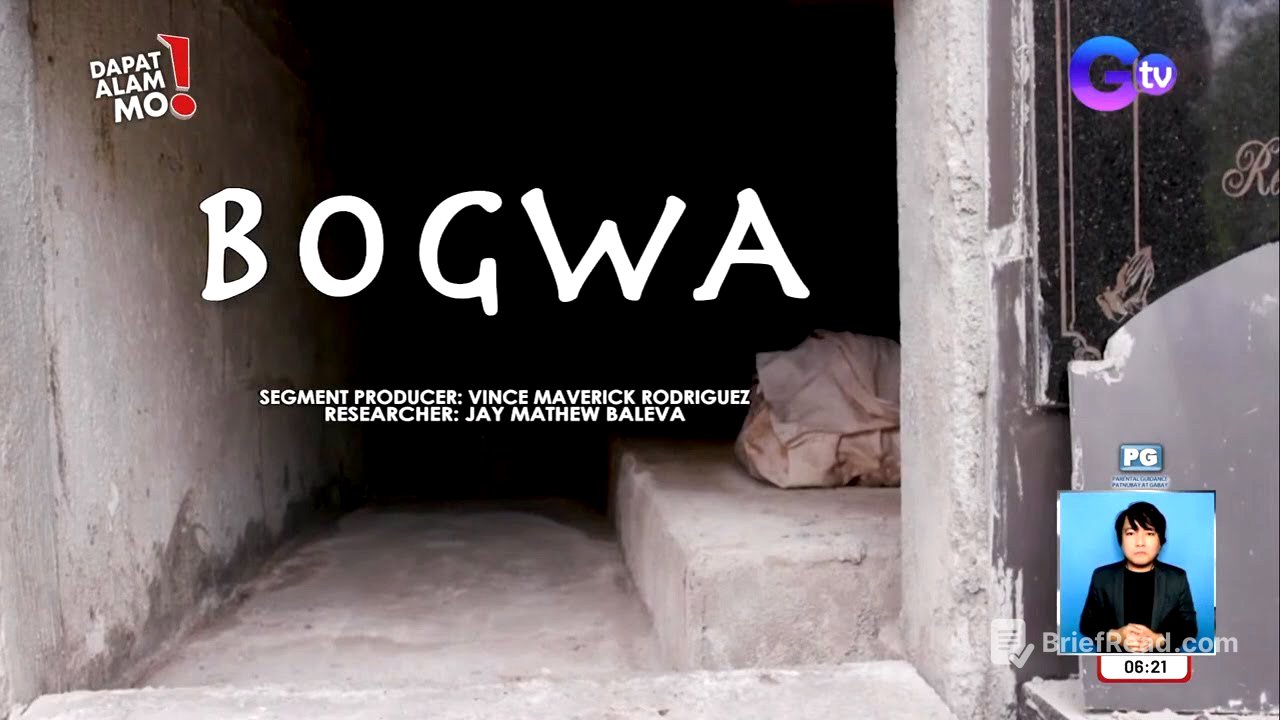
A group of men makes their way to a remote cemetery to perform the "bogwa" ritual, retrieving the remains of their deceased loved ones. They begin by breaking the concrete covering the grave of an 88-year-old woman named Lola Reina, who has been buried for fifteen years. Upon opening the tomb, they find her remains wrapped in white cloth, still displaying signs of her decay, which emphasizes the care taken in the ritual.
Exhuming and Cleaning the Remains [0:50]
As part of the "bogwa" process, the family cleans the remains meticulously. They remove not only the larger bones but also the smallest fragments to ensure respect for the deceased. The bones are often damp due to moisture in the tomb, so it is crucial to dry them properly and then wrap them in special cloth called "igamo" before returning them home for further rituals.
Cultural Significance and Rituals [2:30]
The ritual serves a deeper purpose beyond simply exhuming remains. It is believed that unresolved issues or illnesses in the family may be connected to departed relatives. To diagnose these problems, the community performs rituals, including "Baki," to determine which ancestor might be trying to communicate. The family of Lola Reina reports that her spirit has not found peace, prompting them to conduct the "bogwa."
Preparations and Celebrations [3:30]
The family prepares for the ritual by slaughtering pigs and water buffalo to share with relatives and friends during the wake. This practice symbolizes their appreciation and remembrance of the deceased's goodness. After the remains are cleaned and honored, they are reburied with the hope that Lola Reina's spirit will finally rest in peace.
Evolving Traditions [5:00]
The community’s acceptance of the "bogwa" ritual has evolved over time, transitioning from a discreet practice to one openly recognized in the modern era. As cultural practices adapt alongside religious beliefs, the integration of these traditions reflects the rich cultural tapestry of the Philippines. The video concludes with a reminder of the importance of remembering our loved ones and the traditions that honor them.