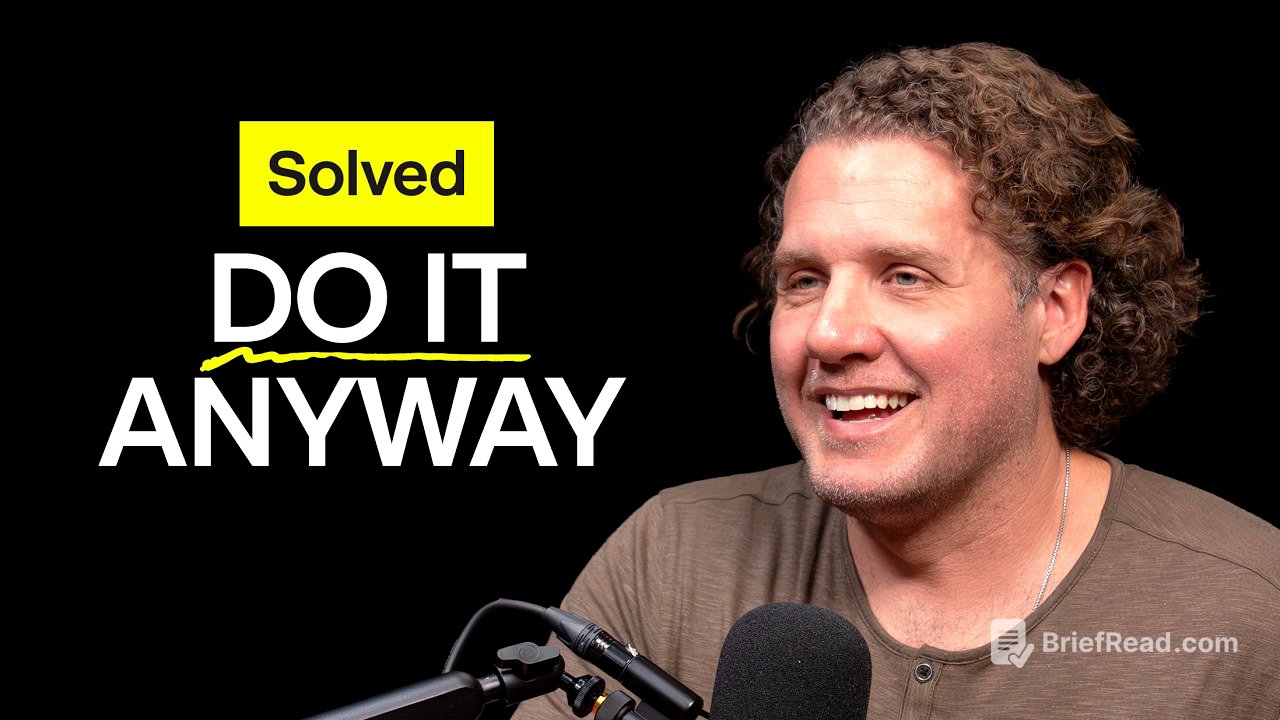
TLDR;
This episode of Solved explores the worth of meditation, addressing common skeptic claims and misconceptions. It clarifies that meditation is a skill-building practice, not a miracle cure, and highlights its validated benefits like stress reduction, emotional regulation, and attentional control. The discussion also covers secular alternatives, potential downsides, and the importance of mindfulness.
- Meditation is a skill, not a quick fix.
- Mindfulness is the real goal.
- There are validated benefits, but also potential downsides.
Introduction [0:00]
Mark Manson introduces the topic of meditation, questioning its worth and addressing the common feeling of stress associated with even considering it. He points out the irony of meditation being promoted by individuals who often don't embody inner peace. The core issue is a misunderstanding of meditation's true purpose: not to empty the mind, but to clearly see and understand its clutter. The episode will explore the overhyped early research, validated benefits, ineffective instructions, hidden reasons for resistance, and the distinction between meditation as an intervention versus a skill.
Skeptic Claim #1: Meditation Is Overhyped [8:15]
The initial excitement surrounding meditation led to exaggerated claims of it being a magic pill that could fix everything from stress to relationships. This hype was fueled by early research and amplified by information technology, resulting in apps and online courses promising unrealistic outcomes like permanent happiness and enlightenment. However, more careful research reveals that meditation is a skill that requires training and yields gradual outcomes. The focus should be on mindfulness, with meditation being a tool rather than a treatment.
Skeptic Claim #2: "Meditation Isn't for Me" [22:45]
Many people object to meditation because they believe they can't sit still, their minds are too busy, or they don't have time. However, meditation doesn't necessarily mean sitting quietly and thinking about nothing; walking meditation and mindful chores are also valid forms. The goal isn't to eliminate thoughts, but to observe them and detach from them. Even one minute of meditation can be beneficial, and those who feel they don't have time may need it most. A key point is that increased awareness through meditation can be uncomfortable, as it may reveal the need for change.
Meditation Isn't Safe or Helpful for Everyone [41:36]
Recent research indicates that meditation can be harmful in some cases, increasing anxiety or rumination. Individuals with a history of trauma should approach meditation cautiously and under supervision, as it can lead to dysregulation or re-experiencing trauma. While meditation can help with anxiety and OCD, it needs to be structured and supervised. The fit between the person and the practice is crucial, especially when dealing with mental health issues.
Skeptic Claim #3: The New-Agey, "Woo-Woo" Crowd Turns Me Off [48:33]
Many people are turned off by the association of meditation with new-age spirituality, which often includes claims about universal energy, chakras, and enlightenment. These ideas trace back to 19th-century American transcendentalism and new thought, which have been repackaged over the years. Eastern philosophy, with its concepts of shedding the self and the power of thought, has been integrated into new-age thinking. However, meditation is being unfairly implicated in this woowoo nonsense.
A Secular, Grounded Alternative: Meditation Without Metaphysics [1:01:01]
Meditation can be viewed as attention training, metacognitive awareness, and emotional regulation without the need for spiritual claims or belief systems. Buddhist thought aims to remove the illusion of self, understanding that identity markers are arbitrary and cause suffering. By holding experiences loosely and disidentifying with everything, one can relieve unnecessary suffering. This can lead to a feeling of oneness with everything as the boundaries between self and the universe dissolve.
Are We Losing Something by Secularizing Meditation? [1:07:40]
Secularizing meditation may lead to a loss of its moral and ethical backbone, as well as the long-term commitment seen in ancient spiritual traditions. Serious Buddhists measure their meditation practice in decades, whereas casual practitioners may only engage sporadically. Attaching a practice to a larger system increases the likelihood of sticking with it and gives it a different meaning. There's a hidden third category of those who take meditation seriously as a religious practice, which involves a completely different world and commitment.
Conclusion: What Meditation Really Is [1:17:35]
The worth of meditation depends on individual needs and goals, but it's worth trying. It's not a health hack or a path to happiness, but a way to learn about and know one's mind, including the dark parts. Meditation shows how little control we have, which paradoxically gives us agency. The difficulty of simply sitting and doing nothing highlights the challenge of confronting our own minds.




![[Vietsub] 111118 SNSD + Wonder Girls - Backstage [Music Bank]](https://wm-img.halpindev.com/p-briefread_c-10_b-10/urlb/aHR0cDovL2ltZy55b3V0dWJlLmNvbS92aS90UTJCandhNlJjTS9ocWRlZmF1bHQuanBn.jpg)