TLDR;
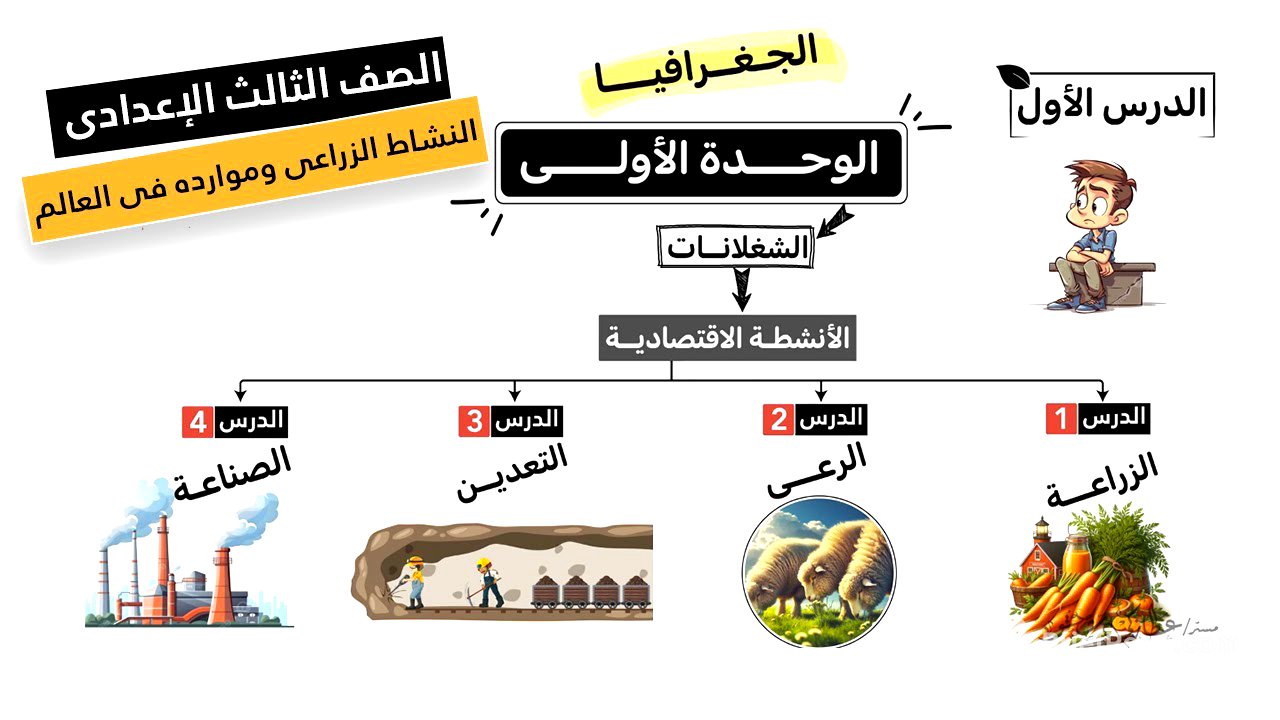
This video provides an overview of the first geography lesson for third-grade students, focusing on economic activities, particularly agriculture. It explains the types of agriculture, including primitive, intensive, and commercial farming, detailing their characteristics, locations, and significance.
- Economic activities are the jobs people do.
- Agriculture is a primary economic activity.
- There are two main types of agriculture: simple/primitive and advanced.
Introduction to Economic Activities [0:00]
The first unit in geography covers the various jobs people do around the world, referred to as economic activities. The initial lessons focus on agriculture, followed by grazing, mining, and industry. The first lesson specifically addresses agricultural activity and its resources globally.
The Evolution of Agriculture [1:16]
Before agriculture, humans engaged in hunting, grazing, and animal husbandry. The advent of agriculture led to human settlement near water sources like rivers, increasing population and diversifying economic activities. The most advanced activity today is industry, prevalent in developed countries. Humans engage in these activities to fulfill their needs for food, drink, and shelter to sustain life.
The Significance of Agriculture [3:28]
Agriculture began approximately 5,000 years ago, leading to settlement in fertile lands near rivers. It is a fundamental economic activity present in almost all countries and continents. Agriculture is crucial as it provides food, supports animal husbandry, and supplies raw materials for industries like cotton, flax, and jute for textiles, and natural rubber for tire manufacturing.
Types of Agriculture: Primitive [7:20]
There are two main types of agriculture: primitive and advanced. Primitive agriculture involves simple tools and is practiced in hot regions near tropical forests and savannas. It involves few people in small, isolated areas, growing crops like corn, bananas, yams, and cassava, primarily for local consumption without surplus for export.
Locating Primitive Agriculture on the Map [11:07]
Primitive agriculture is typically found near the equator in South America, Africa, and certain Asian islands, as well as in parts of North America.
Types of Agriculture: Advanced - Intensive [12:13]
Advanced agriculture is divided into intensive and commercial farming. Intensive agriculture is common in densely populated areas in hot and temperate regions, involving cultivation of land more than once a year to meet local food needs.
Characteristics of Intensive Agriculture [13:57]
Intensive agriculture involves cultivating land multiple times a year to satisfy the food requirements of local populations in densely populated regions. The small size of agricultural fields complicates the use of machinery, necessitating a large labor force for tasks such as planting, irrigation, and weeding. Key crops include wheat, rice, and cotton.
Locating Intensive Agriculture on the Map [16:04]
Intensive agriculture is located around the Nile River in Africa, the Mediterranean Sea, parts of North and South America, the lower edges of Australia, and areas near India and China in Asia.
Types of Agriculture: Advanced - Commercial [17:38]
Commercial agriculture is characterized by large-scale farming aimed at producing significant commercial output. It is prevalent in Europe, North America (especially the United States), and Southeast Asia.
Techniques and Locations of Commercial Agriculture [18:48]
Commercial agriculture employs modern machinery and scientific methods, reducing costs and labor needs while increasing production. Europe and the United States cultivate wheat and cotton, while Southeast Asia focuses on rubber and tea.
Locating Commercial Agriculture on the Map [20:25]
Commercial agriculture is easily identifiable on the map in Europe, the United States, and a significant line in Asia. South Africa also practices commercial agriculture.
Review and Summary [21:03]
To consolidate the information, it's important to define each type of agriculture:
- Primitive agriculture involves few people in isolated areas.
- Intensive agriculture cultivates land multiple times a year to feed local populations in densely populated areas.
- Commercial agriculture is large-scale and aims for significant commercial production.
Create a table to organize the location, main crops, and purpose of each type of agriculture. Also, create a table to describe the characteristics of each type, focusing on field size, tools used, and labor force.