
TLDR;
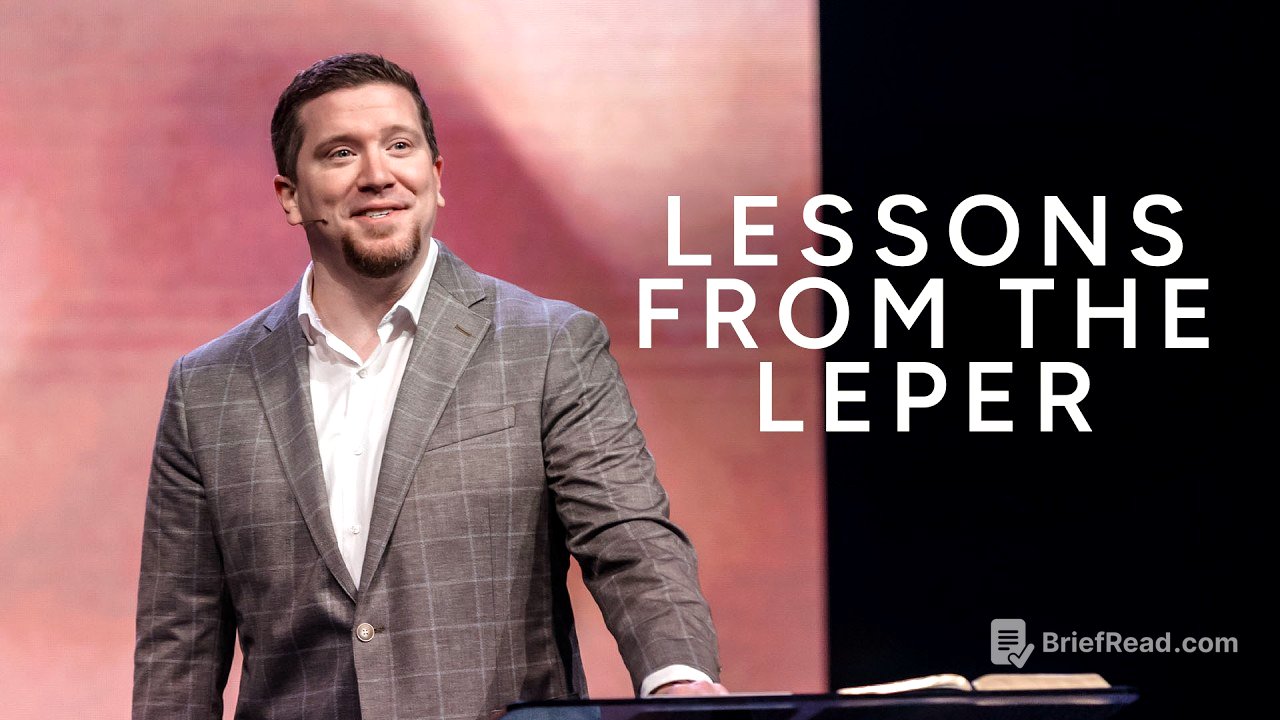
Luke 17:11–19 tells of ten men with leprosy who were healed as they went to show themselves to the priests, but only one returned to thank Jesus. This sermon draws three lessons from the man’s response: recognize the blessings you have, remember who gave them, and express gratitude through praise and action. Gratitude, the preacher says, changes perspective and remains possible through both joy and hardship.
- Notice everyday blessings instead of focusing only on what is missing.
- Remember God as the source of those blessings and avoid taking them for granted.
- Show gratitude openly, even when life is painful, because praise reflects who God is, not just how circumstances feel.
The Setting: Ten Men Healed, One Returns [0:18]
Jesus is traveling toward Jerusalem between Samaria and Galilee when ten men with leprosy call out from a distance, asking him for mercy. Following the requirements of Jewish law, Jesus tells them to show themselves to the priests. As they go, they are cleansed, but only one returns, praising God loudly and falling at Jesus’ feet to thank him. Jesus notes that the grateful man is a Samaritan, an outsider in a region marked by religious and racial tension between Samaritans and Jews. The sermon describes the story as moving from ten unclean men, to nine who do not return, to one unusual man whose gratitude stands out.
Recognize the Blessings in Your Life [4:55]
The first lesson is to notice what you have rather than dwelling on what you lack. The preacher points to ordinary gifts—being alive, having a phone, electricity, clean water, and the freedom to gather for worship—and emphasizes that many people around the world lack these things. Gratitude is a matter of perspective: even when life is difficult, someone else might long for what you have. He calls this a “gratitude quotient,” or GQ, and describes a prayer routine built around the word PRAY: praise, repent, ask, and yield. Praise comes first by thanking God for both major blessings and small comforts, such as a quiet morning and a cup of coffee. Ephesians 5:20 is cited as an encouragement to give thanks to God for everything.
Remember Who Gave the Blessings [10:59]
The healed Samaritan turns back because he recognizes the source of his healing. The sermon warns that people can easily forget God’s goodness; in the story, nine of the ten men do not return. Psalm 103:2 urges people not to forget the good things God does, while Romans 1:21 is used to show that failing to honor and thank God can be an early sign of turning away from him. The preacher recounts the story of Martin Rinkart, a Lutheran pastor during the Thirty Years’ War who performed thousands of funerals, including his wife’s, and wrote the hymn “Now Thank We All Our God.” His example shows that gratitude can persist amid devastating loss.
Respond to God with Visible Gratitude [15:22]
The third lesson is to express gratitude rather than merely feel it. The healed man returns, praises God loudly, and thanks Jesus at his feet. Psalm 107:1–2 calls the redeemed to give thanks and “say so,” and the preacher encourages worshippers to enter church with thanksgiving rather than remain disengaged or focused only on their troubles. Praise does not depend on having an easy week; it depends on who God is. He also encourages people to end each day by thanking God and begin each new day with the resolve to rejoice, recalling the words, “This is the day that the Lord has made.” He explains that the other nine men were declared clean by the priest, while Jesus tells the returning Samaritan that his faith has made him well—using a Greek word that can also mean “saved.”
Gratitude Through Loss and Hardship [21:59]
The sermon turns to Job, who lost everything yet declared, “The Lord gave, and the Lord has taken away; blessed be the name of the Lord.” Praising God in times of loss is harder than praising him when life brings blessings, but the preacher urges people to remain grateful in both circumstances. He also shares Arthur Ashe’s response to a letter asking whether he was bitter after contracting AIDS through a blood transfusion: if he asked God “why me?” about the bad things, he should also have asked “why me?” about the good things. The point is that life’s gifts are not something people can claim to deserve, so gratitude is fitting in both addition and subtraction.
Gratitude Changes Your Perspective [25:55]
After visiting Stone Mountain in Georgia, the preacher looked down at Atlanta and was struck by how small the city appeared from the mountaintop. Atlanta had not changed; his perspective had. He uses this image to explain that gratitude and worship can make overwhelming problems seem smaller by helping people see God’s greatness more clearly. Rather than focusing only on how large a difficulty feels, believers can look toward God as the rock of their salvation.
Remaining Thankful in Grief [29:19]
The preacher shares the story of a young church member who needed a lung transplant and spent four months in the hospital. Despite prayer, fasting, and hope for a transplant, the young man died. In the hospital room, as life-support equipment was turned off, family and church members played and sang “All My Life You Have Been Faithful.” The experience was painful, but they chose to pray, worship, and entrust their grief to God rather than turn away from him. Their response reflects the sermon’s central lesson: gratitude is not only an emotion to feel but something to show, even when life does not turn out as hoped.
Closing Worship and Thanksgiving [33:45]
The sermon ends with the congregation singing “Goodness of God” and giving thanks for God’s faithfulness. The preacher emphasizes that goodness and mercy continue to follow people through detours, failure, sickness, and difficult seasons. He calls the congregation to surrender their lives to God and praise him for his enduring goodness.