TLDR;
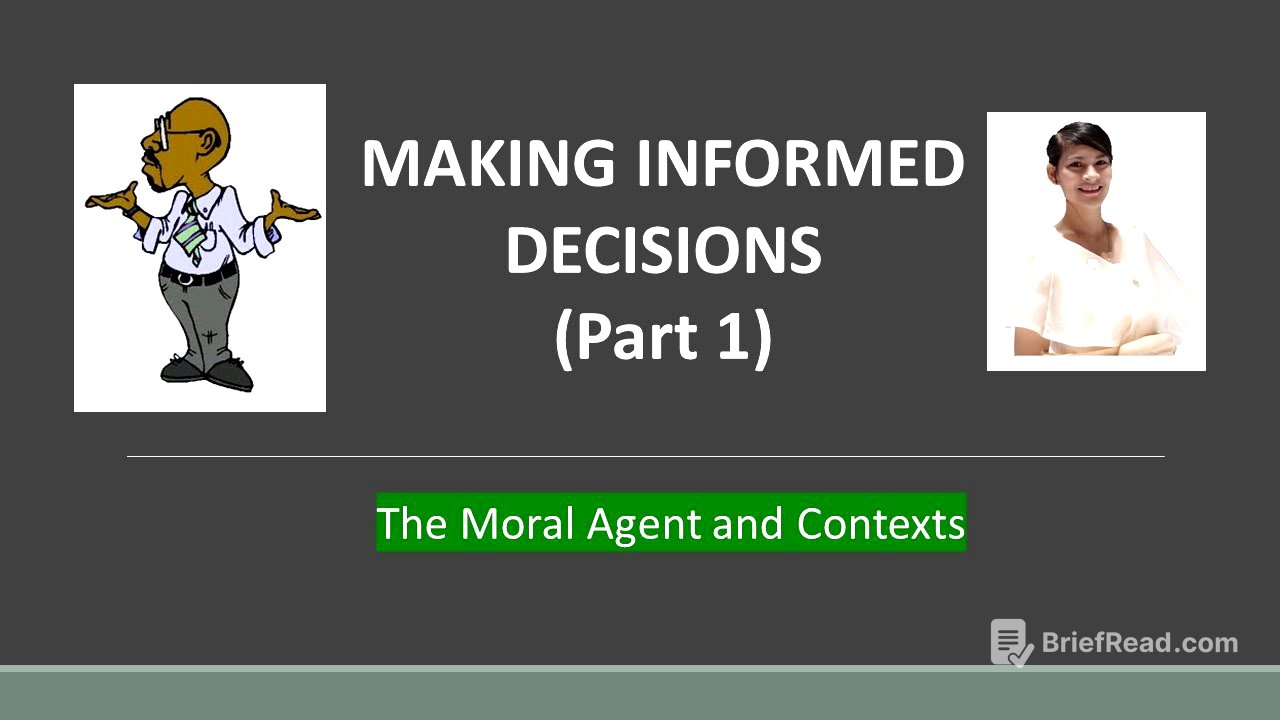
In this video, Joe discusses the importance of making informed decisions related to ethics. He emphasizes the role of various factors that influence our moral decision-making, such as personal identity, societal influences, cultural context, and historical experiences. The video also touches on the relationship between culture, ethics, and religion in shaping moral principles and the complexities involved in understanding right and wrong.
- Making informed decisions is influenced by our identity and various cross points.
- Cultural relativism suggests there is no absolute moral truth across different cultures, but there are common values.
Understanding Informed Decisions [0:06]
Joe begins the video by expressing gratitude for his viewers' support and proceeds to discuss the necessity of making informed decisions in ethics. He explains how moral decision-making can be confusing due to various factors that shape our understanding of right and wrong. To explore this, he references Filipino philosopher Ramon Reyes, who emphasizes that individuals are responsible for their decisions and must evaluate what is right based on rational thinking.
The Four Cross Points Influencing Decisions [3:30]
The video outlines four cross points that impact how we understand ourselves and make decisions:
Physical Cross Points - These are experiences and events affecting our physical state and personal history, shaping our current experiences.
Interpersonal Cross Points - Our relationships play a crucial role in decision-making, as these connections influence our perspectives and choices.
Societal Cross Points - The surrounding society—friends, family, and colleagues—affects our self-image and moral understanding.
Historical Cross Points - Our past experiences shape who we are today, including how we overcome hurtful events and improve ourselves.
Joe emphasizes that these factors work together and define our identity, making it essential to recognize their interaction in the context of informed decision-making.
Cultural Relativism and Ethics [14:48]
Joe discusses the relationship between culture and ethics, citing American philosopher James Rachels, who argues against the existence of objective morality due to differing cultural codes. He explains the concept of cultural relativism, stating that it implies no culture's practices can be right or wrong compared to another. Rachels argues that moral progress is possible, and while cultures may differ significantly, there are common values among them, urging respect for these differences.
Religion and Ethics [22:10]
In this chapter, Joe explores the influence of religion on ethics as guided by Ramon Reyes. He notes the diverse interpretations of religious principles regarding morality and the importance of personal accountability in moral decision-making. Joe highlights that individuals, being moral agents, must use their rational abilities to understand their decisions and the ethical implications tied to religious teachings.