TLDR;
This video provides an overview of the 12 branches of the Indo-European sublanguage family. It details the origin, current languages, and extinct languages of each branch.
- Celtic, Germanic, Latin, Slavic, Baltic, Hellenic, All, Anatolian, Thrashian, Iranian, Indic, and Tkarian are the 12 branches.
- The video covers the geographical origins of each branch.
- It lists both extant and extinct languages within each branch.
Celtic Branch [1:01]
The Celtic branch originated in Central or Western Europe. Some languages still spoken include Welsh, Irish, Gaelic, and Scottish Gaelic, and Britain. Cornish, Golish, Cumbrian, Mangs, Pish, and Galatian are extinct languages within this branch.
Germanic Branch [1:42]
The Germanic branch originated from old doors and sections. Languages still in use include English, Dutch, Flemish, Africans varieties, German, Yiddish variety, Danish, Norwegian, and Swedish. Extinct languages include Gothic, Frankish, Lambardo, Vigot, and Wendal.
Latin Branch [2:14]
The Latin branch, also known as Italic or Romance languages, includes Italian, Portuguese, Galatius dialect, Spanish, French, Roman, Mold included Mulavian dialect, Romans Leano, Provincial, and Catalans. Extinct languages are Dalmatines, Oscus, Pals, Sabin, and Amberan.
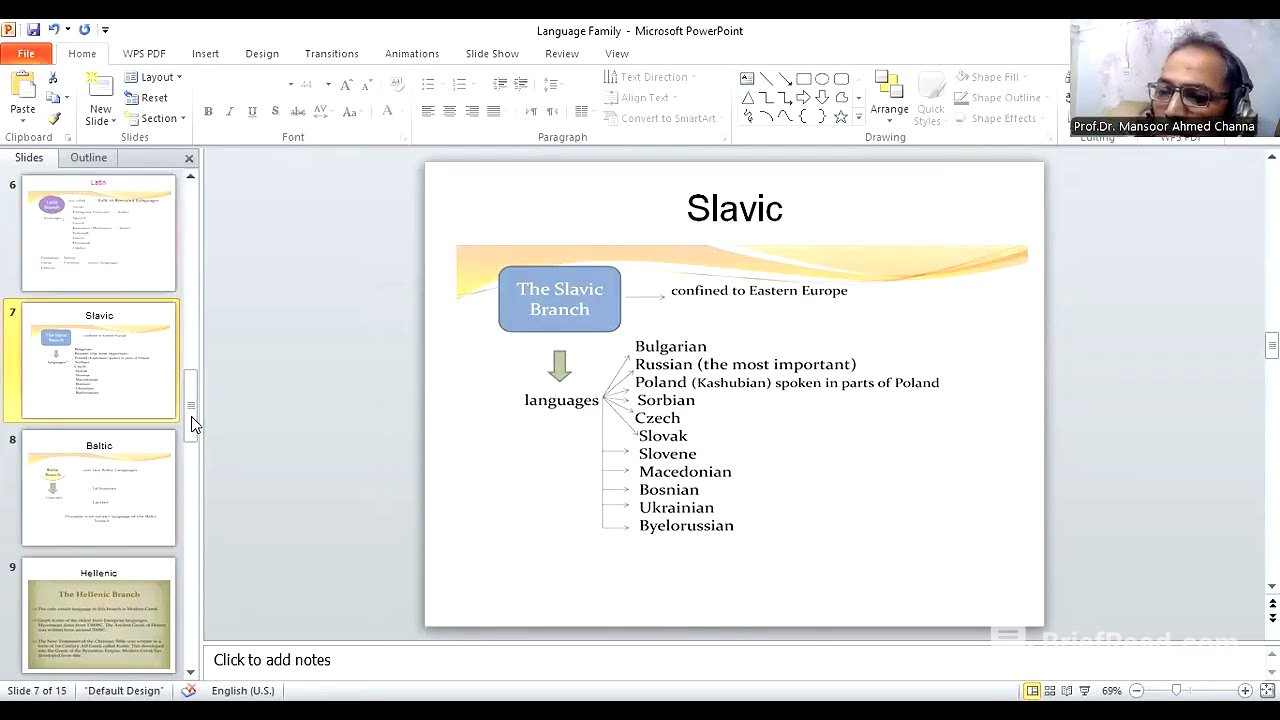
Slavic Branch [3:02]
The Slavic branch is primarily located in Eastern Europe. Its languages include Bulgarian, Russian, Poland, Kashubian, Serbian, Czech, Slovic, Selovian, meonian, Bosanian, Ukrainian, and Bellow Russian.
Baltic Branch [3:27]
The Baltic branch consists of only two extant languages: Lethonian and Latavian. Perian is an extinct language of this branch.
Hellenic Branch [3:44]
The Hellenic branch's only extant language is modern Greek, one of the oldest Indo-European languages. Mechanian dates from 1300 BC, and ancient Greek of Homer was written around 700 BC. The New Testament was written in 1st-century AD Greek called queen, which developed into the Greek of the Bentine Empire.
All Branch [4:21]
The All branch has a single language branch, Albanian, with two dialects: gate and tasks. Aleric and Mesopian are considered extinct languages.
Anatolian Branch [4:44]
All languages in the Anatolian branch are extinct, including Lydian, Lissian, Luian, and Pelle.
Thrashian Branch [4:56]
The Thrashian branch is represented by a single language, Armenian, which has its own script. Extinct languages include dian and friian.
Iranian Branch [5:17]
Iranian languages descended from ancient Persian. The main language is farsy persian, with Kuresh as a second language. Other languages include Pashto, Baloi, Oetian, and Tajik. Extinct languages are Aestian and Iskeian.
Indic Branch [5:40]
The Indic branch has the most languages, derived from Sanskrat. There are no extinct languages in this branch. Languages include Pali, Ardi, Indi, Hindi, Udu, Nepali, Bengali, Bhi, Ora, Marathi, Asamese, Punjabi, Lehinda, Mitali, Mghadi, Kashmiri, Sindi, Gujarati, Konani, Sinali, and Maldivian.
Tkarian Branch [6:14]
The Tkarian branch has only two extinct languages identified: Turfanian and Kuchin, once spoken in northwest China.