TLDR;
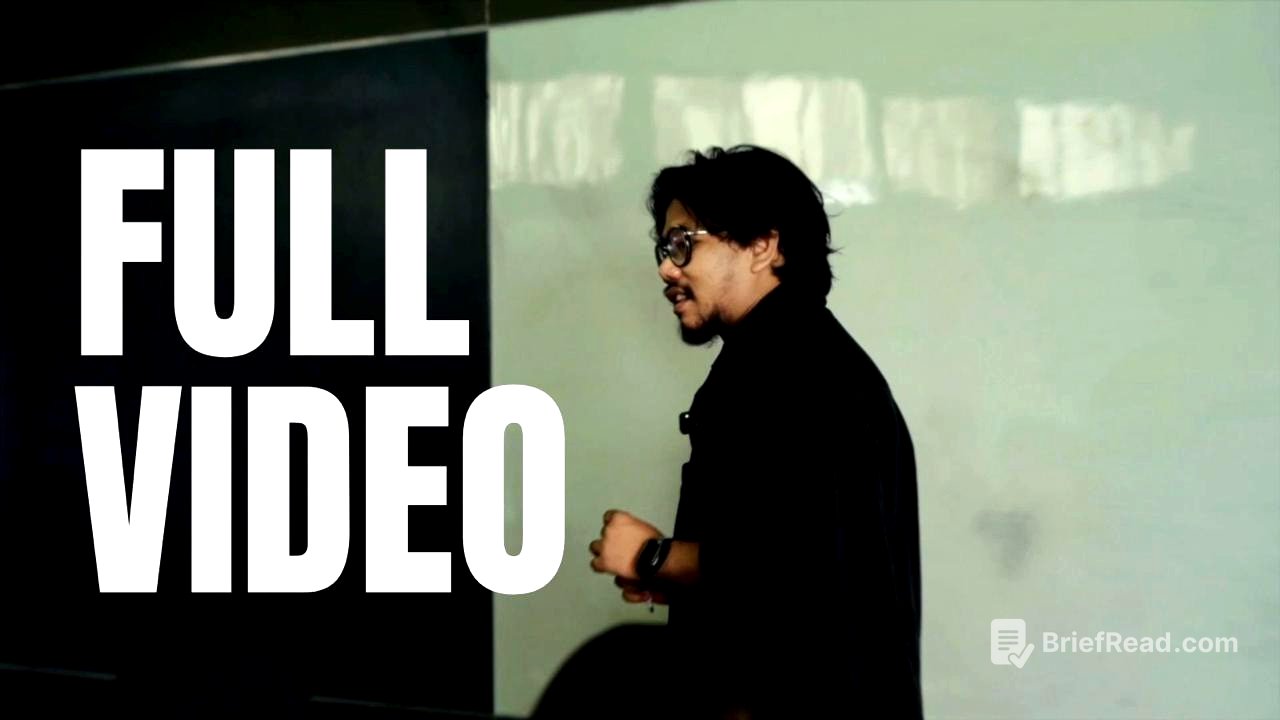
This video is a lecture that explores fundamental concepts of economics, including micro and macroeconomics, scarcity, opportunity cost, and the history of economic thought. It emphasizes that economics is not just about numbers and statistics but is deeply intertwined with everyday decision-making. The lecture also touches on the importance of innovation, efficiency, and prioritization in addressing scarcity, and it critiques the way economics is often taught.
- Economics stems from scarcity, the limited resources against unlimited human needs.
- Key strategies to manage scarcity include efficiency, innovation, and setting priorities.
- Opportunity cost involves evaluating trade-offs, considering not just monetary but also happiness, time, and future prospects.
Introduction to Economics and Scarcity [0:00]
The lecturer starts by engaging the audience with a light-hearted discussion about their understanding of economics. He asks students to define micro and macroeconomics, highlighting that microeconomics focuses on household economics, production, and consumption, while macroeconomics studies the economy on a broader, more general scale. The discussion transitions into the fundamental basis of economics, which is scarcity—the concept that resources are limited while human needs are unlimited. This scarcity drives the need for economic systems to allocate resources effectively.
Addressing Scarcity: Efficiency, Innovation, and Prioritization [14:42]
The lecture identifies three primary ways societies deal with scarcity: efficiency, innovation and technology, and prioritization. Efficiency involves using resources wisely to maximize their utility. Innovation and technology aim to create new resources or make existing ones more accessible. Prioritization involves making choices about which needs and wants to satisfy given limited resources. The lecturer uses examples from everyday life and pop culture, such as the anime Naruto, to illustrate these concepts, making them relatable and understandable.
Opportunity Cost: Making Choices and Understanding Trade-offs [25:51]
The discussion shifts to opportunity cost, which is the cost of the next best alternative forgone when one choice is made. This cost includes not only monetary value but also intangible factors like happiness, time, and future opportunities. The lecturer emphasizes the importance of cost-benefit analysis in making informed decisions, weighing the potential benefits against the costs. He cautions against cognitive biases that can lead to irrational decisions, such as justifying unnecessary purchases.
A Brief History of Economic Thought [44:26]
The lecture provides a historical overview of economic thought, starting with the origins of the word "economics" from the Greek term "oikonomia," meaning household management. It covers key figures such as Adam Smith, whose book "The Wealth of Nations" laid the foundation for modern economics, and Karl Marx, who critiqued capitalism. The discussion also includes John Maynard Keynes and his theories developed in response to the Great Depression, as well as the rise of neoliberalism. The lecturer explains how economic theories have evolved and been applied in different contexts, highlighting that economics is not a fixed set of rules but rather a dynamic field of analysis.
Applying Economic Principles to Real-World Issues [1:00:20]
The lecture applies economic principles to contemporary issues such as the high prices of masks during the COVID-19 pandemic, scarcity of cooking oil, and the complexities of the cigarette market in Indonesia. It explains how supply and demand, elasticity, and government policies influence these situations. The lecturer critiques populist economic policies that may seem appealing but have detrimental effects, such as high taxes on cigarettes leading to the rise of illegal markets.
Morality, Policy, and the Future of Indonesia's Economy [1:09:57]
The lecture concludes by discussing the role of morality in economic policy and the future of Indonesia's economy. It argues that economic policies should be based on scientific and academic analysis rather than moral considerations, as morality is not universal and can lead to destructive outcomes. The lecturer touches on the shifting global economic landscape, with China's rise as a major economic power, and emphasizes the need for Indonesia to focus on education, clear policy goals, and critical thinking to progress economically.