TLDR;
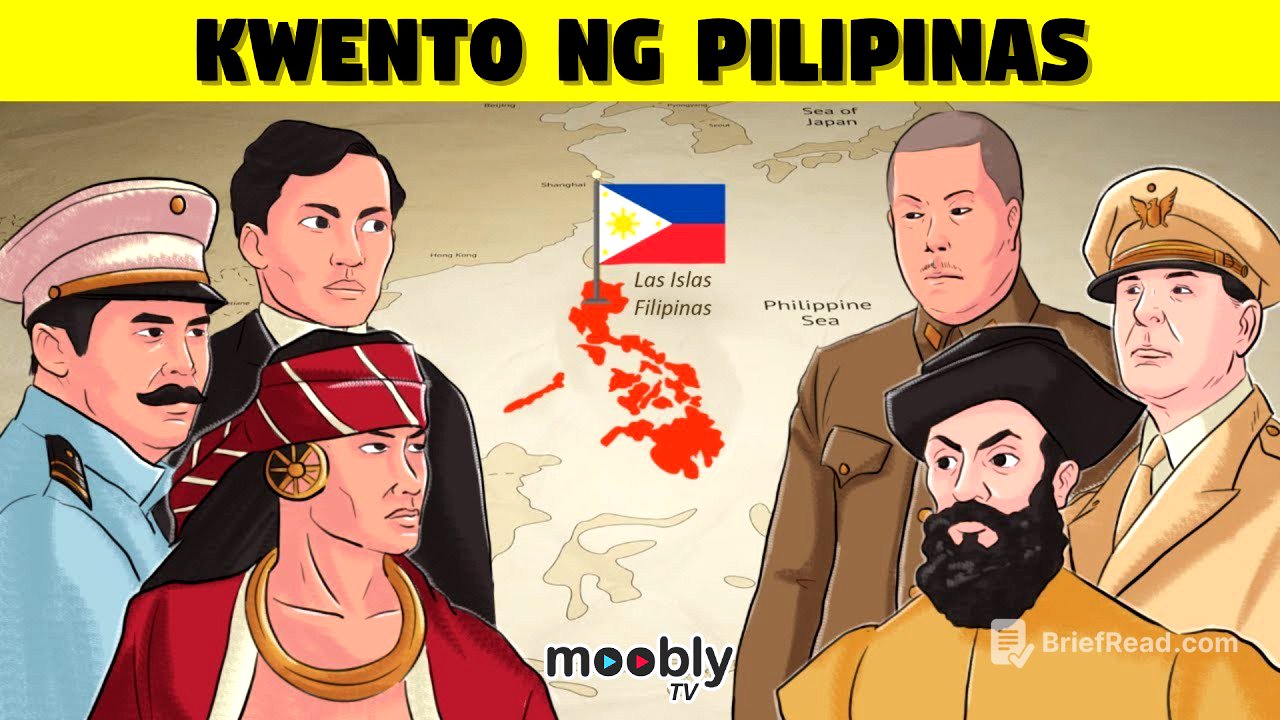
The video discusses the historical evolution of the Philippines, tracing its early inhabitants, cultural influences, and significant events leading up to its eventual independence. Key points include:
- Modern humans arrived in the Philippines 20,000 years ago, separate from Malay and Chinese origins.
- The introduction of Islam in the 14th century marked significant religious and cultural developments.
- The Spanish colonization began with Magellan in 1521, lasting for 333 years and transforming Philippine society.
- The rise of nationalism among Filipinos led to revolts and movements against Spanish rule culminating in the Philippine Revolution.
- After declaring independence in 1898, the Philippines faced new challenges under American control and later Japanese occupation, leading to a continuous struggle for true freedom.
Prehistoric Era and Early Culture [0:00]
Modern humans first settled in the Philippines approximately 20,000 years ago, stemming from natural human evolution rather than migration from Malay or Chinese origins. Filipinos share cultural and physical traits with Southeast Asian neighbors due to similar climates and agricultural practices. F. Landan Ducano's concept of "Base Culture" suggests the cultural foundations established among these populations before foreign influences began.
Arrival of Islam in the Philippines [0:30]
Islam arrived in the Philippines in the 14th century through traders from Malaysia. Raja Baginda introduced the religion to Sulu, while Serif Kabun Suwan became Mindanao's first Sultan, marking the beginning of Islamic influence in the region. During this time, the Philippines became pivotal in Southeast Asia, integrated into early Chinese and Southeast Asian trade networks.
Spanish Colonization Begins [1:00]
Ferdinand Magellan's arrival in 1521 initiated Spanish colonization, although he died in Mactan in 1521 after an encounter with local leaders. Subsequent Spanish expeditions led to further control over Philippine territories, with Ruy Lopez de Villalobos naming the islands "Las Islas Filipinas" in 1543, establishing Spanish governance and the spread of Catholicism.
Cultural Transformation Under Spanish Rule [1:30]
Spanish rule brought significant changes to Filipino society, promoting Christianity while undermining indigenous beliefs. Traditional religions involving animism were gradually replaced. The term "Filipino" emerged as a national identity only later in history as the concept of the nation-state developed amidst colonial governance.
Nationalism and Early Revolts [2:00]
The desire for reform and independence grew among Filipinos, particularly from the established middle class, leading to early uprisings against Spanish rule. Tensions culminated in the Cavite Mutiny and the martyrdom of the three priests known as Gomburza, which ignited national consciousness and contributed to the emergence of nationalist movements.
The Philippine Revolution Begins [2:30]
The revolution against Spanish rule formally erupted on August 23, 1896, signaled by the "Cry of Balintawak." Different factions emerged, notably the Magdalo and Magdiwang groups, with leaders Andres Bonifacio and Emilio Aguinaldo clashing over governance strategies. The ousting of Bonifacio underscored the internal conflicts as Filipinos sought independence.
Spanish-American War and the Path to Independence [3:00]
Following the Pact of Biak-na-Bato and the outbreak of the Spanish-American War, Emilio Aguinaldo returned to the Philippines, and Filipino aspirations for independence grew. However, the end of Spanish rule led to new challenges under American colonization, highlighting the struggle for true sovereignty amidst foreign governance.
American Occupation and Continued Resistance [3:30]
Despite the declaration of independence on June 12, 1898, the Philippines fell under American control, leading to resistance from various Filipino leaders. Nationwide uprisings and the establishment of the Tagalog Republic illustrated ongoing desires for self-rule against foreign influence.
Struggles and Achievements Post-Independence [4:00]
Following World War II, the Philippines gained independence in 1946, yet ongoing American influence persisted in politics and economics. The struggle against government corruption and the quest for true democracy marked significant challenges for the nation as Filipinos continued to celebrate and reconnect with their cultural heritage while striving for a better future.