TLDR;
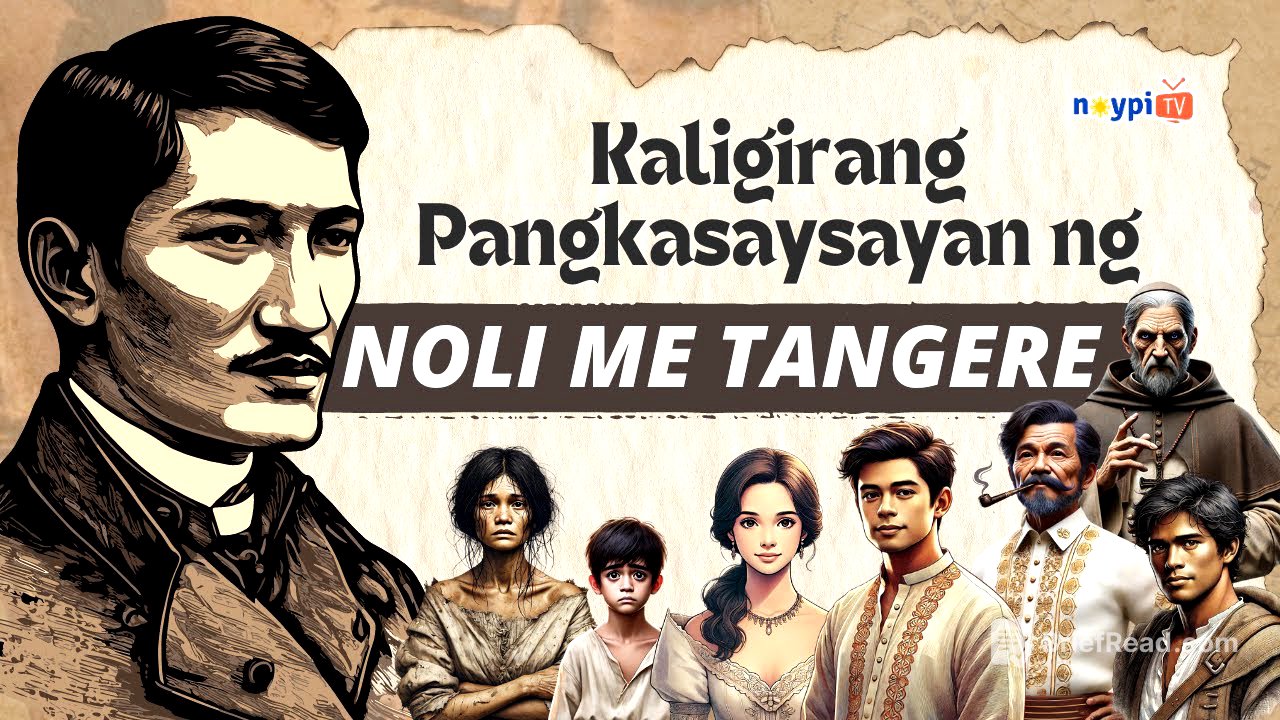
This video discusses the historical context of Jose Rizal's novel, Noli Me Tangere, exploring Rizal's motivations for writing it, the challenges he faced, and its impact on the Philippine revolution. It covers Rizal's life, education, and the influences that led him to write the novel, as well as the novel's publication, reception, and Rizal's defense of his work against critics.
- Rizal wrote Noli Me Tangere to expose the abuses and corruption of the Spanish colonizers in the Philippines.
- The novel faced opposition from the Church, which banned its circulation due to its subversive content.
- Rizal defended his novel through various writings, asserting its truthful portrayal of Filipino society and its critique of Spanish rule.
Introduction [0:00]
The video introduces the historical background of Jose Rizal's Noli Me Tangere, a novel that awakened Filipinos to the abuses and corruption of the Spanish colonizers and inspired the desire for freedom. It poses questions about Rizal's motivations for writing the novel, the challenges he faced in completing it, and how it ignited the Philippine revolution. The video aims to explore the historical context of Noli Me Tangere.
Rizal's Early Life and Education [0:37]
Noli Me Tangere is Jose Rizal's first novel. Rizal, whose full name was Jose Protasio Rizal Mercado y Alonso Realonda, was born on June 19, 1861, in Calamba, Laguna, to Francisco Rizal Mercado y Alejandro and Teodora Alonso Realonda y Quintos. He studied medicine in Manila and continued his studies in Spain at the Universidad Central de Madrid in 1882. It was in Spain that he began writing his first novel, Noli Me Tangere.
Inspiration and Writing of Noli Me Tangere [1:19]
Rizal was 26 years old when he started writing Noli Me Tangere, dedicating it to his homeland. The novel depicts the social cancer under Spanish rule. The title, Noli Me Tangere, is a Latin phrase meaning "Touch me not," taken from the Gospel of John 20:13-17, where Jesus tells Mary Magdalene not to touch him because he has not yet ascended to his father. Rizal was inspired to write Noli Me Tangere after reading three books: "The Wandering Jew" by Eugene Sue, "Uncle Tom's Cabin" by Harriet Beecher Stowe, and the Bible. "The Wandering Jew" tells the story of a man who mocked Jesus and was punished to wander the earth endlessly, while "Uncle Tom's Cabin" portrays the maltreatment of African slaves by white Americans. These books inspired Rizal to create a novel depicting the oppression of Filipinos by the Spanish and to awaken the patriotic sentiments of his countrymen.
Writing and Publication [2:31]
Rizal began writing Noli Me Tangere in Madrid in 1884. Initially, he planned to collaborate with fellow Filipino writers in Madrid, including Pedro Paterno, Graciano Lopez Jaena, and Valentin Ventura, but when they did not contribute, Rizal decided to finish it alone. After his studies at the Universidad Central de Madrid, he moved to Paris in 1885, where he continued writing and completed three-quarters of the novel. He finished Noli Me Tangere in Germany in February 1887.
Financial Struggles and Publication in Berlin [3:49]
Publishing his novel was a significant challenge for Rizal due to lack of funds. He often endured hunger, sometimes eating only twice a day to save money, as the money sent by his brother Paciano was often delayed. The lack of funds almost prevented the novel from being published. Fortunately, his friend Dr. Maximo Viola lent him Php300 for the printing of 2,000 copies at Berliner Buchdruckerei-Aktiengesellschaft in Berlin, Germany. The printing was completed, and the novel was released on March 21, 1887.
Reception and Controversy [4:33]
After its publication, Noli Me Tangere was admired by many, including Rizal's friend Ferdinand Blumentritt, who said the novel was "written with the blood of the heart." However, it also sparked anger, especially from the clergy. Father Salvador Font led the criticism of the novel, and on December 28, 1887, its distribution in the Philippines was banned due to its subversive content. In his letter to Ferdinand Blumentritt, Rizal explained his reasons for writing Noli Me Tangere: to defend Filipinos against the slanders of the Spaniards, to expose the true social conditions, lifestyle, and beliefs of the Filipinos, to reveal the misuse of religion for personal gain by those in power, to distinguish between true and false religion, to expose the evils and hypocrisy hidden behind the facade of the government, and to describe the errors, bad habits, and hardships of life experienced by Filipinos.
Rizal's Return to the Philippines and Subsequent Departure [5:54]
Despite warnings from friends and family, Rizal returned to the Philippines to assess the impact of his novel, to operate on his mother's worsening cataract, and to find out why Leonor Rivera had stopped responding to his letters from 1884 to 1887. His family was happy about his return but also filled with fear due to the potential danger posed by his enemies. When Governor-General Emilio Terrero summoned him to Malacañang Palace, he was questioned about the subversive content of his novel, but Rizal stated that he had only presented the truth in his work. Due to the growing threat to his safety and that of his family, Rizal was advised to leave the Philippines again. He left on February 3, 1888.
Defense of Noli Me Tangere and Legacy [7:04]
During his travels abroad, Rizal defended Noli Me Tangere against critics through his works "La Vision del Fray Rodriguez" and "Por Telefono," which criticized the priests Padre Jose Rodriguez and Padre Salvador Font. Noli Me Tangere is not just a novel but a historical work that opened the eyes of Filipinos to the cruelty of the Spaniards. It became a way to show the truth, expose the social cancer, and promote nationalistic sentiment. Rizal's work is a significant contribution to awakening the spirit of freedom and love for the country among Filipinos.
Conclusion [7:42]
The video concludes by summarizing the historical context of Noli Me Tangere, emphasizing its role in awakening Filipinos to the abuses of Spanish colonizers and promoting nationalistic sentiment. The narrator encourages viewers to like, subscribe, and click the notification bell for future updates.