TLDR;
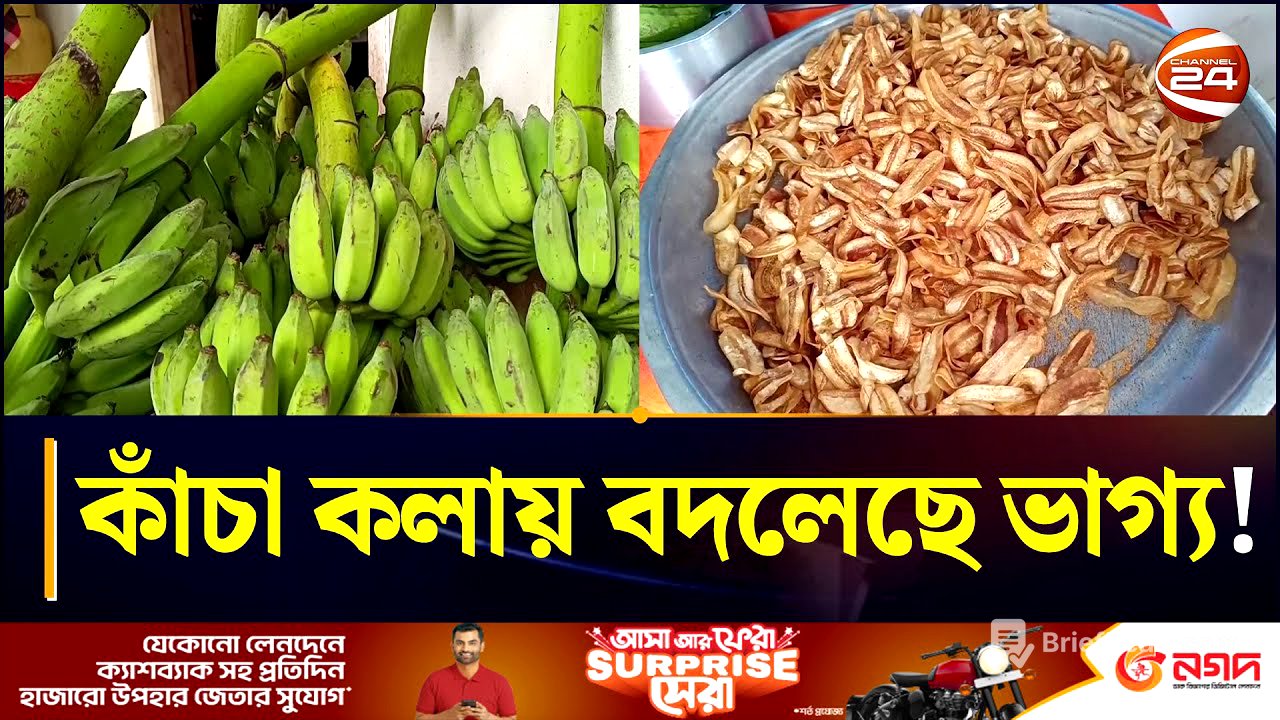
This video highlights the story of Lucky Chakma, an entrepreneur from Khagrachari, who produces banana chips from locally grown "Katali Kola." She started this venture in May 2024 after receiving training from the Ministry of Agriculture. Her business has grown from a small-scale operation to one that employs three to four people and ships products across Bangladesh. Lucky aims to expand her business with government support and encourages local unemployed youth to explore entrepreneurial opportunities using locally sourced produce.
- Lucky Chakma produces banana chips from "Katali Kola".
- She started her business in May 2024 after training from the Ministry of Agriculture.
- Her products are shipped across Bangladesh.
- She aims to expand her business with government support.
Introduction [0:05]
The video introduces the concept of processing bananas into various food products, focusing on a story from Chattogram. It highlights how bananas, particularly the "Bereta Kola," are being utilized beyond just raw fruit consumption, with innovative processing methods creating diverse food items.
Banana Chip Production Process [0:45]
The segment shows the process of selecting and preparing bananas for chip production. Bananas are sourced from the weekly markets in Khagrachari and are processed using vinegar and turmeric water to remove any bitterness. This preparation takes place in a home setting, where the entrepreneur, Lucky Chakma, manages the production of these banana chips.
Lucky Chakma's Entrepreneurial Journey [1:12]
Lucky Chakma shares her journey of starting a banana chip business in May 2024, inspired by a training program from the Ministry of Agriculture. She recognized the potential of "Katali Kola," a local banana variety available year-round in Khagrachari, known for its taste. Initially, she experimented at home for personal consumption, but positive feedback from relatives and acquaintances encouraged her to start commercially.
Business Growth and Challenges [1:50]
Lucky's business quickly faced stock-out issues due to high demand, which prompted her to scale up operations. She emphasizes that her chips are a healthy snack option for children. Currently, she employs three to four workers and ships her products throughout Bangladesh. Despite managing an office job during the day, she dedicates her nights to slicing and processing bananas, with Fridays fully dedicated to production with her team.
Financials and Marketing Strategies [2:51]
Lucky earns approximately 30,000 Taka per month from her banana chip business. Her products are sold in Khagrachari, Rangamati, and Barisal, with significant demand from large NGOs in Dhaka for their programs. She primarily uses Facebook to market her products through her page, "Lucky Fashion & Food," and also sells through a local উদ্যোক্তা shop. Lucky dreams of establishing a banana chip processing factory.
Future Aspirations and Community Impact [3:41]
Lucky expresses her hope for government support to further expand her business, noting that she was the first to commercialize "Katali Kola" in Khagrachari. She believes that with government assistance, she could involve more people in her venture. Lucky encourages unemployed youth to creatively explore opportunities using locally produced fruits, vegetables, and products to become entrepreneurs and create their own employment.