TLDR;
This documentary explores the life and livelihood of the Majhi community in Jashore's Monirampur, particularly those living around the Jhapa Baur, a significant water body. It highlights their traditional fishing practices, the economic importance of the Baur, and the challenges they face. The documentary also touches on the agricultural practices in the surrounding areas and the unique cultural aspects of the community.
- Traditional fishing practices in Jhapa Baur
- Economic dependence on the Baur for the Majhi community
- Agricultural practices and challenges in the surrounding areas
- Cultural and social life of the villagers
Introduction to Jhapa Baur and Its Surroundings [1:12]
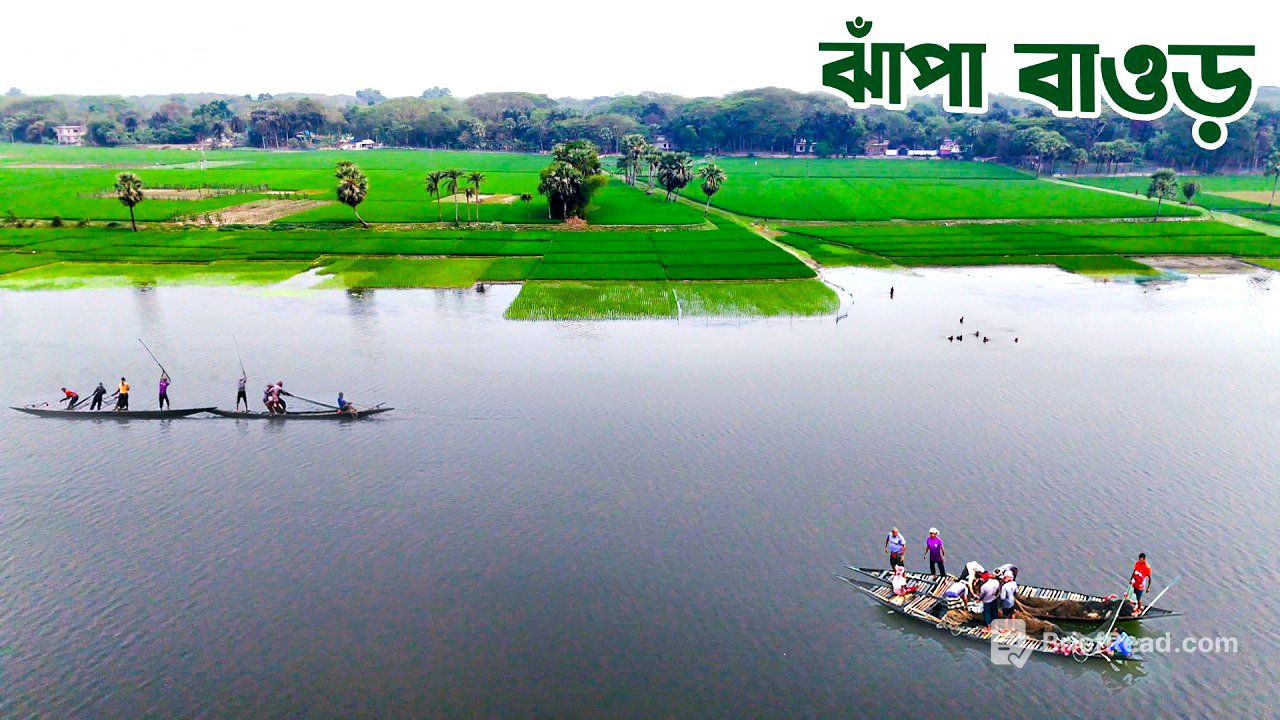
The documentary opens with scenic shots of Jhapa Baur in Monirampur, Jashore, showcasing its natural beauty and the surrounding greenery. The area is home to the Bishajkar Prakriti Shondurjir Abugunthunem Ejaj Jaljalaj Shemul Bhumi, Jashurair Monirampurujelar Jhapa Baurer. The visuals emphasize the tranquil environment and the importance of water resources in the region.
Traditional Fishing Practices [3:02]
The film shows the traditional fishing methods employed by the local Majhi community, who depend on the Baur for their livelihood. They use various techniques, including nets and traps, to catch fish. The Baa-शेरे खोलेज is used to catch fish. The community's life revolves around the Baur, with families spending their days and nights fishing.
Community Management of the Baur [5:58]
The Xhapa-bāu-r is managed through local cooperative societies, ensuring sustainable fishing practices. These societies regulate fishing activities, allowing for the release of fish and setting specific times for fishing. This collaborative approach helps preserve the fish population and maintain the ecological balance of the Baur.
Variety of Fish Species [6:32]
The Baur is rich in diverse fish species, including both native and commercially farmed varieties. Local fish like Air, Boal, Cital, Shoal, Gajar, Bele, Tangrao, and Poti Charo are abundant. Additionally, introduced species such as Rui, Katla, Mrigel, Telapia, MIROR CARB, SILVER CARB, and GRASS CARB are also cultivated, contributing to the economic value of the Baur.
Boat Construction and Usage [8:33]
The documentary highlights the construction of boats used for fishing, noting that 6 to 8 boats are made using materials like plastic drums, iron sheets, and angles. These boats are essential for navigating the Baur and facilitating fishing activities.
Economic and Social Significance of the Baur [9:49]
The Jhapa Baur is not only a vast water body but also a lifeline for thousands of people in the surrounding villages. It supports the livelihoods of numerous fishing families and is central to their economic and social well-being. The Baur's water is integral to the lives of the villagers.
Cooperative Fishing Practices [11:20]
Fishing communities in villages like Jhapa, Rrajgonj, Mobaruk Purshahu, and Noyte Ggramir Zele work together through cooperative societies. These societies ensure fair distribution of resources and resolve conflicts, promoting harmony and sustainability within the community.
Selective Harvesting Methods [11:54]
The film shows the selective harvesting methods used by the fishermen of Jhapa Baur, which are unique and traditional. This method ensures that only mature fish are caught, allowing the younger ones to grow and maintain the fish population.
Fish Market and Trade [13:25]
The freshly caught fish from Zhaapabauri are directly transported to the ghat (dock) for sale. Fishermen promptly deliver their catch to the market, where it is sold to traders. The Raj Ganj market in Jashore's Monirampur is a hub for fish trade, attracting buyers from various regions.
Agricultural Practices and Challenges [17:21]
The documentary shifts focus to the agricultural practices in the areas surrounding the Baur. The fertile soil is suitable for cultivation, but farmers need to use fertilizers to ensure good yields. They also face challenges in protecting their crops from pests and diseases, requiring the use of pesticides.
Village Life and Culture [19:17]
The film portrays the serene village life around the Baur, with picturesque scenes and close-knit communities. The villagers maintain their traditional way of life, with homes reflecting their cultural heritage. The ghats (riverbanks) are central to daily activities, especially for women.
Traditional Crafts and Livelihoods [20:50]
The documentary highlights traditional crafts and livelihoods, showcasing how the villagers are skilled artisans. They create various products, including fishing nets and bamboo items, which are essential for their livelihoods. These crafts are not just occupations but also a part of their cultural identity.
Daily Life and Cooking [23:34]
The film captures the essence of daily life in the villages, focusing on the preparation of meals. Cooking is done on traditional clay stoves, with firewood used as fuel. The aroma of cooking food blends with the peaceful atmosphere of the Baur, creating a harmonious environment.
Conclusion: Harmony of Nature and Human Effort [25:11]
The documentary concludes by emphasizing the harmonious relationship between nature and human effort in the Jhapa Baur region. The lush greenery, the labor of the villagers, and their deep connection to the Baur create a unique and vibrant community. The film underscores the importance of preserving this balance for future generations.