TLDR;
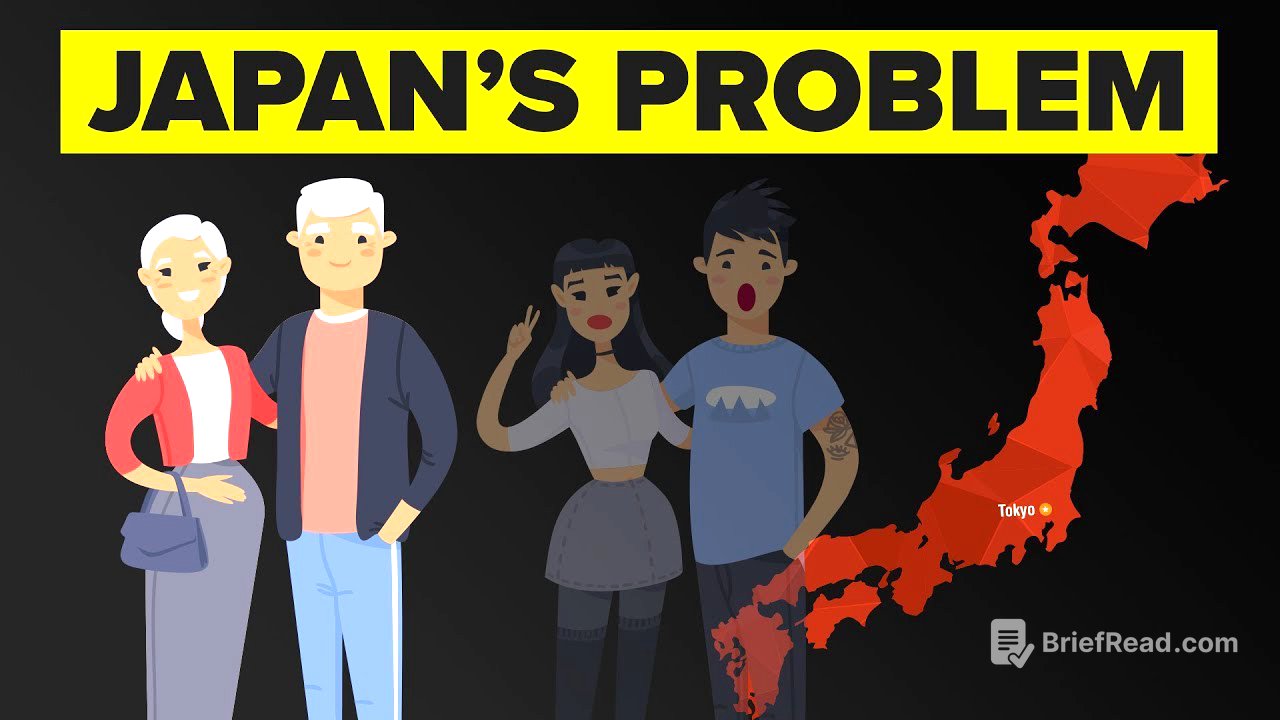
Japan's population is decreasing due to a combination of factors, including a declining birth rate, low immigration, and high life expectancy. Cultural shifts, such as changing attitudes towards marriage and relationships, as well as economic factors, contribute to the trend. The phenomenon of "celibacy syndrome," characterized by a lack of interest in relationships and sexual contact, further exacerbates the issue, leading to concerns about Japan's future demographic landscape.
- Declining birth rate and aging population
- Cultural shifts and changing attitudes towards marriage
- "Celibacy syndrome" and lack of interest in relationships
Japan's Decreasing Population [0:08]
Japan's population is declining, with the country's population decreasing by almost a million people in eight years. This is the first time in the country’s history that the population has shrunk. This decline is attributed to three main reasons: a drop in the birth rate, low immigration levels, and a high life expectancy. With a birth rate of 1.4, which is below the 2.1 needed to sustain growth, and a life expectancy of 85 years, Japan faces a demographic challenge.
Demographic Projections [2:25]
Japan's population density is high, with most people living in cities due to the country's mountainous terrain. Projections indicate that the population will continue to decrease by approximately one million each year, potentially reaching 42 million by 2110. By 2060, it is estimated that 40% of the population will be over 65 years old, transforming Japan into a country with a predominantly elderly population.
Changing Attitudes Towards Marriage and Family [2:59]
A survey revealed that one-third of Japanese people do not see the point in marrying and having children. Cultural changes have led to a shift in social standards, with more individuals choosing to remain single. People are prioritizing personal interests and financial independence over traditional family structures. This shift is reflected in the increasing number of people in their 30s and even teenagers who express disinterest in marriage.
Celibacy Syndrome [4:34]
"Celibacy syndrome" (Sekkusu Shinai Shokogun) is emerging, with many under 40s losing interest in marriage and relationships. Surveys indicate that a significant percentage of unmarried men and women are not in any kind of relationship, and many have never dated. Some individuals express disinterest or even disgust towards sexual contact. This phenomenon is linked to factors such as social anxiety, reclusion (hikikomori), and reliance on technology for gratification, including online pornography and virtual relationships.





![🔴 [ LIVE ] Kaedah-Kaedah Mensikapi Fitnah Akhir Zaman | Ustadz Abu Ghozie As-Sundawy حفظه الله](https://wm-img.halpindev.com/p-briefread_c-10_b-10/urlb/aHR0cDovL2ltZy55b3V0dWJlLmNvbS92aS9fMlJja3BSLXZzWS9ocWRlZmF1bHQuanBn.jpg)