TLDR;
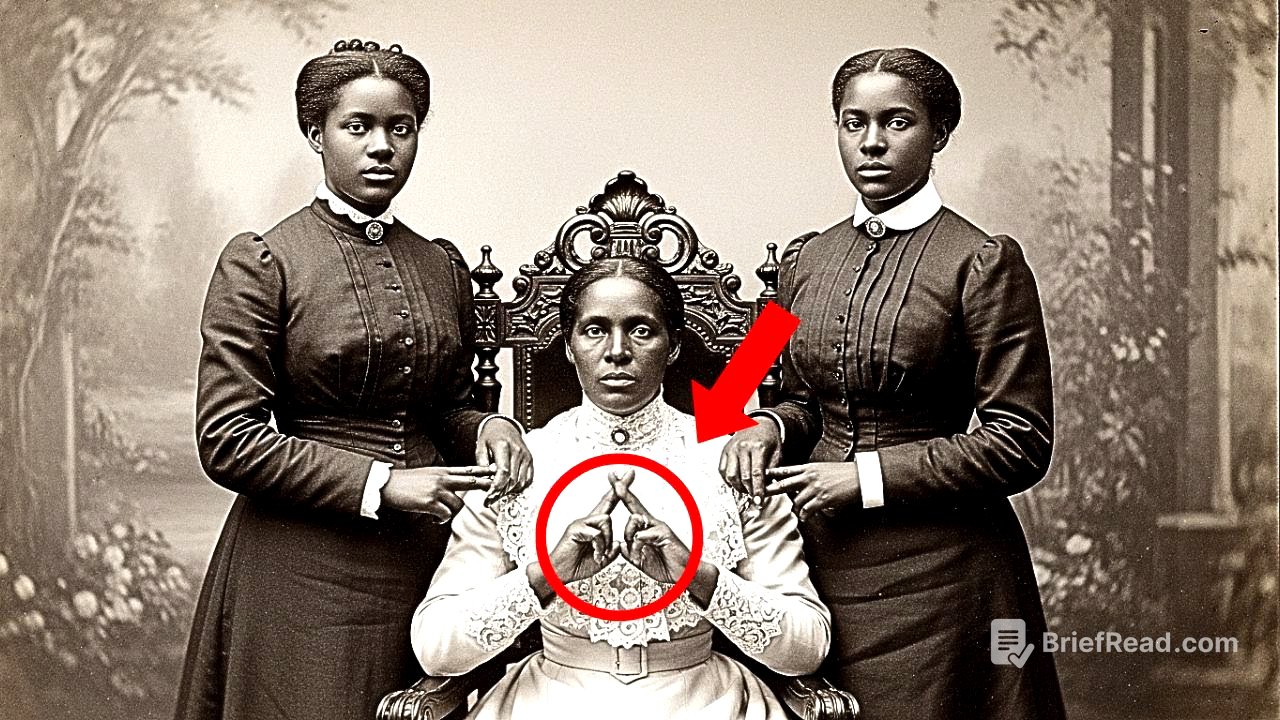
The video explores the discovery and significance of a 1892 portrait of an African-American mother and her daughters, which reveals coded messages through their hand positions. Dr. James Mitchell's research uncovers a hidden network of African-American families in post-Reconstruction New York who used photography as a means of documenting identity and asserting property rights. The portrait serves as a bridge to families' pasts and a testament to the resilience and resourcefulness of their ancestors.
- The portrait's hand gestures suggest encoded messages.
- The research uncovers an extensive network of mutual aid and documentation efforts among African-American families.
The Discovery of the Portrait [0:00]
Dr. James Mitchell discovered a remarkable portrait during his study of historical photographic archives. The image depicted a mother and her daughters, each with intricately posed hands that caught his attention. Unlike typical portraits from the late 19th century, the hand positions seemed deliberate, hinting at some deeper meaning. This prompted him to investigate further, leading to the realization that the numbers etched into the glass of the photograph could unlock essential information about the subjects.
Research and Contextual Understanding [3:00]
Returning to the historical society, James analyzed the portrait and discussed it with Dr. Sarah Chen, an expert in African-American history. They examined the struggles African-American families faced regarding property rights in the post-Reconstruction era. They uncovered that many families lacked formal documentation, which made proving identity and ownership challenging. James began connecting the hand positions in the portrait to potential coded messages used by these families to navigate oppressive systems.
Thomas Wright's Photography Studio [6:00]
James traced the etched numbers to a photographer, Thomas Wright, who operated a studio welcoming black clients with reasonable rates. Wright’s progressive practices were unusual for the time, and his photographs potentially served not just as artistic representations but as essential documentation for the community. The conversation with Sarah revealed that Wright might have been complicit in creating a system of coded communication within the African-American community.
Exploring the Codes [9:00]
James began collaborating with Dr. Marcus Thompson, a cryptography historian, to analyze the hand gestures in the portrait. They hypothesized that each hand position conveyed specific meanings rather than letters, possibly indicating roles and statuses within the community. As they researched, they found other portraits with similar gestures, reinforcing the idea of a visual communication system.
Connections to Community Activism [12:00]
Their investigation revealed a broader network of individuals pushing for identity verification and property ownership rights among African-Americans in New York. They identified a lawyer, Robert Hayes, who achieved high success rates in representing black clients, often using photographic evidence to support their claims. These portraits provided tangible proof of dignity and community standing.
Tracing the Women in the Portrait [15:00]
James discovered that the women in the portrait were Elellanar Morrison and her daughters, Ruth and Grace. Patricia Johnson, a descendant, provided personal insight into Elellanar's life and her role in helping families navigate systemic barriers. These connections further enhanced the understanding of the network that Elellanar operated within.
Decoding the Church Records [18:00]
James and Sarah found evidence linking Elellanar to a church network, which meticulously recorded families in need, allowing for coordinated documentation efforts. They realized that the church combined with Wright’s photography and Hayes’ legal work to create a hidden system that countered the systemic exclusion of African-Americans from official records.
The Exhibition and Its Impact [21:00]
Three months into their research, James and Sarah organized an exhibition showcasing the portraits and stories they uncovered. The event connected descendants of the photographed families, illuminating the extent of the hidden documentation network. The exhibition highlighted the power of these portraits in preserving history and revealing the community's resilience.
Reflections on Legacy [24:00]
Six months after finding the portrait, James reflected on the importance of the photographic legacy and the narrative it conveyed about survival and dignity in African-American communities. The research had identified numerous families benefiting from the network, showcasing their struggles for rights and representation. Ultimately, the portrait stands as a symbol of resistance, ingenuity, and community in the face of systemic challenges.