TLDR;
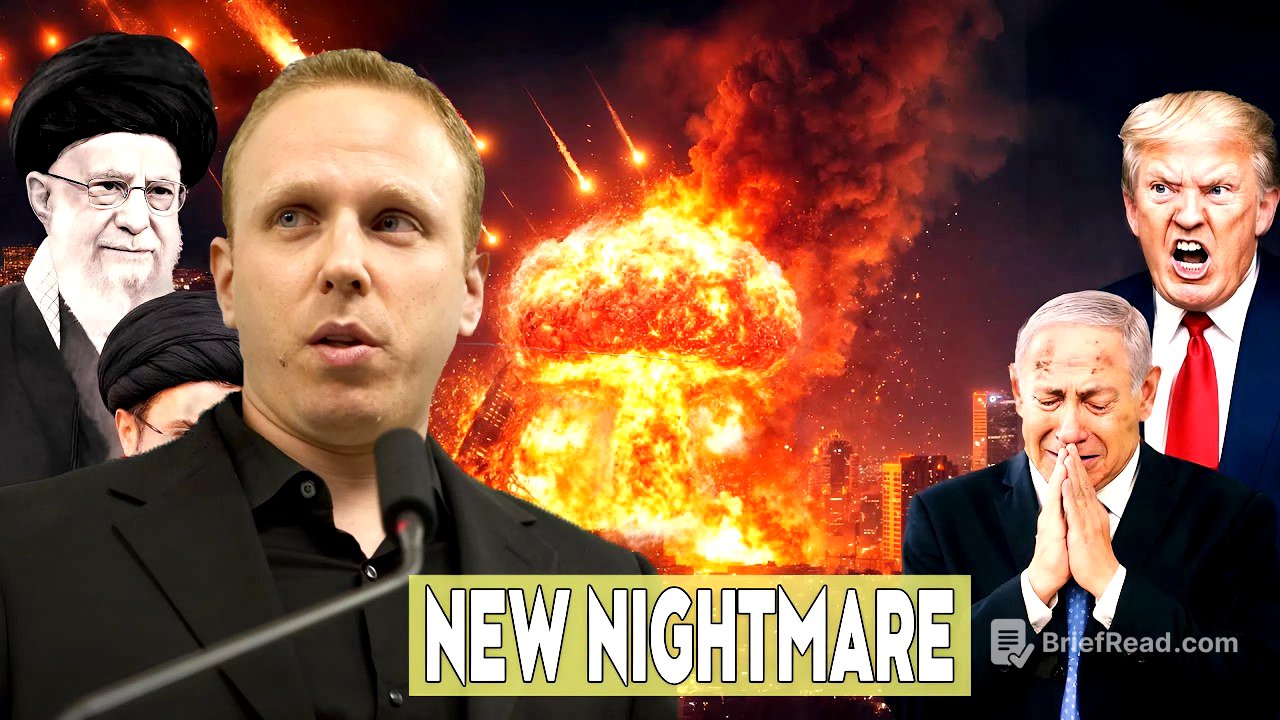
This video discusses the current tensions between Israel, Iran, and the United States, focusing on the potential for a larger conflict and the internal dynamics influencing each country's actions. It highlights the role of Israeli influence on US foreign policy, particularly under the Trump administration, and the potential consequences of escalating military actions in the region. The video also touches on the domestic political situations in both Israel and Iran, and how these factors contribute to the ongoing conflict.
- Netanyahu is trying to keep the media focused on Operation Epstein Fury to prevent Trump from calling for another ceasefire before Iran's state collapse.
- Israel has been influencing Donald Trump's campaign and foreign policy, leading to increased tensions with Iran.
- The potential for a US ground war in Iran is high, possibly using Kurdish forces as a cover.
- The American public is largely against the war, while Israel is in a state of mass indoctrination, viewing the conflict as a religious war.
Netanyahu's Strategy and Potential for US Involvement [0:00]
Netanyahu is allegedly trying to keep the media focused on Operation Epstein Fury to prevent Donald Trump from calling for another ceasefire before he achieves his goal of Iranian state collapse. Former defense minister Benny Gance stated that he wouldn't exclude the possibility of boots on the ground, sending a message to Donald Trump. The speaker asserts that Netanyahu and the Israeli military intelligence apparatus see dead American soldiers in a ground war as a way to guarantee a US presence in the region to fight Iran.
Trump's Shift and Israeli Influence [2:17]
Donald Trump initially campaigned as a president of peace, denouncing regime change wars, but after Butler, Pennsylvania, he began receiving false reports from Israel that Iran was behind assassination attempts on him. Netanyahu declared that Iran was behind the two assassination attempts on Donald Trump during a Fox News interview one week before Trump first bombed Iran with Operation Midnight Hammer. Israel has been influencing Trump's campaign, keeping him on a path to war by surrounding him with Israel-aligned advisors. Trump was allegedly misled into believing that bombing the Ayatollah would lead to a Venezuela-style solution, but it backfired, radicalizing the Iranian public.
Iran's Readiness and Potential US Losses [4:59]
The Iranian foreign minister stated that Iran is prepared and waiting for a US invasion, confident that they can confront the US military, which would be a big disaster for them. Iran has upgraded its missiles and learned lessons from the previous war, preparing for any eventuality, including a ground invasion. The speaker questions whether the US can sustain the same level of casualties as Iran did in the Iran-Iraq war and whether the American public is as ideologically invested in this war as Iranians are. The domestic constituency for Trump's war consists mainly of angry expats and a small immigrant community.
Kurds as a Trojan Horse and War Powers Vote [8:54]
The CIA has already armed Kurdish groups like Kumala and Pjac. The Kurds, who have a history of being supported and then abandoned by the US, will serve as a Trojan horse for a US ground war. The speaker draws a parallel to the Vietnam War, where advisors and special forces teams will be deployed among the Kurds, eventually leading to a full-scale US ground invasion. Senator Federman was the only Democrat to vote against the War Powers vote, while Senator Paul was the only Republican to vote in favor.
Senate's Role and Foreign Influence [11:28]
The Senate is described as an anti-democratic institution that prevents reform and is designed to consolidate wealth and authorize imperial wars. The vote on the war does not represent the American people, who are largely against the war, but rather the "Epstein class." John Federman's vote in favor of the war is attributed to Israeli foreign influence, suggesting he may have been compromised after a period of depression and treatment at Walter Reed.
Attack on Ship and Diplomatic Scandal [13:28]
The US allegedly blew up an unarmed ship in international waters near India and Sri Lanka, a soft target with no weapons, to achieve a psychological victory after failing to achieve regime change in Iran. This act is considered a war crime and a demonstration of ruthlessness. The Indian government, under Narendra Modi, has remained silent, raising suspicions that India lured the Iranians into a joint naval exercise and then betrayed them to the US and Israel, following a meeting between Modi and Netanyahu where India promised $10 billion in weapons purchases from Israel.
Iranian Counterattack and Israeli Economy [16:10]
Due to official censorship, the extent of the damage from the Iranian counterattack on Tel Aviv is unknown. The Israeli stock market surged after the war began because the Israeli economy is based on volatility through war and genocide, with defense stocks surging as investors anticipate a quick resolution to the conflict with Iran. However, if the war continues for several weeks, Israel's economy may start to decline, as it did during the assault on Gaza. The Pentagon is suggesting that the war could last until September.
Purim and Indoctrination in Israel [18:29]
Purim, a Jewish holiday, is described as a celebration of Jewish triumph over Persians, with undertones that can be misinterpreted. In Israel, Purim is part of a springtime season of mass indoctrination, where the Persians are portrayed as the enemy. This period includes Holocaust Memorial Day and Memorial Day, creating a spiritual and religious nationalist cycle. The speaker notes that this war is being interpreted as a religious war in Israel, with widespread support among Jewish Israelis, while anti-war demonstrations are suppressed. The war is also being imposed on Iran during Ramadan, further intensifying the conflict.