TLDR;
This video discusses the UN's resolution declaring the transatlantic slave trade as the gravest crime against humanity and its implications for reparatory justice. It addresses the vote results, the motivations behind abstentions and no votes, and the historical context that made this resolution possible. The speakers emphasize the importance of unity among people of African descent in the ongoing struggle for reparations and the restoration of dignity. They also touch on the broader themes of decolonization, the end of European domination, and the need for a deeper engagement with Africana studies to counter anti-African narratives.
- The UN resolution declaring the transatlantic slave trade as the gravest crime against humanity.
- The vote results, motivations behind abstentions and no votes.
- The historical context and the end of European domination.
- The importance of unity among people of African descent in the struggle for reparations.
- The need for deeper engagement with Africana studies to counter anti-African narratives.
Intro and Gratitude for the UN Resolution [0:00]
The speaker expresses gratitude for the UN's recognition of the transatlantic slave trade as the gravest crime against humanity. This recognition is dedicated to those who were meant to be forgotten, acknowledging the pain and torture endured by ancestors. Before the UN session, prayers were offered at the African burial grounds, seeking ancestral support for the day's mission. The achievement is viewed as a beginning, creating a platform for the struggle for reparatory justice, urging continued work to ensure that the humanity and dignity of the ancestors are restored and never forgotten.
Discussion with Dr. Carr: The UN Vote and Its Context [3:42]
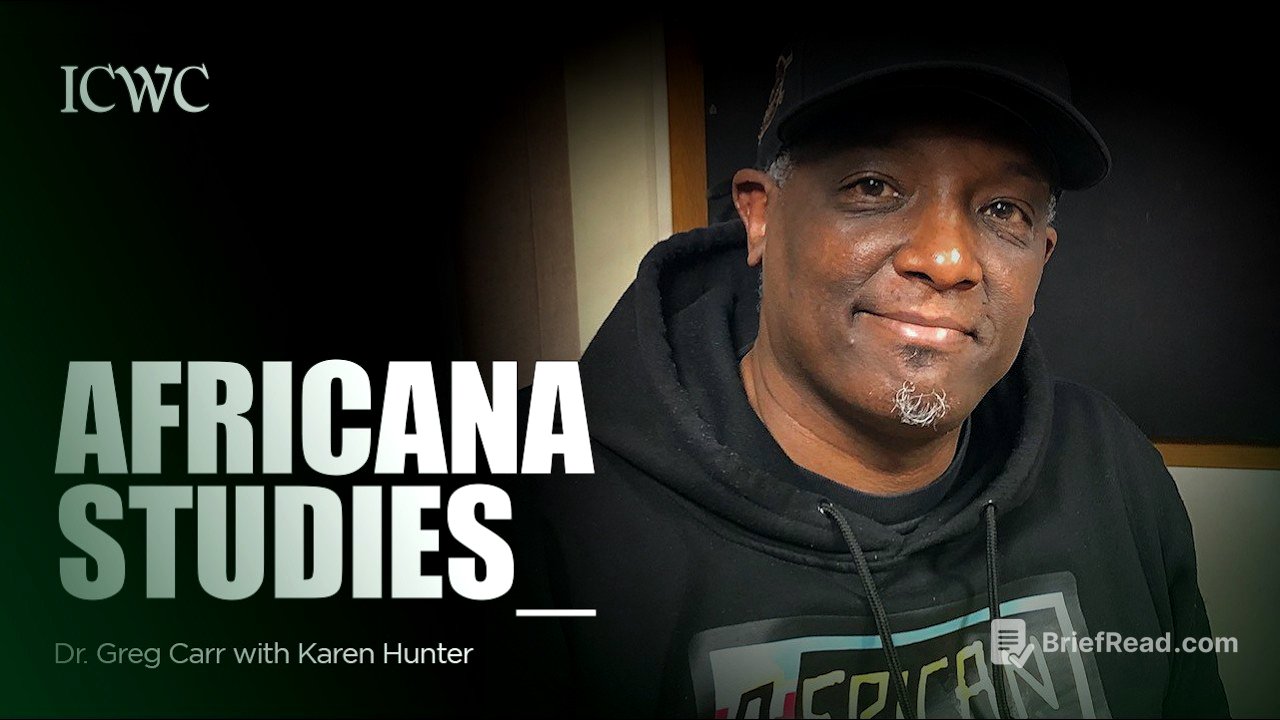
Dr. Carr and Karen Hunter discuss the UN resolution A80 L48, which declared the transatlantic slave trade as the gravest crime against humanity. Out of 123 member states, 123 voted yes, 52 abstained (including Egypt), and three voted no (including the United States, Israel and Argentina). The abstentions are attributed to countries beholden to the United States or those with white nationalist leanings, while the "no" votes are seen as outright racist. The US and EU countries used the excuse that there was no international law in place when the trafficking occurred. The vote was precipitated by the second decade of the UN Decade of Africa and geopolitical shifts that made such a statement possible.
Historical Context and the End of European Domination [11:10]
The UN resolution was made possible by the end of European domination and the age of Europe, creating breathing space for the world to push back. The United Nations, despite criticisms, provides a voice for countries and their representatives. The resolution was introduced on the International Day of Remembrance for the victims of slavery and the international slave trade. The resolution specifically targets the transatlantic trade due to Europe being the main perpetrator, though other forms of slavery are acknowledged.
Nuance Conversations and Breaking Through the Noise [16:19]
The speakers discuss the difficulty of having nuanced conversations with the masses and how to break through the "nonsense" to achieve meaningful resolutions. They emphasize the importance of being present and consistent, creating a space for conversation and institution-building. They also touch on the role of science and technology in sharing information and the need to maintain a high standard of conversation, resisting the urge to engage in inflammatory or unnuanced takes for the sake of popularity.
Jailbreaking the Black University and Africana Studies [22:06]
The speakers discuss the concept of "jailbreaking the black university" by demystifying academic language and making education accessible to all. They emphasize the importance of Africana studies in centering African voices and intellectual traditions, addressing white supremacy, and promoting self-determination. They also touch on the significance of community discussion and intellectual investigation in understanding and addressing the crime scene of the country.
Historical Context: Memphis Sanitation Strike and Civil Rights Movement [35:10]
The discussion shifts to the 58th anniversary of the sanitation strike in Memphis, where Martin Luther King Jr. detoured from his plans for the Poor People's March to support labor. King's assassination altered the path of the Civil Rights Movement, with Jesse Jackson emerging as a more politically driven leader. The speakers emphasize the importance of moral leadership grounded in African governance formations and ways of knowing.
Erosion of the Nation State and the Fight Against White Nationalism [1:18:20]
The speakers discuss the erosion of the nation-state and the testing of the "rules-based international order." They highlight the ongoing fight against white nationalism and the attempts to erase the Reconstruction Amendments. They also touch on the historical context of migrations from Europe and the "white test" that immigrants had to pass.
The UN Vote and the Moral Standard [1:32:57]
The discussion returns to the UN vote and the moral standard it represents. The speakers criticize the United States' and other Western nations' justifications for voting against or abstaining from the resolution. They emphasize the importance of understanding the distinction between the people of the world and the nation-state frameworks in terms of world leaders.
Lincoln University and the Importance of Conversation [1:45:33]
The speakers express disappointment with Lincoln University's decision to rescind an invitation to President Muhammad of Ghana. They argue that the university missed an opportunity to have a crucial conversation about LGBTQ rights and African governance formations. They emphasize the importance of African global solidarity and the need to address questions of common humanity with difference.
Final Thoughts and the Path Forward [1:54:11]
The speakers conclude by emphasizing the importance of understanding who we are, what our ways of knowing are, and using science and technology to dismantle any social structure that prevents self-determination. They highlight the need to square commitment to common humanity with difference and to seek solutions from Africana legal frameworks that predate captivity. They end with a quote from Brian Stevenson, emphasizing that hope is our superpower.