TLDR;
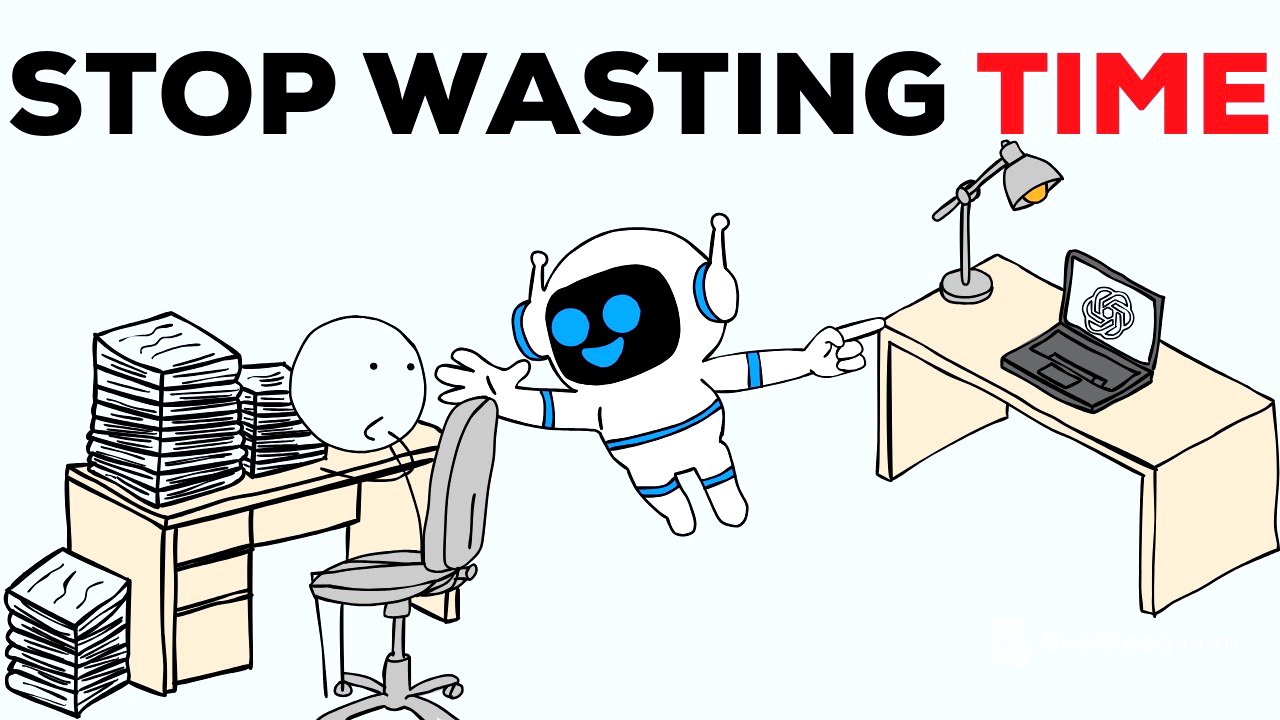
This video discusses how to use ChatGPT as a cognitive tool to enhance thinking, decision-making, communication, and personal growth. It emphasizes that ChatGPT should be viewed as infrastructure to augment human capabilities rather than just an app. The video outlines ten specific strategies for leveraging ChatGPT to improve various aspects of life, from overcoming inertia and learning new skills to building systems and reshaping one's identity.
- ChatGPT as cognitive infrastructure, not just an app.
- Using ChatGPT to overcome inertia and start tasks.
- Employing ChatGPT as a private tutor for personalized learning.
- Utilizing ChatGPT as a "thinking gym" to challenge and refine ideas.
- Structuring decisions and gaining perspective with ChatGPT.
- Improving communication through prompt rewriting and perspective analysis.
- Translating and understanding emotions with ChatGPT's help.
- Managing inner dialogue and self-criticism using ChatGPT.
- Building systems and habits with ChatGPT's assistance.
- Editing and reshaping one's identity by rewriting personal narratives with ChatGPT.
Introduction [0:00]
The video introduces the idea of ChatGPT as more than just a simple application. It suggests that most people are underutilizing its potential, comparing it to using a Ferrari to check the weather. The core message is to start viewing ChatGPT as a fundamental tool that can be integrated into daily life to enhance thinking, similar to how a smartphone is used for navigation, communication, and memory. ChatGPT is presented as a tireless, non-judgmental "second brain" that can extend cognitive capabilities.
Chapter 1: "The Lever Principle" [0:58]
This chapter explains ChatGPT as a lever, where a small input can generate a massive output. The input-to-output ratio is highly favorable, offering benefits like an intern who never sleeps, a consultant who never bills, and a helper who never complains. However, the quality of the output depends on the quality of the input; vague prompts yield vague results, while specific prompts produce valuable outcomes. A good prompt acts as a lever to move one's life forward.
Chapter 2: "The First 10%" [1:59]
The chapter addresses the difficulty of starting tasks. It notes that the brain often resists beginning due to the energy required to load context, make decisions, and face a blank page. To overcome this, the video suggests using ChatGPT to complete the first 10% of a task, such as creating an outline or rough draft. This provides a starting point and momentum, making the task less daunting. Using ChatGPT in this way is portrayed as intelligent rather than lazy.
Chapter 3: "The Private Tutor" [2:57]
This chapter introduces ChatGPT as a personalized learning tool. Instead of relying on overwhelming tutorials, the video suggests using ChatGPT as a private tutor that explains concepts at the user's level, answers questions patiently, and avoids making the user feel inadequate. The method involves asking ChatGPT to explain a topic in three ways: like you're five (intuition), like you're 15 (framework), and like you're 35 (application). This approach facilitates both understanding and practical application.
Chapter 4: "The Thinking Gym" [4:04]
The chapter encourages using ChatGPT as a "thinking gym" rather than just an answer machine. It suggests engaging ChatGPT as a sparring partner to practice reasoning. This involves asking it to challenge ideas, question assumptions, and play devil's advocate. This Socratic dialogue on demand helps improve thinking skills through practice, externalizing internal arguments and promoting deeper reasoning.
Chapter 5: "The Decision Architect" [5:08]
This chapter focuses on using ChatGPT to structure complex decisions. It explains that difficult decisions are often unstructured with too many factors and unknowns. ChatGPT can provide structure by identifying factors, weighting criteria, and mapping scenarios. A key exercise is to ask ChatGPT to respond as one's 80-year-old self, offering a long-term perspective on potential regrets and desired actions.
Chapter 6: "The Communication Coach" [6:21]
The chapter addresses the challenge of high-stakes communication, such as emails that require careful wording. It advises using ChatGPT to rewrite messages for clarity, warmth, or directness, and to help set boundaries without damaging relationships. Additionally, it suggests asking ChatGPT how a message might be received to gain perspective before sending it, reducing stress and improving communication outcomes.
Chapter 7: "The Emotion Translator" [7:23]
This chapter discusses using ChatGPT to understand and articulate emotions. It explains that vague feelings like "bad" are not actionable and that identifying precise emotions is crucial. ChatGPT can help by suggesting specific emotional vocabulary to describe experiences, sensations, and triggers. Naming emotions reduces their intensity and creates distance, allowing one to observe feelings rather than being overwhelmed by them.
Chapter 8: “The Inner Dialogue" [8:16]
The chapter focuses on managing inner dialogue, particularly during times of worry or sleeplessness. It suggests using ChatGPT at 3:00 a.m. to process thoughts without judgment. Writing out worries and asking ChatGPT to respond as a wise self, compassionate friend, or desired mentor can provide valuable perspective and counter the inner critic.
Chapter 9: "The System Builder" [9:12]
This chapter emphasizes the importance of systems over motivation. It explains that motivation is unreliable, while systems provide consistency. ChatGPT can help build systems by turning repetitive tasks into checklists or standard operating procedures. It can also assist with habit stacking, linking new behaviors to existing ones, and designing friction to reduce bad habits and increase good ones.
Chapter 10: "The Identity Editor" [10:13]
This chapter addresses the concept of identity and how it can be reshaped. It challenges fixed statements like "I'm not a morning person" and suggests that these are rehearsed practices rather than immutable traits. ChatGPT can help rewrite one's identity by identifying patterns, values, and themes in personal stories. It encourages shifting from fixed statements to a growth mindset, viewing identity as an ongoing process of becoming.