TLDR;
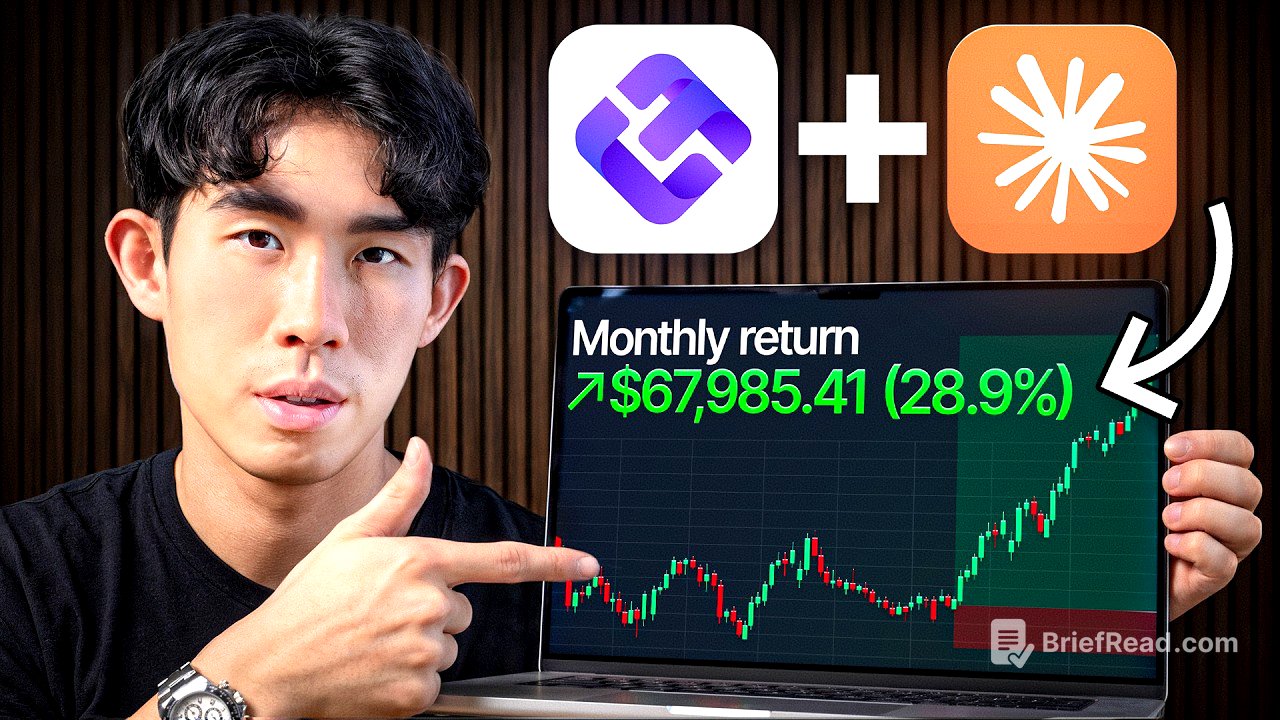
In this video, Brad Goh discusses the limitations of AI in trading while emphasizing the importance of practical skills and personal discipline. Despite the tech advancements, many traders still struggle with profitability because AI cannot replace human judgment or emotional resilience in executing trades.
- AI provides access to information but does not improve execution.
- Many traders fall into analysis paralysis when overwhelmed by AI-generated data.
- Relying on AI can lead to strategy hopping and disrupt the development of a consistent trading method.
- Risk management cannot be effectively handled solely by AI; discipline and execution are crucial.
- AI should be used as a support tool rather than a replacement for critical thinking.
Why AI Is Making You Unprofitable [0:00]
Brad Goh opens by questioning why AI hasn't made everyone profitable in trading despite its widespread availability. He suggests that it has democratized access to information but hasn't improved essential skills or execution in trading. Profitability stems from applying knowledge consistently while adhering to principles such as risk management and discipline. He stresses that although he utilizes AI technologies daily, they cannot replace the crucial human element of decision-making in trading.
The Truth Nobody Tells You About AI [2:17]
Goh explains that while AI offers instant access to trading concepts, it can hinder clarity and decision-making by creating confusion with too much information. He describes a phenomenon he calls "AI-induced analysis paralysis," where traders become overwhelmed by options and delay making trades, ultimately impacting their profitability. He argues for the importance of simplicity in trading strategies for faster, more effective execution.
How AI Is Sabotaging Your Trading [4:36]
He continues by highlighting that the ease of switching strategies with AI leads to a lack of depth in traders' skills. Goh likens this to video games, where constant restarting prevents mastery. Too many strategies can create an unstable foundation for success, as traders fail to stick with one approach to hone their skills and gather significant data for improvement.
The AI Strategy Trap [9:43]
Goh points out that risk management is another area where AI falls short. While it can generate statistically sound strategies, human traders often struggle with adhering to these plans due to emotional factors like fear and greed. He stresses that one emotional decision can undo weeks of disciplined trading, linking successful trading to self-discipline and control over one's actions in the market.
Why AI Can't Save You From Losing Money [12:34]
Brad outlines how the misconception that AI trading bots will lead to effortless profits is misleading. He illustrates that just because AI can backtest a strategy based on historical data, it doesn't guarantee future success. Market dynamics change, making past data less relevant. He emphasizes that traders should focus on developing a repeatable edge based on solid reasoning rather than relying solely on AI-generated solutions.
The Biggest Lie About AI Trading Bots [15:34]
Goh critiques the belief that employing AI strategies alone will yield consistent profits. He notes that traders often misinterpret AI-generated strategies as foolproof, leading to unrealistic expectations. He urges viewers to understand that strategies created by AI might not hold up under varying market conditions unless traders have developed a comprehensive understanding of their mechanisms and risks involved.
How Profitable Traders Actually Use AI [17:49]
Finally, Goh explains how effective traders harness AI to enhance their existing processes rather than replace their thinking. He mentions his product, Edge Flow, which acts as an AI-powered trading coach rather than a signal provider. This tool is aimed at fostering traders' skills in following structured processes and making better decisions rather than acting as an automated trading solution. He concludes by recommending that traders focus on using AI to support their discipline and accountability in trading.